
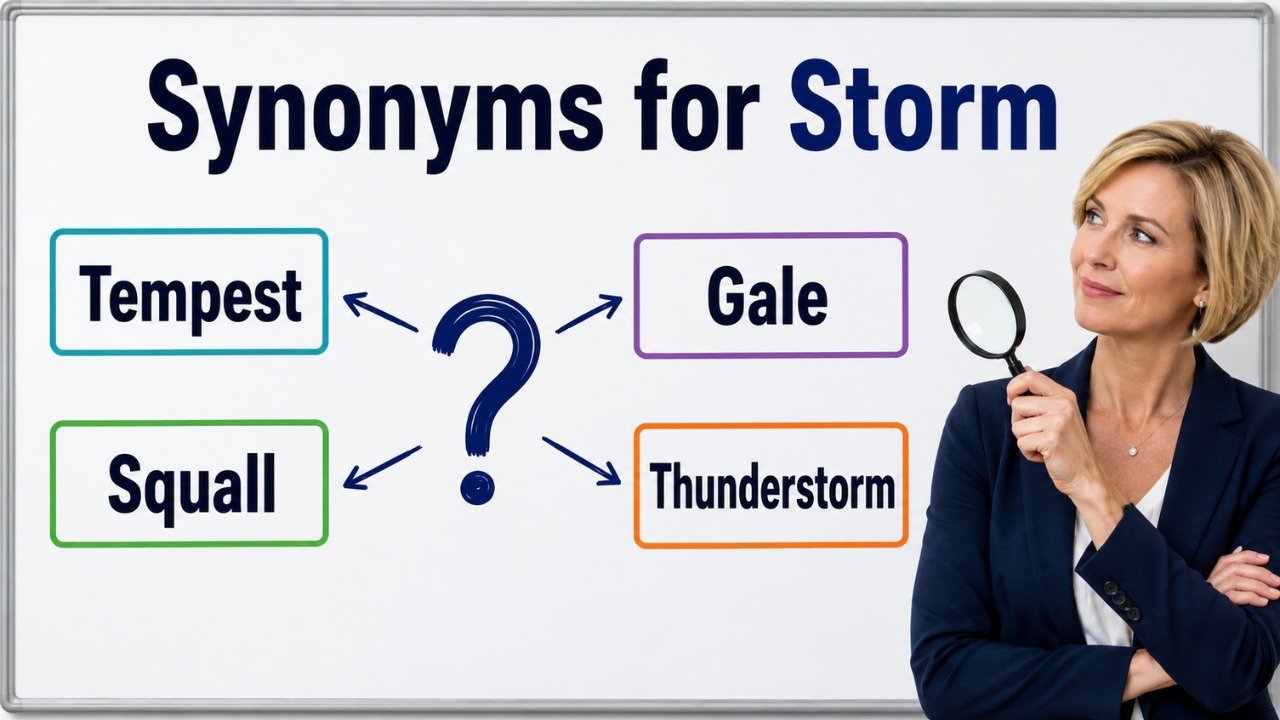
Quick Answer: The best synonyms for storm include tempest, squall, gale, thunderstorm, cyclone, hurricane, turmoil, uproar, onslaught, and outburst. Tempest works well in literary or dramatic writing, while squall describes a sudden burst of wind or rain. Gale is best for powerful winds, and thunderstorm is more specific when thunder and lightning are present. In figurative contexts, turmoil and uproar describe disorder, onslaught suggests a powerful attack, and outburst fits a sudden display of anger or emotion. The best choice among synonyms for storm depends on whether you mean severe weather, conflict, emotional intensity, or sudden force.
Pronunciation and Word Details
Word: Storm
Pronunciation: /stɔːrm/
Part of Speech: Noun and verb
Meaning: A violent weather disturbance, a sudden forceful event, an emotional outburst, or the act of moving or attacking with great force.
US Pronunciation:
UK Pronunciation:
What Does “Storm” Mean?
Storm means a powerful disturbance in the atmosphere that may involve strong wind, rain, thunder, lightning, snow, or other severe weather.
As a noun, storm most commonly refers to dangerous or intense weather. A sentence such as “A storm moved across the coast” describes a weather system producing strong atmospheric conditions.
Storm can also be used figuratively. It may describe emotional conflict, public disorder, criticism, anger, or any situation filled with sudden intensity.
As a verb, storm can mean to move somewhere angrily or forcefully. For example, “She stormed out of the room” means she left quickly and with visible anger.
Storm can also describe a powerful attack. An army may storm a building, meaning it enters or attacks the place rapidly and forcefully.
Because storm has both literal and figurative meanings, the most accurate synonym depends strongly on context.
Meaning, Tone, and Context of “Storm”
Storm is a strong and vivid word. Its tone is usually intense because it suggests force, disruption, danger, anger, or rapid movement.
In weather writing, storm is generally neutral and descriptive. It can appear in everyday conversation, scientific discussion, news style writing, educational material, and formal reports.
In literary writing, storm often carries emotional or symbolic meaning. Writers may describe a storm of anger, a storm of criticism, or an emotional storm to suggest conflict, confusion, or powerful feelings.
In casual conversation, storm can refer to bad weather without specifying its exact type. Someone might say, “A storm is coming,” even when the weather could more precisely be described as a thunderstorm or windstorm.
As a verb, storm often sounds dramatic or emotional. “He stormed into the office” suggests fast, forceful, and possibly angry movement.
Choosing a more specific alternative can make writing clearer. Gale highlights wind, downpour highlights heavy rain, thunderstorm highlights thunder and lightning, while turmoil or uproar describes figurative disorder.
When and How to Use “Storm”
For Severe Weather: Use storm when describing dangerous or disruptive atmospheric conditions involving wind, rain, snow, thunder, or other weather.
Example: The storm damaged several trees during the night.
For Strong Wind: Storm can describe weather in which powerful winds are a major feature.
Example: The storm sent strong gusts across the valley.
For Heavy Rain: Storm is useful when intense rainfall forms part of a larger weather event.
Example: The afternoon storm flooded several low areas.
For Thunder and Lightning: Use storm broadly when thunder, lightning, rain, and wind occur together.
Example: The storm produced bright lightning throughout the evening.
For Emotional Intensity: Storm can represent strong anger, fear, grief, or other powerful feelings.
Example: A storm of emotion followed the unexpected announcement.
For Public Disorder: Storm may describe an intense period of criticism, argument, controversy, or social disturbance.
Example: The decision created a storm of complaints.
For Forceful Movement: As a verb, storm can describe someone moving quickly and angrily.
Example: She stormed out after the argument.
For Forceful Entry: Storm can describe entering or attacking a location with speed and strength.
Example: The group stormed through the entrance.
Best Synonyms for Storm
Tempest: A violent storm, especially in literary or dramatic language.
Example: The sailors struggled to guide the vessel through the tempest.
Squall: A sudden and brief period of strong wind, often accompanied by rain.
Example: A sudden squall swept across the lake.
Gale: A very strong wind, often associated with stormy weather.
Example: The gale shook the windows throughout the night.
Thunderstorm: A storm involving thunder and usually lightning and rain.
Example: A thunderstorm developed over the hills during the afternoon.
Cyclone: A rotating storm system with winds circulating around a central area.
Example: The cyclone brought severe weather to the region.
Downpour: A period of extremely heavy rain.
Example: The sudden downpour covered the streets with water.
Turmoil: A state of great confusion, disturbance, or emotional disorder.
Example: The unexpected change threw the organization into turmoil.
Uproar: Loud confusion, protest, or public disturbance.
Example: The announcement caused an uproar among the crowd.
Onslaught: A sudden and powerful attack or overwhelming force.
Example: The defenders struggled against the onslaught.
Outburst: A sudden expression of strong emotion or activity.
Example: His angry outburst surprised everyone in the room.
50 Synonyms for Storm with Short Meanings
- Tempest: A violent and powerful storm.
- Squall: A sudden burst of strong wind and rain.
- Gale: A period of very strong wind.
- Thunderstorm: A storm containing thunder and usually lightning.
- Rainstorm: A storm characterized mainly by heavy rain.
- Windstorm: A storm dominated by powerful winds.
- Snowstorm: A storm that produces significant snowfall.
- Blizzard: A severe snowstorm with strong winds.
- Cyclone: A rotating atmospheric storm system.
- Hurricane: A powerful tropical cyclone with extremely strong winds.
- Typhoon: A powerful tropical cyclone occurring in certain regions.
- Tornado: A violently rotating column of air extending from a storm cloud.
- Downpour: A sudden period of extremely heavy rain.
- Cloudburst: A sudden and exceptionally heavy rainfall.
- Deluge: A very heavy fall of rain or overwhelming flood of something.
- Torrent: A powerful rushing flow of water or other force.
- Gust: A sudden strong rush of wind.
- Blast: A sudden powerful movement of air or force.
- Flurry: A brief burst of snow, activity, or movement.
- Weather disturbance: A disruption in normal atmospheric conditions.
- Uproar: Loud confusion, protest, or disturbance.
- Turmoil: Great confusion, disorder, or emotional disturbance.
- Tumult: Loud disorder, excitement, or confusion.
- Commotion: Sudden noisy confusion or activity.
- Disturbance: An event that disrupts calm or normal conditions.
- Disorder: A lack of calm, control, or organization.
- Chaos: Complete confusion and lack of order.
- Fury: Violent anger or intense force.
- Rage: Powerful anger or violent intensity.
- Outburst: A sudden release of emotion or force.
- Eruption: A sudden explosive release or emotional expression.
- Explosion: A sudden violent release of energy or emotion.
- Upheaval: A major and disruptive change or disturbance.
- Crisis: A difficult and unstable situation requiring urgent attention.
- Onslaught: A powerful and overwhelming attack.
- Assault: A forceful attack.
- Attack: An aggressive action against someone or something.
- Charge: A rapid and forceful advance.
- Rush: A sudden fast movement or surge.
- Surge: A sudden powerful increase or forward movement.
- Burst: A sudden release or movement of energy.
- Rampage: A period of uncontrolled violent behavior or destruction.
- Assail: To attack forcefully.
- Invade: To enter forcefully or aggressively.
- Overrun: To spread over or take control rapidly.
- Sweep: To move rapidly and powerfully across an area.
- Thunder: To move, speak, or sound with great force.
- Roar: To produce or move with a deep powerful sound.
- Rage violently: To continue with great destructive force.
- Descend forcefully: To arrive or move upon something with sudden intensity.
Read Also:
Synonyms for Called:

Synonyms for Storm by Context
When Storm Means Severe Weather
When storm refers broadly to dangerous or intense weather, tempest, squall, thunderstorm, rainstorm, windstorm, and weather disturbance are useful alternatives.
Tempest sounds more literary, while thunderstorm and rainstorm provide more specific information about the weather involved.
Example: A powerful tempest moved toward the coastline.
Example: The thunderstorm produced heavy rain and frequent lightning.
When Storm Means Strong Wind
When wind is the main feature, gale, squall, gust, blast, and windstorm are more precise choices.
Gale suggests sustained powerful wind, while gust describes a shorter burst.
Example: A strong gale swept across the open fields.
Example: A sudden gust knocked several branches loose.
When Storm Means Heavy Rain
When rainfall is the main idea, downpour, cloudburst, deluge, rainstorm, and torrent may work better than the general word storm.
Downpour is especially natural for extremely heavy rain.
Example: A sudden downpour soaked the streets within minutes.
Example: The cloudburst caused water to rise rapidly.
When Storm Means Snowy Weather
For severe winter weather, snowstorm and blizzard are more specific than storm.
A blizzard usually suggests severe snow combined with strong wind and poor visibility, while snowstorm is a broader term.
Example: The snowstorm covered the roads overnight.
Example: The blizzard made travel extremely difficult.
When Storm Means Disorder or Conflict
In figurative writing, storm may describe chaos, turmoil, uproar, tumult, commotion, or upheaval.
These alternatives are useful when no actual weather is involved.
Example: The sudden resignation created turmoil throughout the department.
Example: The controversial decision caused an uproar.
When Storm Means Strong Emotion
Storm can represent intense anger, grief, excitement, or emotional conflict.
Fury, rage, outburst, eruption, and explosion are useful alternatives in these contexts.
Example: His sudden outburst shocked the entire room.
Example: She struggled to control her rage.
When Storm Means a Powerful Attack
When storm refers to attacking or entering something forcefully, onslaught, assault, attack, charge, invade, and overrun may be clearer.
Example: The defenders prepared for another onslaught.
Example: The group charged toward the entrance.
When Storm Means Moving Angrily
As a verb, storm can mean moving quickly and emotionally.
Rush, charge, burst, sweep, and thunder may work depending on the exact action and tone.
Example: She rushed out of the room after the disagreement.
Example: He charged through the doorway in frustration.
Another Word for Storm
The best single alternative for storm is often tempest when referring to violent weather, although tempest has a more dramatic and literary tone.
For everyday weather writing, thunderstorm, rainstorm, gale, or squall may be more precise. In figurative contexts, turmoil, uproar, rage, or onslaught may better communicate the intended meaning.
Original: A powerful storm struck the coast.
Better Option: A powerful tempest struck the coast.
Original: A storm of criticism followed the decision.
Better Option: An uproar of criticism followed the decision.
Original: He stormed out of the room.
Better Option: He rushed angrily out of the room.
Original: The soldiers stormed the entrance.
Better Option: The soldiers charged toward the entrance.
When Not to Use “Storm”
Storm can sometimes sound too broad when the exact type of weather is known. More specific words make descriptions clearer.
Weak: A storm brought thunder and lightning.
Better: A thunderstorm brought heavy rain, thunder, and lightning.
If heavy rain is the main point, downpour may be more precise.
Weak: We were caught in a storm for ten minutes.
Better: We were caught in a sudden downpour for ten minutes.
Storm may also sound unclear in figurative sentences if the reader cannot immediately understand what kind of disturbance is being described.
Weak: The announcement created a storm.
Better: The announcement created an uproar.
In formal reports, vague figurative uses of storm can reduce precision.
Weak: The department entered a storm after the changes.
Better: The department entered a period of turmoil after the changes.
Avoid using storm as a synonym for every kind of severe weather. A tornado, hurricane, blizzard, and thunderstorm describe different weather events and should not automatically be treated as completely interchangeable.
Words Commonly Confused With Storm
Storm vs Thunderstorm: Storm is a broad word for severe or disruptive weather. Thunderstorm specifically involves thunder and usually lightning.
Storm vs Hurricane: A hurricane is a particular type of powerful tropical cyclone. Storm is a much broader term.
Storm vs Tornado: A tornado is a rapidly rotating column of air, while storm can describe many different atmospheric disturbances.
Storm vs Gale: Gale mainly refers to very strong wind. Storm may involve wind, rain, thunder, snow, or several conditions together.
Storm vs Squall: A squall is typically sudden and relatively brief, while a storm can last much longer.
Storm vs Downpour: Downpour describes extremely heavy rain. Storm describes a broader weather event that may include rain along with other conditions.
Storm vs Tempest: Tempest is a dramatic or literary synonym for a violent storm. Storm is more common in everyday English.
Storm vs Turmoil: Storm refers literally to weather but can also be figurative. Turmoil refers to confusion, emotional disorder, or instability rather than weather.
Storm vs Uproar: Uproar refers to loud disturbance, protest, or public reaction. It is useful when storm is being used figuratively.
Which Synonym Should You Choose?
Choose tempest when writing dramatically or describing violent weather in literary language.
Choose thunderstorm when thunder and lightning are important details.
Choose rainstorm when heavy rain is the main feature of the weather.
Choose gale when very strong wind is the central idea.
Choose squall for a sudden and brief burst of strong wind, often with rain.
Choose downpour when you specifically mean extremely heavy rainfall.
Choose blizzard when describing severe snow combined with strong winds and dangerous conditions.
Choose cyclone when discussing a rotating storm system in formal or weather related contexts.
Choose turmoil in essays, reports, or formal writing about confusion, instability, or emotional disorder.
Choose uproar when describing noisy protest, public reaction, or widespread anger.
Choose outburst when storm refers to a sudden expression of emotion.
Choose rage or fury when emphasizing powerful anger or destructive intensity.
Choose onslaught when describing an overwhelming attack, pressure, or powerful force.
Choose charge when storm is a verb describing rapid and forceful movement toward a place.
Choose rush in casual speech when someone moves somewhere quickly, especially when the forceful sense is less important.
Real Life Examples of “Storm” in Sentences
Original: A storm moved through the town during the night.
Better Option: A thunderstorm moved through the town during the night.
Original: We were caught in a storm on our walk.
Better Option: We were caught in a sudden downpour on our walk.
Original: The storm produced extremely strong winds.
Better Option: The gale produced extremely strong winds.
Original: A storm of criticism followed the announcement.
Better Option: An uproar followed the announcement.
Original: The company faced a storm of uncertainty.
Better Option: The company faced a period of turmoil.
Original: He stormed out after the argument.
Better Option: He rushed angrily out after the argument.
Original: The crowd stormed toward the gate.
Better Option: The crowd charged toward the gate.
Original: A storm of emotion overwhelmed her.
Better Option: A sudden outburst of emotion overwhelmed her.
Original: The team faced a storm of complaints.
Better Option: The team faced an onslaught of complaints.
Original: The winter storm made driving difficult.
Better Option: The blizzard made driving difficult.
Synonym Groups and Usage Differences
Weather Group
Tempest, thunderstorm, rainstorm, windstorm, cyclone, squall, and gale describe different forms or features of severe weather.
These words are not perfectly interchangeable because each emphasizes a different atmospheric condition.
Example: A sudden squall crossed the lake before sunset.
Heavy Rain Group
Downpour, cloudburst, deluge, rainstorm, and torrent emphasize large amounts of water or intense rainfall.
Downpour is common in everyday conversation, while deluge sounds stronger and can also be figurative.
Example: The downpour continued for most of the afternoon.
Wind Group
Gale, gust, blast, squall, and windstorm focus primarily on wind.
Gale suggests sustained strength, while gust is usually short and sudden.
Example: A powerful gale shook the trees throughout the night.
Disorder Group
Turmoil, tumult, uproar, commotion, chaos, and upheaval describe social, emotional, or organizational disorder.
These are useful figurative synonyms when storm does not refer to weather.
Example: The unexpected announcement caused widespread turmoil.
Emotion Group
Rage, fury, outburst, eruption, and explosion describe intense emotional reactions.
They work when storm is used metaphorically for anger or powerful feelings.
Example: His sudden outburst ended the calm discussion.
Attack Group
Onslaught, assault, attack, charge, and invasion relate to the forceful meaning of storm as an aggressive advance.
Onslaught emphasizes overwhelming force, while charge emphasizes rapid forward movement.
Example: The defenders prepared for the approaching onslaught.
Movement Group
Rush, charge, burst, sweep, and thunder can replace storm when describing rapid, forceful movement.
The right choice depends on whether speed, anger, noise, or force is most important.
Example: She rushed into the hallway after hearing the noise.
Antonyms of Storm
The opposite of storm depends on whether the word refers to weather, disorder, emotion, or forceful movement.
Calm: A peaceful state without strong wind, disturbance, or emotion.
Stillness: A condition with little or no movement.
Peace: Freedom from conflict, disorder, or disturbance.
Tranquility: A state of quiet calm.
Serenity: Peaceful and untroubled calmness.
Clear weather: Weather without storms or major atmospheric disturbance.
Sunshine: Bright weather associated with clear skies.
Order: An organized state without confusion or chaos.
Stability: A condition that remains steady and controlled.
Harmony: Peaceful agreement or balanced conditions.
Quiet: An absence of loud activity or disturbance.
Restraint: Controlled behavior rather than emotional outburst.
Retreat: Movement away rather than a forceful advance.
Withdrawal: The act of moving back instead of attacking or advancing.
Comparison: Storm vs Related Words
Storm vs Tempest
Storm is the standard everyday term for severe atmospheric weather. Tempest has a more dramatic, literary, and emotional quality.
Example With Storm: The storm reached the coast in the evening.
Example With Tempest: The vessel struggled through the violent tempest.
Storm vs Thunderstorm
Storm is broad, while thunderstorm specifically describes a storm producing thunder and generally lightning.
Example With Storm: A storm developed beyond the hills.
Example With Thunderstorm: A thunderstorm produced frequent lightning.
Storm vs Squall
Storm may last for an extended period, while a squall is typically sudden, sharp, and relatively brief.
Example With Storm: The storm continued throughout the night.
Example With Squall: A sudden squall swept across the harbor.
Storm vs Gale
Storm describes an entire weather event, while gale primarily describes very strong wind.
Example With Storm: The storm damaged trees and flooded roads.
Example With Gale: The gale shook the trees for several hours.
Storm vs Downpour
Storm can involve several forms of severe weather. Downpour specifically emphasizes extremely heavy rain.
Example With Storm: The storm passed over the city.
Example With Downpour: The downpour flooded the street within minutes.
Storm vs Blizzard
Storm is a general term, while blizzard refers to severe winter weather involving snow and powerful winds.
Example With Storm: The winter storm disrupted travel.
Example With Blizzard: The blizzard reduced visibility across the highway.
Storm vs Turmoil
Storm can refer literally to weather or figuratively to difficulty. Turmoil only describes disorder, confusion, or instability.
Example With Storm: The organization survived a storm of criticism.
Example With Turmoil: The organization experienced months of internal turmoil.
Storm vs Uproar
Storm can represent a strong public reaction figuratively. Uproar specifically suggests loud protest, anger, or confusion.
Example With Storm: The proposal created a storm of objections.
Example With Uproar: The proposal caused an immediate uproar.
Storm vs Onslaught
Storm may function as a verb meaning to attack forcefully. Onslaught is a noun describing an overwhelming attack or powerful rush.
Example With Storm: The group stormed the entrance.
Example With Onslaught: The guards struggled against the sudden onslaught.
Common Phrases and Expressions With “Storm”
Weather the Storm: To survive or endure a difficult situation.
A Storm Is Brewing: Trouble, conflict, or severe weather appears likely to develop.
Calm Before the Storm: A peaceful period before major trouble or activity begins.
Storm of Protest: A strong and widespread expression of opposition.
Storm of Criticism: A sudden and intense amount of criticism.
Storm Out: To leave a place quickly and angrily.
Storm In: To enter a place suddenly and often angrily.
Take by Storm: To become extremely successful or popular very quickly, or to capture something forcefully.
Perfect Storm: A situation in which several difficult conditions combine at the same time.
Ride Out the Storm: To endure a difficult period until conditions improve.
Common Mistakes to Avoid
One common mistake is treating every weather word as an exact synonym for storm. Hurricane, tornado, thunderstorm, gale, blizzard, and cyclone describe different weather phenomena, so they should be chosen according to the actual conditions.
Another mistake is using storm repeatedly when a more specific word would improve the sentence.
Weak: The storm brought a lot of rain, and the storm lasted for hours.
Better: The thunderstorm brought heavy rain, and the downpour continued for hours.
Writers sometimes use tempest in ordinary conversation where it can sound unnecessarily dramatic. Tempest is better suited to literary, historical, or emotionally intense writing.
Another mistake is confusing gale with an entire storm. Gale mainly describes strong wind and does not automatically imply thunder or heavy rain.
Figurative uses also require care. If storm means public anger, uproar may be clearer. If it means confusion, turmoil may be better. If it describes a powerful attack, onslaught may provide greater precision.
As a verb, storm suggests force, speed, anger, or aggressive movement. Do not replace it with walk, leave, or enter unless you want to remove that emotional force.
Choosing a synonym according to the exact weather, emotion, movement, or conflict being described makes writing more precise and natural.
Conclusion
The most useful synonyms for storm change with context. Tempest suits dramatic weather, while thunderstorm, squall, gale, downpour, and blizzard describe more specific conditions. In figurative writing, turmoil and uproar express disorder, rage and outburst show powerful emotion, and onslaught describes overwhelming force. When storm functions as a verb, rush, charge, or burst may be more precise. Understanding these differences helps you choose clearer vocabulary for weather reports, essays, descriptions, stories, professional writing, and everyday conversation.
FAQs About Synonyms for Storm
What Is the Best Synonym for Storm?
Tempest is a strong general synonym for a violent storm. However, thunderstorm, squall, gale, or rainstorm may be more precise depending on the weather involved.
What Is a Formal Synonym for Storm?
Tempest, weather disturbance, cyclone, turmoil, and upheaval can work in more formal contexts. The correct choice depends on whether storm refers to weather or figurative disorder.
What Is Another Word for a Strong Storm?
Tempest is a good general choice. Hurricane, cyclone, blizzard, or severe thunderstorm may be more specific when the exact weather type is known.
What Is Another Word for a Rain Storm?
Rainstorm, downpour, cloudburst, and deluge are useful alternatives. Downpour emphasizes very heavy rain, while cloudburst suggests sudden intense rainfall.
What Is a Synonym for Storm in Figurative Writing?
Turmoil, uproar, tumult, fury, rage, upheaval, and onslaught can replace storm in figurative contexts depending on whether you mean disorder, emotion, or force.
What Is Another Word for Storming Out?
Rushing out, charging out, bursting out, or leaving angrily can express the idea of storming out. The best choice depends on the level of anger and force.
Are Tempest and Storm the Same?
They can refer to the same general idea of violent weather, but tempest sounds more dramatic and literary. Storm is the more common and neutral word in everyday English.
