
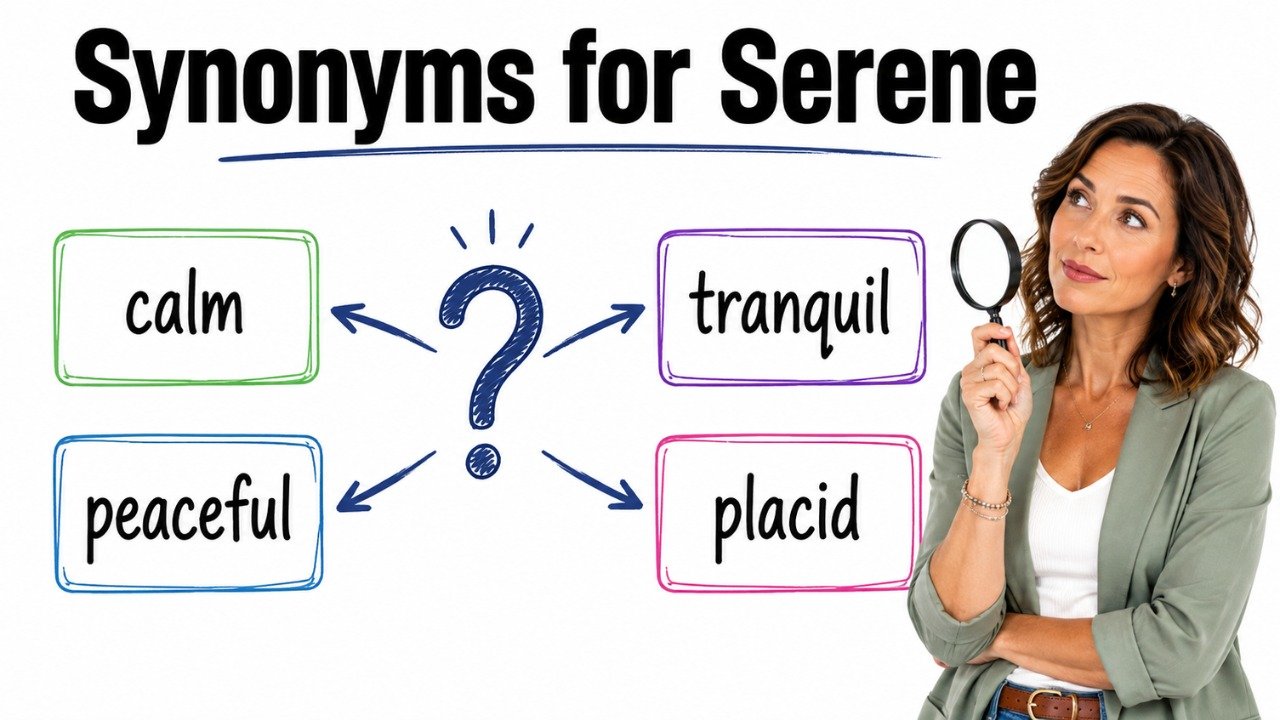
Quick Answer: The best synonyms for serene are calm, peaceful, tranquil, placid, composed, restful, untroubled, still, harmonious, and soothing. Use calm for a person or emotion, peaceful for places and situations, tranquil for quiet surroundings, composed for controlled behavior, placid for still water or a mild personality, and restful for an atmosphere that encourages relaxation. The most suitable choice among synonyms for serene depends on whether you are describing a person, mood, expression, landscape, sound, or environment.
Pronunciation and Word Details
Word: Serene.
Pronunciation: /səˈriːn/.
Part of Speech: Adjective.
Meaning: Calm, peaceful, and free from worry, disturbance, or emotional tension.
US Pronunciation:
UK Pronunciation:
What Does “Serene” Mean?
Serene means calm, peaceful, and undisturbed. It is an adjective used to describe people, expressions, places, weather, water, moods, and situations that appear free from stress, noise, conflict, or movement.
A serene person remains emotionally controlled and relaxed. A serene place feels quiet and peaceful. A serene expression shows calmness and freedom from worry.
The word often carries a positive and graceful feeling. It suggests more than simple silence. Something serene usually creates a sense of inner peace, emotional balance, or natural beauty.
Person: Her serene manner helped everyone feel comfortable.
Place: The garden was serene in the early morning.
Expression: He maintained a serene expression during the discussion.
Atmosphere: Soft light created a serene atmosphere in the room.
Nature: The lake looked serene beneath the clear sky.
Meaning, Tone, and Context of “Serene”
Serene has a positive, gentle, and slightly formal tone. It is common in descriptive writing, personal communication, literature, travel writing, wellness discussions, and conversations about emotions or natural beauty.
The word is more expressive than quiet. Quiet mainly refers to a lack of sound, while serene suggests peace, emotional calm, and freedom from disturbance.
Serene can describe both external surroundings and internal feelings. A beach can be serene because it is quiet and beautiful. A person can feel serene because the person is relaxed and emotionally balanced.
Formal Context: Serene works well in essays, reports, descriptive passages, and professional writing when a graceful word for calmness is needed.
Conversational Context: Serene is also natural in everyday speech, especially when describing a peaceful place, mood, or appearance.
Emotional Context: The word can describe someone who feels free from anxiety, anger, or tension.
Visual Context: Serene often describes landscapes, skies, water, gardens, and facial expressions.
Positive Tone: Serene usually expresses admiration, comfort, beauty, or emotional control.
Literary Tone: Writers often use serene to create a gentle, reflective, or peaceful image.
When and How to Use “Serene”
Use serene when you want to describe deep calmness rather than simple silence or temporary relaxation.
For Peaceful Places: Use serene for locations that feel quiet, beautiful, and undisturbed.
Example: The serene valley offered a welcome escape from the crowded city.
For Calm People: Use serene for someone who appears emotionally balanced and free from worry.
Example: She remained serene even when the plans suddenly changed.
For Facial Expressions: Use serene when a person’s face shows peace, confidence, or emotional control.
Example: A serene smile appeared on his face.
For Natural Scenery: Use serene for lakes, beaches, forests, mountains, skies, and gardens.
Example: The serene lake reflected the colors of the evening sky.
For Relaxing Atmospheres: Use serene for an environment that encourages rest or reflection.
Example: Gentle music gave the space a serene atmosphere.
For Mental States: Use serene when someone feels calm and mentally settled.
Example: After a quiet walk, she felt serene and focused.
For Controlled Behavior: Use serene when someone remains composed during pressure or disagreement.
Example: His serene response prevented the conversation from becoming tense.
For Weather and Water: Use serene for clear skies, mild weather, or water without waves.
Example: The sea was serene before sunrise.
Best Synonyms for Serene
Calm: Free from nervousness, excitement, anger, or disturbance.
Example: She stayed calm throughout the difficult meeting.
Peaceful: Quiet, harmonious, and free from conflict or interruption.
Example: They spent the afternoon in a peaceful garden.
Tranquil: Extremely quiet, calm, and undisturbed.
Example: The tranquil lake was surrounded by tall trees.
Placid: Calm, still, and showing little movement or strong emotion.
Example: The boat moved slowly across the placid water.
Composed: Emotionally controlled and confident, especially under pressure.
Example: He remained composed while answering the challenging questions.
Untroubled: Free from worry, difficulty, or emotional distress.
Example: The child had an untroubled expression.
Restful: Creating a feeling of relaxation and renewed energy.
Example: The soft colors made the bedroom feel restful.
Still: Without movement, activity, or disturbance.
Example: The forest was completely still before dawn.
Harmonious: Peaceful, balanced, and pleasantly arranged.
Example: The harmonious setting made conversation easy.
Soothing: Having a calming or comforting effect.
Example: Her soothing voice helped the nervous child relax.
50 Synonyms for Serene With Short Meanings
- Calm: Free from excitement, anger, or worry.
- Peaceful: Free from conflict, noise, or disturbance.
- Tranquil: Deeply quiet and undisturbed.
- Placid: Calm, still, and emotionally mild.
- Composed: Controlled and confident in behavior.
- Untroubled: Free from worry or distress.
- Restful: Encouraging relaxation and recovery.
- Still: Without movement or disturbance.
- Quiet: Making little sound or activity.
- Hushed: Extremely quiet and subdued.
- Undisturbed: Not interrupted, changed, or troubled.
- Relaxed: Free from tension or nervousness.
- Poised: Calm, confident, and self controlled.
- Collected: Emotionally controlled and mentally organized.
- Self possessed: Calm and confident in difficult situations.
- Unruffled: Not upset, worried, or disturbed.
- Steady: Calm, controlled, and dependable.
- Balanced: Emotionally stable and well controlled.
- Harmonious: Peaceful, balanced, and agreeable.
- Soothing: Producing comfort or calmness.
- Gentle: Mild, kind, and not forceful.
- Mellow: Soft, relaxed, and pleasantly calm.
- Pacific: Peaceful and opposed to conflict.
- Halcyon: Calm, happy, and peaceful.
- Idyllic: Extremely peaceful, beautiful, and pleasant.
- Blissful: Full of happiness and complete peace.
- Contented: Quietly happy and satisfied.
- Secure: Safe, confident, and free from fear.
- Clear: Free from clouds, confusion, or disturbance.
- Cloudless: Clear and free from clouds.
- Smooth: Even, calm, and free from difficulty.
- Motionless: Completely still and without movement.
- Silent: Making no sound.
- Meditative: Calm and suitable for deep thought.
- Contemplative: Quietly thoughtful and reflective.
- Centered: Emotionally balanced and mentally focused.
- Grounded: Sensible, stable, and emotionally secure.
- At ease: Comfortable and free from worry.
- Easygoing: Relaxed, tolerant, and not easily upset.
- Unworried: Free from concern or anxiety.
- Carefree: Without worry, responsibility, or fear.
- Equable: Calm and not easily disturbed.
- Cool headed: Able to remain calm under pressure.
- Level headed: Sensible and emotionally controlled.
- Unagitated: Not disturbed, excited, or anxious.
- Unflustered: Calm despite confusion or pressure.
- Unperturbed: Not worried, upset, or disturbed.
- Reposed: Resting in a calm and peaceful state.
- Sedate: Calm, quiet, and controlled.
- Peaceable: Inclined toward peace rather than conflict.
Read Also:
Synonyms for Inconsistent
Synonyms for Serene by Context
When Serene Means Emotionally Calm
Use these words when describing a person who is free from anxiety, anger, excitement, or emotional tension.
Calm: The most general choice for emotional control.
Example: She remained calm while everyone else became worried.
Composed: Best for controlled behavior during pressure.
Example: The speaker looked composed despite the difficult questions.
Unruffled: Suggests that a person has not been disturbed by a problem.
Example: He appeared unruffled by the sudden criticism.
Unperturbed: Means unaffected by worry, confusion, or difficulty.
Example: She continued working, unperturbed by the noise.
Poised: Adds confidence, grace, and self control.
Example: The candidate gave a poised and thoughtful response.
When Serene Means Peaceful and Quiet
Use these alternatives for places, situations, and environments that are free from conflict, noise, or interruption.
Peaceful: The broadest alternative for calm surroundings.
Example: The village was peaceful after sunset.
Tranquil: Suggests deeper quietness and freedom from disturbance.
Example: They rested beside a tranquil stream.
Quiet: Focuses mainly on limited sound or activity.
Example: The library remained quiet throughout the afternoon.
Hushed: Describes an unusually soft or silent atmosphere.
Example: A hushed mood filled the hall.
Undisturbed: Emphasizes the absence of interruption.
Example: They enjoyed an undisturbed morning in the garden.
When Serene Describes Nature
These synonyms work well for landscapes, water, skies, forests, and weather.
Placid: Best for calm water or a mild natural scene.
Example: Birds flew over the placid lake.
Still: Emphasizes the absence of movement.
Example: The trees were still in the morning air.
Idyllic: Describes a place that appears perfectly peaceful and beautiful.
Example: They stayed in an idyllic village near the mountains.
Halcyon: A literary word for peaceful, happy conditions.
Example: The painting showed a halcyon summer afternoon.
Cloudless: Suitable for a clear and peaceful sky.
Example: A cloudless sky stretched above the quiet fields.
When Serene Means Relaxing
Use these words for places, sounds, colors, or experiences that create calmness.
Restful: Best for something that helps the mind or body relax.
Example: The room had a restful atmosphere.
Soothing: Describes something that actively reduces stress or discomfort.
Example: The soothing sound of rain helped her sleep.
Gentle: Suggests softness, mildness, and comfort.
Example: A gentle breeze moved through the open window.
Mellow: Describes a soft, warm, and relaxed quality.
Example: The evening light created a mellow mood.
Harmonious: Suggests pleasant balance between different elements.
Example: The colors formed a harmonious and calming design.
When Serene Means Mentally Balanced
Use these alternatives for a stable, thoughtful, or reflective state of mind.
Centered: Calm, focused, and emotionally balanced.
Example: A few quiet minutes helped her feel centered.
Grounded: Stable, sensible, and connected to reality.
Example: He remained grounded despite his success.
Balanced: Emotionally stable and able to consider different views.
Example: She offered a balanced response to the disagreement.
Meditative: Calm and suitable for reflection.
Example: The slow music created a meditative mood.
Contemplative: Quietly thoughtful rather than simply relaxed.
Example: He became contemplative as he watched the sunset.
Another Word for Serene
Calm is usually the best single replacement for serene because it can describe emotions, behavior, expressions, weather, and surroundings. However, the best alternative depends on context. Peaceful is often better for places, tranquil for natural settings, composed for behavior, and placid for still water.
Original: She gave him a serene smile.
Better Option: She gave him a calm smile.
Original: The lake looked serene in the morning light.
Better Option: The lake looked tranquil in the morning light.
Original: He remained serene during the argument.
Better Option: He remained composed during the argument.
Original: They found a serene place beside the river.
Better Option: They found a peaceful place beside the river.
When Not to Use “Serene”
Serene is not always the most accurate choice. It may sound overly graceful, too formal, repetitive, or emotionally weak when a more specific word is available.
When You Only Mean Silent
Serene suggests peacefulness, not merely an absence of sound. Use silent or quiet when sound is the main point.
Weak: The machine became serene after it was switched off.
Better: The machine became silent after it was switched off.
When Describing Controlled Professional Behavior
Composed is often more precise than serene when someone is managing pressure, criticism, or conflict.
Weak: The manager remained serene while answering complaints.
Better: The manager remained composed while answering complaints.
When Describing Still Water
Placid or still may create a clearer image than serene.
Weak: The water was serene without a single wave.
Better: The water was placid without a single wave.
When Describing a Place Without Conflict
Peaceful is usually more direct when the main idea is safety or freedom from conflict.
Weak: The community became serene after the disagreement ended.
Better: The community became peaceful after the disagreement ended.
When Describing Something That Causes Relaxation
Soothing or restful may be more accurate when something produces calmness.
Weak: The music had a serene effect on the baby.
Better: The music had a soothing effect on the baby.
When the Emotion Is Stronger Than Calmness
Serene may sound too mild when the intended feeling is complete happiness or deep satisfaction.
Weak: She felt serene after receiving the wonderful news.
Better: She felt blissful after receiving the wonderful news.
When the Word Becomes Repetitive
Repeating serene can make descriptive writing sound limited.
Weak: The serene lake stood beside a serene forest under a serene sky.
Better: The tranquil lake stood beside a peaceful forest under a clear sky.
Words Commonly Confused With Serene
Serene vs Calm: Serene suggests deep, graceful, and lasting peace. Calm is broader and can describe any absence of excitement, anger, or movement.
Serene vs Peaceful: Serene often emphasizes appearance, mood, or inner calm. Peaceful commonly describes situations and places without conflict or disturbance.
Serene vs Tranquil: Both words describe deep calmness. Tranquil is especially common for natural places and quiet surroundings.
Serene vs Quiet: Quiet refers mainly to low sound or limited activity. Serene includes a feeling of emotional peace and beauty.
Serene vs Placid: Placid often describes still water or a person who rarely shows strong emotion. Serene has a warmer and more graceful tone.
Serene vs Composed: Serene suggests natural inner peace. Composed suggests deliberate emotional control, especially during difficulty.
Serene vs Relaxed: Relaxed means free from physical or mental tension. Serene suggests a deeper and more complete sense of peace.
Serene vs Stoic: Serene implies genuine peace. Stoic describes someone who does not openly show pain or emotion, even when suffering.
Which Synonym Should You Choose?
Choose the synonym that matches the exact type of calmness you want to express.
For Formal Writing: Choose tranquil, composed, equable, harmonious, or unperturbed. These words provide greater precision and suit essays, reports, and professional descriptions.
For Casual Speech: Choose calm, peaceful, relaxed, quiet, or at ease. These alternatives sound natural in ordinary conversation.
For Describing People: Choose calm for general emotional control, composed for pressure, poised for confident behavior, and unruffled for someone who is not easily upset.
For Describing Places: Choose peaceful for general surroundings, tranquil for quiet natural locations, idyllic for beautiful settings, and restful for comfortable spaces.
For Describing Water: Choose placid, still, smooth, or tranquil.
For Describing Facial Expressions: Choose calm, composed, peaceful, untroubled, or contented.
For Describing Sounds: Choose soothing, gentle, mellow, quiet, or hushed.
For Reports and Essays: Choose composed for behavior, harmonious for balance, tranquil for environments, and undisturbed for situations without interruption.
For Emails: Choose calm or composed when discussing a person’s reaction. Choose peaceful or restful when describing an environment.
For Conversation: Calm is usually the most natural and flexible replacement.
For Literary Description: Choose halcyon, tranquil, idyllic, placid, or contemplative.
For Emotional Balance: Choose centered, grounded, balanced, or at ease.
Real Life Examples of “Serene” in Sentences
Original: She looked serene before the interview began.
Better Option: She looked composed before the interview began.
Original: We discovered a serene beach beyond the cliffs.
Better Option: We discovered a tranquil beach beyond the cliffs.
Original: His serene voice made the children feel safe.
Better Option: His soothing voice made the children feel safe.
Original: The garden remained serene throughout the morning.
Better Option: The garden remained peaceful throughout the morning.
Original: Her serene expression revealed no sign of worry.
Better Option: Her untroubled expression revealed no sign of worry.
Original: The water appeared serene under the moonlight.
Better Option: The water appeared placid under the moonlight.
Original: The soft colors gave the office a serene feeling.
Better Option: The soft colors gave the office a restful feeling.
Original: He stayed serene despite the unexpected delay.
Better Option: He stayed unruffled despite the unexpected delay.
Original: The landscape looked serene after the snowfall.
Better Option: The landscape looked still and peaceful after the snowfall.
Original: She felt serene after completing her work.
Better Option: She felt calm and contented after completing her work.
Synonym Groups and Usage Differences
Emotional Calm Group
Calm, composed, unruffled, unperturbed, poised, collected, and self possessed describe emotional control. Calm is general, while composed and poised suggest visible control during pressure.
Example: She remained composed while explaining the difficult decision.
Peaceful Environment Group
Peaceful, tranquil, quiet, undisturbed, hushed, and restful describe places or situations with little conflict, noise, or interruption.
Example: The tranquil garden provided a welcome break from the busy streets.
Physical Stillness Group
Still, placid, motionless, smooth, and silent focus on limited movement, activity, sound, or disturbance.
Example: The placid surface of the lake reflected every tree.
Relaxation Group
Relaxed, soothing, restful, mellow, gentle, and at ease relate to reduced tension and increased comfort.
Example: The gentle rhythm of the music created a restful mood.
Emotional Stability Group
Centered, grounded, balanced, steady, equable, and level headed describe someone who remains stable and sensible.
Example: Her balanced attitude helped the group reach a fair decision.
Ideal Peace Group
Idyllic, blissful, halcyon, contented, and harmonious suggest unusually pleasant or complete peace.
Example: They remembered the trip as a halcyon period of rest and happiness.
Freedom From Worry Group
Untroubled, unworried, carefree, secure, and unagitated describe a lack of anxiety or emotional disturbance.
Example: The child slept with an untroubled expression.
Antonyms of Serene
The opposite of serene depends on whether the word describes a person, environment, emotion, or natural condition.
Agitated: Nervous, disturbed, or emotionally excited.
Anxious: Worried, uneasy, or fearful.
Tense: Unable to relax because of pressure or worry.
Troubled: Experiencing emotional distress or difficulty.
Restless: Unable to remain calm, still, or comfortable.
Disturbed: Upset, interrupted, or emotionally unsettled.
Chaotic: Completely disorganized and difficult to control.
Turbulent: Characterized by conflict, disorder, or violent movement.
Noisy: Filled with loud or unwanted sound.
Stormy: Violent, unsettled, or emotionally intense.
Frantic: Wildly anxious, hurried, or uncontrolled.
Unsettled: Not calm, stable, or resolved.
Irritated: Annoyed, impatient, or slightly angry.
Flustered: Confused and nervous under pressure.
Frenzied: Extremely excited, uncontrolled, or active.
Comparison of Serene and Related Words
Serene vs Calm
Serene suggests deep and graceful peace, while calm is a broader word for freedom from excitement, worry, or movement. Calm is more common in everyday speech.
Example With Serene: She watched the sunset with a serene expression.
Example With Calm: She remained calm when the schedule changed.
Serene vs Peaceful
Serene often describes appearance, mood, or inner balance. Peaceful is especially useful for places and situations without conflict or disturbance.
Example With Serene: His serene presence made everyone feel comfortable.
Example With Peaceful: They moved to a peaceful village near the coast.
Serene vs Tranquil
Serene can describe both people and places. Tranquil is especially effective for quiet natural surroundings.
Example With Serene: She felt serene after finishing the difficult task.
Example With Tranquil: The path led to a tranquil forest clearing.
Serene vs Placid
Serene suggests peaceful beauty or inner calm. Placid emphasizes stillness, mildness, or a lack of strong emotion.
Example With Serene: The valley looked serene beneath the morning sky.
Example With Placid: The placid lake showed no sign of movement.
Serene vs Composed
Serene suggests a naturally peaceful state. Composed suggests that someone is actively controlling emotions or behavior.
Example With Serene: He appeared serene as he listened to the music.
Example With Composed: He remained composed while responding to criticism.
Serene vs Quiet
Serene expresses peace and emotional comfort. Quiet mainly means making little sound or showing little activity.
Example With Serene: The garden had a serene and welcoming atmosphere.
Example With Quiet: The hallway was quiet after the students left.
Serene vs Relaxed
Serene suggests deep peace and emotional balance. Relaxed refers more directly to freedom from physical or mental tension.
Example With Serene: She had a serene expression during the ceremony.
Example With Relaxed: She felt relaxed after completing the presentation.
Common Phrases and Expressions With Serene
Serene Atmosphere: A peaceful and relaxing environment.
Serene Beauty: A calm, graceful, and undisturbed form of beauty.
Serene Expression: A facial appearance showing peace and emotional control.
Serene Landscape: A natural scene that looks quiet and peaceful.
Serene Setting: A location with a calm and pleasant mood.
Serene Mood: A mental or emotional state free from tension.
Serene Confidence: Quiet confidence without nervousness or arrogance.
Serene Waters: Water that is calm, smooth, and nearly motionless.
Serene Silence: Silence that feels peaceful rather than uncomfortable.
Serene Presence: A person’s calming and emotionally balanced effect on others.
Common Mistakes to Avoid
Repeating Serene Too Often
Using serene repeatedly in one paragraph weakens its effect. Replace some uses with calm, peaceful, tranquil, placid, or restful.
Repetitive: The serene garden surrounded a serene house beside a serene lake.
Improved: The peaceful garden surrounded a quiet house beside a tranquil lake.
Using Serene as a Direct Synonym for Silent
Something can be silent without being peaceful. A silent room may feel tense, uncomfortable, or frightening.
Incorrect: The alarm stopped, and the machine became serene.
Correct: The alarm stopped, and the machine became silent.
Choosing Serene for Intense Activity
Serene does not suit situations filled with excitement, speed, conflict, or confusion unless the contrast is intentional.
Incorrect: The crowd became serene as the winning goal was scored.
Correct: The crowd became ecstatic as the winning goal was scored.
Confusing Serene With Composed
Serene describes peacefulness. Composed focuses on controlled behavior during pressure.
Less Precise: She remained serene while defending her proposal.
More Precise: She remained composed while defending her proposal.
Using Serene for Every Peaceful Description
A more specific word may create a clearer image. Use placid for water, tranquil for natural places, soothing for sounds, and restful for comfortable spaces.
General: The music was serene.
Specific: The music was soothing.
Forgetting the Adverb Form
Serene is an adjective. Serenely is the adverb used to describe how an action is performed.
Incorrect: She smiled serene at the audience.
Correct: She smiled serenely at the audience.
Using an Unnatural Noun Combination
Not every noun combines naturally with serene. Check whether the noun can logically appear peaceful, graceful, or undisturbed.
Unnatural: He made a serene calculation.
Natural: He made a careful calculation.
Overstating Temporary Calmness
Serene often suggests deeper peace. For a brief reduction in stress, relaxed or calmer may sound more natural.
Overstated: I felt serene after sitting down for one minute.
Natural: I felt more relaxed after sitting down for one minute.
Conclusion
The most useful synonyms for serene include calm, peaceful, tranquil, composed, placid, restful, untroubled, and soothing. Calm is the most flexible choice for people and emotions, while peaceful and tranquil work well for places. Choose composed for controlled behavior, placid for still water, restful for comfortable spaces, and soothing for sounds or experiences that reduce tension. Understanding these differences will help you select a natural, accurate alternative that matches the person, mood, setting, or situation you want to describe.
FAQs About Synonyms for Serene
What Is the Best Synonym for Serene?
Calm is the best general synonym for serene. However, peaceful is often better for places, composed for behavior, and tranquil for natural surroundings.
What Is a Stronger Word for Serene?
Tranquil can express deeper environmental calm, while blissful suggests complete peace and happiness. The strongest choice depends on the context.
Can Peaceful Replace Serene?
Yes, peaceful can replace serene when describing places, moods, expressions, or situations. Serene often sounds more graceful and emotionally balanced.
Is Tranquil the Same as Serene?
The words are very similar. Tranquil is especially common for quiet places and natural settings, while serene can also describe people, expressions, and emotions.
What Is a Synonym for a Serene Person?
Calm, composed, poised, unruffled, balanced, and untroubled can describe a serene person. Composed is especially useful when the person is under pressure.
What Is the Opposite of Serene?
Common opposites include agitated, anxious, tense, troubled, restless, chaotic, turbulent, and disturbed.
How Do You Use Serene in a Sentence?
You can write, “The lake looked serene beneath the morning sky.” In this sentence, serene describes the lake as calm, peaceful, and undisturbed.
