

Quick Answer: Synonyms for vibe include atmosphere, mood, feeling, energy, aura, ambiance, tone, spirit, style, and impression. The best synonym depends on context. Use atmosphere for a place, mood for emotion, energy for people or events, aura for a personal quality, tone for writing, and style for appearance or expression.
Pronunciation and Word Details
Word: Vibe
Pronunciation: /vaɪb/
Part of Speech: Noun and informal verb
Meaning: A vibe is the feeling, mood, energy, or atmosphere that a person, place, thing, or situation gives.
US Pronunciation:
UK Pronunciation:
What Does “Vibe” Mean?
Direct Answer: “Vibe” means the emotional feeling, atmosphere, or energy that something seems to give.
As a noun, vibe is commonly used to describe how a place feels, how a person comes across, or what kind of emotional effect a situation creates. For example, a room can have a calm vibe, a person can give a friendly vibe, and a song can have a relaxing vibe.
As an informal verb, vibe can mean to enjoy, connect with, or feel in harmony with something. For example, someone may say, “I really vibe with this music,” meaning they like it and feel connected to it.
Meaning, Tone, and Context of “Vibe”
Tone: Vibe is casual, conversational, modern, and expressive.
Formality: It is best for everyday speech, creative writing, lifestyle writing, and informal descriptions. In formal writing, words like atmosphere, tone, mood, impression, or character often sound more polished.
Emotional Use: Vibe is useful when the feeling is hard to describe exactly. It can suggest comfort, tension, style, personality, warmth, mystery, excitement, or calmness.
Common Contexts: Vibe is often used for places, people, music, rooms, writing, designs, events, outfits, conversations, and general feelings.
Example: The cafe has a peaceful vibe.
More Formal: The cafe has a peaceful atmosphere.
When and How to Use “Vibe”
For a Place: Use vibe when describing the overall feeling of a room, city, restaurant, home, or event.
Example: The small bookstore has a cozy vibe.
For a Person: Use vibe when describing the feeling someone gives through behavior, appearance, or attitude.
Example: She gives a calm and confident vibe.
For Music: Use vibe when describing the mood or energy of a song.
Example: This song has a soft evening vibe.
For Style: Use vibe when describing the look, theme, or personality of clothing, decor, or design.
Example: His outfit has a vintage vibe.
For Emotion: Use vibe when the feeling is general rather than exact.
Example: The meeting had a tense vibe from the start.
For Casual Speech: Use vibe when the tone is relaxed and natural.
Example: I like the friendly vibe of this place.
Best Synonyms for Vibe
Atmosphere: The overall feeling or mood of a place.
Example: The restaurant has a warm atmosphere.
Mood: The emotional feeling created by a person, place, or situation.
Example: The music created a peaceful mood.
Feeling: A general emotional sense or impression.
Example: The room had a welcoming feeling.
Energy: The liveliness, attitude, or emotional force of someone or something.
Example: The team brought positive energy to the event.
Aura: A special quality or feeling that seems to surround a person or thing.
Example: He has an aura of quiet confidence.
Ambiance: The pleasant mood or character of a place.
Example: Soft lights gave the room a romantic ambiance.
Tone: The attitude or emotional quality in speech, writing, art, or behavior.
Example: The message had a friendly tone.
Spirit: The main attitude, feeling, or character of a person, group, or event.
Example: The festival captured the joyful spirit of the town.
Style: The look, manner, or expressive quality of something.
Example: The design has a clean modern style.
Impression: The feeling or idea something gives to others.
Example: Her speech left a strong impression.
50 Synonyms for Vibe with Short Meanings
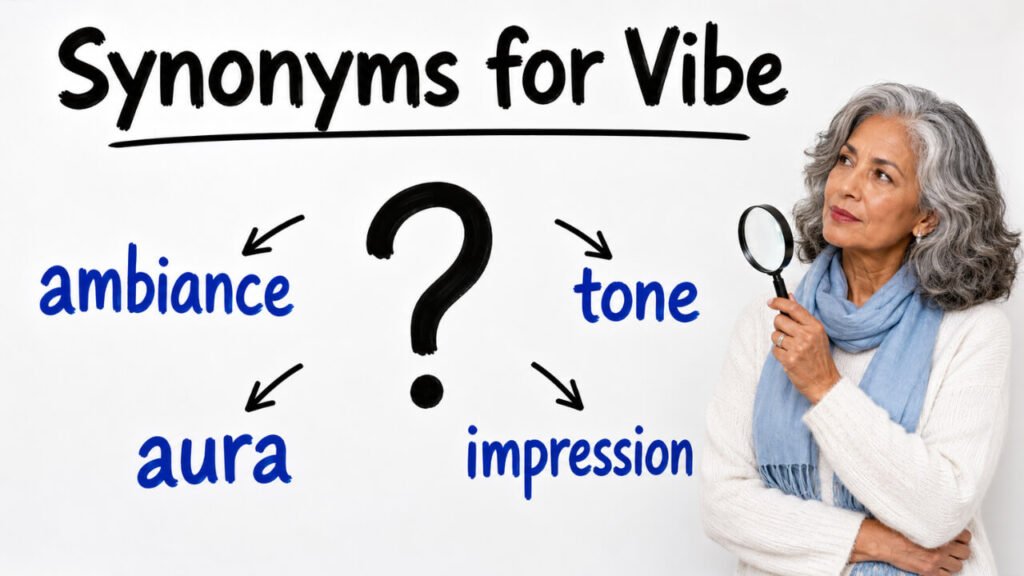
- Atmosphere: Overall feeling of a place or situation.
- Mood: Emotional tone or state.
- Feeling: General emotional sense.
- Energy: Liveliness or emotional force.
- Aura: Distinct quality surrounding someone or something.
- Ambiance: Mood or character of a place.
- Tone: Attitude or emotional quality.
- Spirit: Main feeling or attitude.
- Character: Distinct nature or quality.
- Impression: Feeling or idea received from something.
- Sense: General awareness or feeling.
- Quality: Noticeable feature or nature.
- Flavor: Distinct style or feeling.
- Style: Manner, look, or expression.
- Personality: Distinctive character or charm.
- Feel: Informal sense or mood.
- Air: Noticeable quality or manner.
- Environment: Surrounding conditions and feeling.
- Climate: General emotional or social condition.
- Temper: Overall emotional condition.
- Attitude: Mental or emotional position.
- Presence: Strong noticeable effect or quality.
- Charm: Pleasing and attractive quality.
- Warmth: Friendly and comforting feeling.
- Coolness: Calm, stylish, or relaxed quality.
- Edge: Strong, bold, or intense quality.
- Expression: Way something shows feeling or meaning.
- Essence: Core nature or main quality.
- Nature: Basic character or type.
- Color: Distinct emotional or descriptive quality.
- Texture: Richness or layered feeling.
- Temperament: Natural emotional character.
- Outlook: General attitude or way of seeing things.
- Bearing: Way someone carries or presents themselves.
- Manner: Way of behaving or appearing.
- Look: Visual style or appearance.
- Theme: Main idea, style, or feeling.
- Impressionability: Power to create a feeling.
- Resonance: Emotional effect or deeper connection.
- Harmony: Pleasant sense of balance or connection.
- Flow: Smooth feeling or movement.
- Rhythm: Pattern, pace, or emotional movement.
- Pulse: Lively beat or emotional force.
- Current: Moving feeling or trend.
- Undertone: Subtle hidden feeling.
- Overtone: Added emotional meaning.
- Sensation: Strong feeling or experience.
- Emotion: Feeling or emotional quality.
- Sentiment: Emotional attitude or feeling.
- Imprint: Lasting feeling or effect.
Read Also:
Synonyms For Asked
Synonyms for Vibe by Context
When Vibe Means Atmosphere
Use these synonyms when talking about the feeling of a place, event, room, or environment.
Atmosphere: The overall feeling of a place.
Example: The hotel has a calm atmosphere.
Ambiance: A pleasant or stylish mood in a place.
Example: Candles created a warm ambiance.
Environment: The surrounding feeling and setting.
Example: The office environment feels relaxed.
Climate: The general emotional condition of a place or group.
Example: The school has a positive climate.
When Vibe Means Mood
Use these words when vibe refers to emotional feeling.
Mood: The emotional state or tone.
Example: The poem has a sad mood.
Feeling: A general emotional impression.
Example: The speech gave me a hopeful feeling.
Emotion: A clear emotional quality.
Example: The painting carries deep emotion.
Sentiment: A feeling, opinion, or emotional attitude.
Example: The letter expressed warm sentiment.
When Vibe Means Energy
Use these synonyms when describing liveliness, movement, confidence, or social force.
Energy: The active feeling someone or something gives.
Example: The crowd had exciting energy.
Pulse: A lively beat or active force.
Example: The city has a fast pulse.
Flow: A smooth and natural feeling.
Example: The conversation had an easy flow.
Rhythm: A pattern of movement or feeling.
Example: The song has a gentle rhythm.
When Vibe Means Personal Quality
Use these alternatives when describing the feeling someone gives.
Aura: A special quality around a person.
Example: She has an aura of kindness.
Presence: A strong noticeable effect.
Example: The speaker had a confident presence.
Bearing: The way someone carries themselves.
Example: He had a calm bearing.
Manner: The way someone behaves or appears.
Example: Her manner was gentle and polite.
When Vibe Means Style
Use these words when describing appearance, design, clothing, art, or theme.
Style: A way of looking or expressing something.
Example: The room has a classic style.
Look: Visual appearance or design.
Example: The jacket has a bold look.
Theme: Main idea or visual direction.
Example: The party had a tropical theme.
Flavor: A distinct style or character.
Example: The story has a playful flavor.
Another Word for Vibe
Best Single Replacement: The best single replacement for vibe is usually atmosphere when describing a place, mood when describing emotion, and energy when describing people or events.
The best alternative depends on what you are describing. Atmosphere sounds more polished for places. Mood works well for art, writing, and emotion. Energy works well for people, gatherings, and conversations.
Original: The room had a peaceful vibe.
Better Option: The room had a peaceful atmosphere.
Original: He gives a confident vibe.
Better Option: He gives a confident impression.
Original: This song has a sad vibe.
Better Option: This song has a sad mood.
Original: The event had a fun vibe.
Better Option: The event had a fun energy.
When Not to Use “Vibe”
Do not use vibe when formal, exact, or professional wording is needed. It can sound too casual in academic writing, business reports, serious analysis, or detailed descriptions. Use a clearer synonym when you need precision.
Weak: The report has a negative vibe.
Better: The report has a negative tone.
Weak: The hotel had a rich vibe.
Better: The hotel had an elegant atmosphere.
Weak: Her answer gave a strange vibe.
Better: Her answer created an uneasy impression.
Weak: The essay has a smart vibe.
Better: The essay has a thoughtful tone.
Weak: The design has a nice vibe.
Better: The design has a clean and welcoming style.
Words Commonly Confused With Vibe
Vibe vs Mood: Vibe is a broad informal feeling, while mood is more directly emotional. A room can have a vibe, but a poem or song often has a mood.
Vibe vs Atmosphere: Vibe is casual, while atmosphere is more polished and often used for places, settings, and environments.
Vibe vs Energy: Vibe can be calm, tense, stylish, or warm. Energy usually suggests liveliness, movement, and emotional force.
Vibe vs Aura: Vibe can describe people, places, or things. Aura usually describes a personal or special quality that seems to surround someone or something.
Vibe vs Tone: Vibe is general and informal. Tone is more specific and is often used for writing, speech, art, messages, and communication.
Vibe vs Style: Vibe is the feeling something gives. Style is the way something looks, sounds, or is expressed.
Which Synonym Should You Choose?
Choose atmosphere when writing about the feeling of a room, restaurant, home, event, city, or setting.
Choose mood when writing about emotion in music, stories, poems, films, art, or personal feelings.
Choose energy when describing people, conversations, crowds, parties, teams, or events.
Choose aura when describing a personal quality, special presence, or emotional effect around someone.
Choose ambiance when describing a pleasant, stylish, romantic, calm, or warm place.
Choose tone when writing about messages, essays, speeches, articles, reviews, or communication.
Choose impression when describing what someone or something makes others feel or think.
Choose style when describing clothing, decor, design, appearance, or creative expression.
Choose spirit when describing the shared feeling of a group, celebration, team, or occasion.
Choose feeling when you want a simple and natural everyday replacement.
Real Life Examples of “Vibe” in Sentences
Original: The cafe has a relaxed vibe.
Better Option: The cafe has a relaxed atmosphere.
Original: She gives a friendly vibe.
Better Option: She gives a friendly impression.
Original: The song has a dreamy vibe.
Better Option: The song has a dreamy mood.
Original: The office has a serious vibe.
Better Option: The office has a serious tone.
Original: His outfit has a vintage vibe.
Better Option: His outfit has a vintage style.
Original: The event had a joyful vibe.
Better Option: The event had a joyful spirit.
Original: The room gives a warm vibe.
Better Option: The room gives a warm feeling.
Original: The conversation had a weird vibe.
Better Option: The conversation had an uneasy tone.
Original: The city has a creative vibe.
Better Option: The city has a creative energy.
Original: The design has a calm vibe.
Better Option: The design has a calm aesthetic.
Synonym Groups and Usage Differences
Atmosphere Group
This group works best for places, events, settings, rooms, homes, and public spaces. Words like atmosphere, ambiance, environment, and climate describe how a place feels overall.
Example: The garden had a peaceful atmosphere.
Mood Group
This group works best for emotions, art, stories, music, and personal reactions. Words like mood, feeling, emotion, and sentiment focus on emotional effect.
Example: The song created a soft mood.
Energy Group
This group is useful for people, crowds, events, teams, and conversations. Words like energy, pulse, flow, and rhythm describe movement, liveliness, or emotional force.
Example: The party had amazing energy.
Personal Quality Group
This group works when describing someone’s presence or character. Words like aura, presence, bearing, and manner explain how a person comes across.
Example: The teacher had a calm presence.
Style Group
This group works for clothing, rooms, art, writing, design, and creative choices. Words like style, look, theme, and flavor describe appearance and expression.
Example: The apartment has a simple modern style.
Communication Group
This group is useful for speech, emails, essays, conversations, and articles. Words like tone, attitude, expression, and undertone describe the feeling behind communication.
Example: Her message had a polite tone.
Antonyms of Vibe
Opposites of vibe depend on the meaning. Since vibe means feeling, mood, atmosphere, or energy, its antonyms often describe a lack of feeling, unpleasant energy, or emotional emptiness.
Dullness: Lack of energy or interest.
Flatness: Lack of emotion, depth, or excitement.
Lifelessness: Absence of energy or spirit.
Coldness: Lack of warmth or friendliness.
Harshness: Rough, unpleasant, or uncomfortable feeling.
Tension: Uncomfortable emotional pressure.
Awkwardness: Uncomfortable or unnatural feeling.
Disconnection: Lack of emotional connection or harmony.
Emptiness: Lack of feeling, meaning, or warmth.
Stiffness: Formal, rigid, or uncomfortable feeling.
Comparison: Vibe vs Related Words
Vibe vs Atmosphere
Difference: Vibe is casual and broad, while atmosphere is more polished and often describes places or settings.
Example With Vibe: The lounge has a relaxed vibe.
Example With Atmosphere: The lounge has a relaxed atmosphere.
Vibe vs Mood
Difference: Vibe can describe a person, place, thing, or situation. Mood usually focuses more on emotion.
Example With Vibe: The room has a calm vibe.
Example With Mood: The room creates a calm mood.
Vibe vs Energy
Difference: Vibe describes the general feeling. Energy often describes liveliness, movement, or emotional force.
Example With Vibe: The team has a positive vibe.
Example With Energy: The team has positive energy.
Vibe vs Aura
Difference: Vibe is more common and casual. Aura often sounds deeper, more personal, or more poetic.
Example With Vibe: He gives a peaceful vibe.
Example With Aura: He has an aura of peace.
Vibe vs Tone
Difference: Vibe is general. Tone is more specific for speech, writing, messages, and communication.
Example With Vibe: The email has a rude vibe.
Example With Tone: The email has a rude tone.
Vibe vs Style
Difference: Vibe is the feeling something gives. Style is the way something looks or is presented.
Example With Vibe: The room has a beach vibe.
Example With Style: The room has a beach style.
Common Phrases and Expressions With Vibe
Good Vibe: A positive, pleasant, or friendly feeling.
Bad Vibe: A negative, uncomfortable, or uneasy feeling.
Chill Vibe: A calm, relaxed, and easy feeling.
Positive Vibe: A hopeful, friendly, or uplifting feeling.
Negative Vibe: A dark, tense, or unpleasant feeling.
Cozy Vibe: A warm, comfortable, and welcoming feeling.
Creative Vibe: An artistic, imaginative, or expressive feeling.
Friendly Vibe: A kind, open, and approachable feeling.
Relaxed Vibe: A calm and pressure free feeling.
Vintage Vibe: An old fashioned or classic style feeling.
Common Mistakes to Avoid
Using Vibe Too Often: Repeating vibe many times can make writing sound weak. Replace it with atmosphere, mood, energy, tone, or style when needed.
Choosing the Wrong Synonym: Do not use mood for every situation. A restaurant usually has an atmosphere, while a song may have a mood.
Using Vibe in Formal Reports: Vibe may sound too casual in professional or academic writing. Use tone, impression, character, or atmosphere instead.
Being Too Vague: A phrase like “nice vibe” is not very specific. Say warm atmosphere, friendly energy, calm mood, or elegant style.
Confusing Vibe With Style: Style is usually about appearance. Vibe is about feeling. A design can have a modern style and a peaceful vibe.
Overusing Positive Vibe: Instead of always saying positive vibe, use warmth, optimism, friendly energy, or welcoming atmosphere.
Using Aura Too Casually: Aura can sound poetic or dramatic. For everyday writing, feeling, impression, or presence may sound more natural.
Conclusion
Synonyms for vibe help you describe feelings with more accuracy and variety. Use atmosphere for places, mood for emotions, energy for people and events, tone for communication, aura for personal presence, and style for appearance or design. Vibe is useful in casual speech, but stronger alternatives can make your writing clearer, more polished, and more specific. The best choice depends on whether you mean emotional feeling, setting, personality, sound, design, or overall impression.
FAQs About Synonyms for Vibe
What are the best synonyms for vibe?
The best synonyms for vibe are atmosphere, mood, feeling, energy, aura, ambiance, tone, style, spirit, and impression.
What is another word for vibe in formal writing?
A good formal word for vibe is atmosphere when describing a place, tone when describing writing, and impression when describing how something comes across.
What is another word for good vibe?
Another word for good vibe is positive energy, warm atmosphere, friendly feeling, pleasant mood, or welcoming ambiance.
What is another word for bad vibe?
Another word for bad vibe is negative energy, uneasy feeling, tense atmosphere, cold tone, or uncomfortable impression.
Is vibe formal or informal?
Vibe is mostly informal. It is common in casual conversation, creative descriptions, and everyday writing, but formal writing often needs words like atmosphere, tone, or impression.
Can mood and vibe mean the same thing?
Yes, mood and vibe can overlap, but they are not always the same. Mood usually focuses on emotion, while vibe can describe a broader feeling, style, or energy.
What synonym for vibe should I use for a person?
For a person, use aura, presence, energy, impression, manner, or bearing, depending on the exact meaning.
