
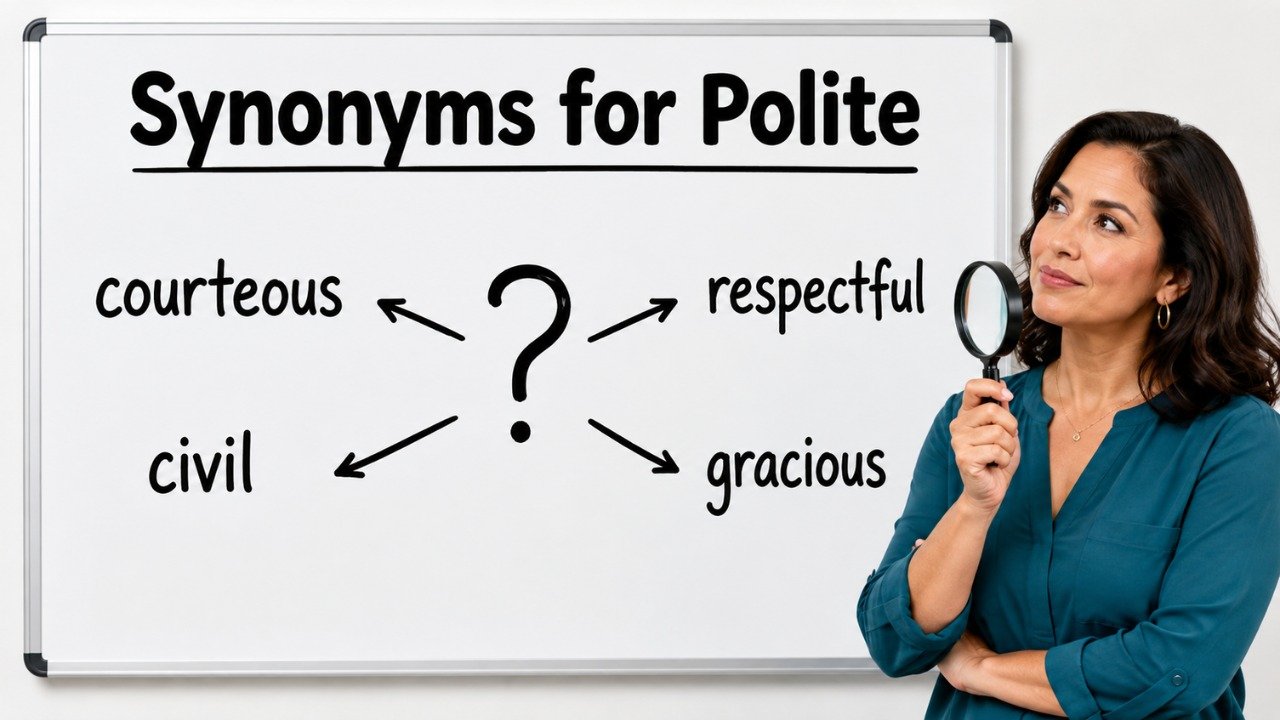
Quick Answer: Common synonyms for polite include courteous, respectful, civil, gracious, considerate, well mannered, tactful, cordial, refined, and diplomatic. Courteous is one of the best general replacements when describing good manners. Respectful works when someone shows regard for another person. Considerate emphasizes awareness of other people’s feelings, while tactful and diplomatic suit careful communication. Gracious fits warm and generous behavior, and refined describes polished manners in more formal contexts.
Pronunciation and Word Details
Word: Polite.
Pronunciation: /pəˈlaɪt/
Part of Speech: Adjective.
Meaning: Showing good manners, respect, consideration, and appropriate behavior toward other people.
US Pronunciation:
UK Pronunciation:
What Does “Polite” Mean?
Polite means showing good manners, respect, and consideration toward other people.
Polite is an adjective used to describe people, words, actions, requests, responses, behavior, or social situations. A polite person generally speaks and behaves in a way that avoids unnecessary offense and shows respect for others.
The word can describe simple everyday manners, such as saying thank you, waiting patiently, or making a respectful request. It can also describe formal communication, professional behavior, and careful language used during disagreement.
In one sentence, polite may mean courteous. In another, it may suggest respectful, tactful, considerate, civil, or gracious behavior. The best interpretation depends on what kind of manners or communication the sentence describes.
Meaning, Tone, and Context of “Polite”
Polite usually has a positive and neutral tone. It describes behavior that follows accepted standards of courtesy and respect.
In everyday conversation, polite often refers to basic good manners. Someone may be called polite because they greet others warmly, listen without interrupting, or make requests respectfully.
In professional settings, polite language helps create respectful communication. Words such as courteous, professional, tactful, and diplomatic may provide more specific alternatives.
In formal writing, refined, decorous, civil, gracious, or courteous may be appropriate depending on the situation.
Polite can also be used when a person remains respectful despite disagreement. In this context, civil and diplomatic often work particularly well.
The word itself is not highly emotional. It usually describes controlled, considerate behavior rather than strong affection or friendliness. A person can be polite without being especially warm or close.
When and How to Use “Polite”
For Good Manners: Use polite when someone behaves according to accepted standards of courtesy.
Example: The student was polite to everyone in the room.
For Respectful Requests: Use polite when a request is expressed without sounding demanding.
Example: She made a polite request for additional information.
For Professional Communication: Use polite when describing respectful language in workplace or formal situations.
Example: His polite response helped keep the discussion productive.
For Social Situations: Use polite when someone behaves appropriately around guests, strangers, or acquaintances.
Example: It was polite of him to greet every visitor.
For Disagreement: Use polite when someone expresses a different opinion without being rude or aggressive.
Example: She remained polite even though she strongly disagreed.
For Consideration: Use polite when behavior shows awareness of another person’s comfort or feelings.
Example: He gave a polite warning before entering the room.
For Formal Conduct: Use polite when manners follow social or professional expectations.
Example: The guests maintained polite conversation throughout the evening.
Best Synonyms for Polite
Courteous: Showing respectful and considerate manners.
Example: The receptionist was courteous to every visitor.
Respectful: Showing proper regard for another person’s feelings, position, or rights.
Example: His respectful response impressed the entire group.
Civil: Polite and controlled, especially during disagreement.
Example: They remained civil despite their different opinions.
Gracious: Pleasant, warm, and politely considerate.
Example: She was gracious when welcoming the unexpected guests.
Considerate: Thoughtful about the needs and feelings of others.
Example: It was considerate of him to lower his voice.
Well Mannered: Behaving according to accepted standards of good manners.
Example: The children were calm and well mannered during dinner.
Tactful: Careful about what is said or done to avoid upsetting others.
Example: She gave a tactful answer to a difficult question.
Cordial: Warm, friendly, and polite.
Example: The two colleagues exchanged cordial greetings.
Refined: Showing polished manners, taste, or social behavior.
Example: His refined manner suited the formal occasion.
Diplomatic: Skilled at dealing with difficult situations without causing offense.
Example: Her diplomatic response prevented the disagreement from becoming worse.
50 Synonyms for Polite with Short Meanings
- Courteous: Showing respectful and considerate manners.
- Respectful: Showing proper regard for others.
- Civil: Polite and controlled in behavior.
- Gracious: Warm, pleasant, and considerate.
- Considerate: Thoughtful about other people’s feelings.
- Well Mannered: Showing accepted standards of good behavior.
- Tactful: Careful not to offend or embarrass others.
- Cordial: Warm, friendly, and polite.
- Refined: Showing polished manners and behavior.
- Diplomatic: Careful and skillful in sensitive situations.
- Mannerly: Showing good manners.
- Respectable: Showing socially appropriate behavior.
- Decorous: Proper and suitable in behavior.
- Proper: Following accepted standards of behavior.
- Genteel: Refined and carefully mannered.
- Cultured: Showing developed manners and social awareness.
- Polished: Showing confident and refined manners.
- Thoughtful: Showing concern for others.
- Obliging: Willing to help in a pleasant manner.
- Accommodating: Willing to adjust for other people.
- Attentive: Showing careful consideration toward someone.
- Affable: Pleasant and easy to speak with.
- Amiable: Friendly and pleasant in manner.
- Pleasant: Agreeable and socially comfortable.
- Friendly: Kind and welcoming toward others.
- Genial: Warm and cheerful in manner.
- Congenial: Pleasant and agreeable in interaction.
- Chivalrous: Showing considerate and courteous behavior.
- Deferential: Showing respectful submission or regard.
- Reverent: Showing deep respect.
- Solicitous: Showing thoughtful concern for someone.
- Mindful: Carefully aware of other people’s needs.
- Gentle: Mild and considerate in manner.
- Soft Spoken: Speaking calmly and gently.
- Discreet: Careful and respectful in sensitive matters.
- Sensitive: Aware of other people’s feelings.
- Diplomatic: Avoiding unnecessary conflict through careful communication.
- Appropriate: Suitable for the social situation.
- Correct: Following accepted rules of social behavior.
- Ceremonious: Very formal and carefully polite.
- Formal: Following established social conventions.
- Composed: Calm and controlled in behavior.
- Reserved: Restrained and careful in social interaction.
- Kind: Showing care and goodwill.
- Respectful Mannered: Behaving with clear respect for others.
- Neighborly: Friendly, helpful, and considerate.
- Agreeable: Pleasant and easy to deal with.
- Conciliatory: Intended to reduce disagreement or tension.
- Diplomatically Minded: Inclined to communicate carefully and respectfully.
- Socially Graceful: Showing ease, courtesy, and consideration around others.
Read Also:
Synonyms for Trivial

Synonyms for Polite by Context
When Polite Means Courteous
When polite describes ordinary good manners, useful alternatives include courteous, mannerly, respectful, well mannered, proper, and considerate.
Example: The waiter was polite to every customer.
Alternative: The waiter was courteous to every customer.
Courteous is one of the closest general synonyms because it directly describes respectful and considerate behavior.
When Polite Means Respectful
When polite focuses on showing regard for another person, respectful, deferential, considerate, thoughtful, and attentive are strong choices.
Example: She gave a polite response to the older guest.
Alternative: She gave a respectful response to the older guest.
Respectful emphasizes regard for the other person rather than simply following social manners.
When Polite Means Tactful
When someone communicates carefully to avoid causing offense, use tactful, diplomatic, discreet, sensitive, or conciliatory.
Example: He made a polite comment about the mistake.
Alternative: He made a tactful comment about the mistake.
Tactful is more precise when the speaker carefully chooses words to protect someone’s feelings.
When Polite Means Friendly and Pleasant
When polite behavior also feels warm and welcoming, gracious, cordial, affable, amiable, pleasant, and genial can work.
Example: She gave us a polite welcome.
Alternative: She gave us a gracious welcome.
Gracious adds warmth and generosity that polite does not always imply.
When Polite Means Refined
When polite refers to polished social behavior, refined, cultured, polished, genteel, decorous, and socially graceful may fit.
Example: He had a polite manner at formal events.
Alternative: He had a refined manner at formal events.
Refined suggests polished behavior and social sophistication.
When Polite Means Civil During Disagreement
When people remain controlled and respectful despite conflict, civil, diplomatic, conciliatory, respectful, and composed are useful alternatives.
Example: Their discussion remained polite despite the disagreement.
Alternative: Their discussion remained civil despite the disagreement.
Civil is especially appropriate when people avoid hostility even though they do not agree.
Another Word for Polite
A strong general replacement for polite is courteous. It works well when someone shows good manners, consideration, and respect.
However, the best alternative depends on context. Respectful focuses on regard for others, tactful emphasizes careful communication, gracious adds warmth, and civil works particularly well during disagreement.
Original: She was polite to every guest.
Better Option: She was courteous to every guest.
Original: He gave a polite answer to the criticism.
Better Option: He gave a tactful answer to the criticism.
Original: They remained polite during the argument.
Better Option: They remained civil during the argument.
Original: She offered a polite welcome to the visitors.
Better Option: She offered a gracious welcome to the visitors.
When Not to Use “Polite”
Polite is a useful general adjective, but it can sometimes be too broad. A more specific synonym may communicate exactly what kind of behavior you mean.
If someone carefully avoids hurting another person’s feelings, tactful may be more precise.
Weak: She was polite when discussing his mistake.
Better: She was tactful when discussing his mistake.
When describing deep respect rather than general manners, respectful may be clearer.
Weak: The students were polite toward their teacher’s experience.
Better: The students were respectful toward their teacher’s experience.
When people behave calmly despite conflict, civil often communicates the situation better.
Weak: The two rivals remained polite throughout the debate.
Better: The two rivals remained civil throughout the debate.
Polite may also sound too neutral when you want to emphasize warmth.
Weak: She was polite while welcoming the family.
Better: She was gracious while welcoming the family.
Avoid repeating polite several times in one paragraph. Using precise alternatives can make writing clearer and more natural.
Words Commonly Confused With Polite
Polite vs Courteous: Polite describes good manners generally, while courteous often emphasizes consideration and respect toward other people.
Polite vs Respectful: Polite concerns manners and socially appropriate behavior. Respectful focuses more strongly on showing regard for someone’s feelings, position, rights, or abilities.
Polite vs Kind: Polite behavior follows social expectations, while kindness involves genuine care or generosity. Someone can be polite without being especially kind.
Polite vs Friendly: Polite means well mannered, while friendly means warm and welcoming. A person may be polite but reserved rather than friendly.
Polite vs Tactful: Polite describes respectful behavior generally, while tactful specifically describes careful communication intended to avoid offense.
Polite vs Civil: Polite can apply to ordinary manners. Civil is particularly useful when people remain respectful despite disagreement or tension.
Polite vs Gracious: Polite means showing good manners, while gracious suggests warmth, generosity, and charm in addition to courtesy.
Polite vs Formal: Polite behavior can be casual or formal. Formal describes behavior that follows established conventions or official standards.
Which Synonym Should You Choose?
Choose courteous for a strong general alternative to polite in everyday, professional, and formal writing.
Choose respectful when the main idea is showing regard for another person’s feelings, experience, authority, or rights.
Choose civil when describing calm and respectful behavior during disagreement, arguments, debates, or difficult conversations.
Choose gracious when politeness includes warmth, generosity, or welcoming behavior.
Choose considerate when someone thinks about another person’s comfort, needs, or feelings.
Choose tactful when someone carefully chooses words or actions to avoid causing embarrassment or offense.
Choose diplomatic for professional communication, negotiations, disagreements, and sensitive situations.
Choose cordial for warm but controlled greetings, meetings, or relationships.
Choose refined when describing polished manners or sophisticated social behavior.
Choose well mannered in everyday writing when you simply want to say someone behaves properly.
For formal essays, courteous, respectful, tactful, civil, and diplomatic often provide precise choices.
For professional emails and messages, courteous, respectful, cordial, and tactful are especially useful.
For everyday conversation, nice, respectful, friendly, considerate, and well mannered may sound more natural depending on the situation.
Real Life Examples of “Polite” in Sentences
Original: The employee was polite to every visitor.
Better Option: The employee was courteous to every visitor.
Original: She gave a polite reply to the complaint.
Better Option: She gave a tactful reply to the complaint.
Original: The children were polite throughout dinner.
Better Option: The children were well mannered throughout dinner.
Original: He remained polite during the disagreement.
Better Option: He remained civil during the disagreement.
Original: She was polite toward the elderly guest.
Better Option: She was respectful toward the elderly guest.
Original: They gave us a polite welcome.
Better Option: They gave us a gracious welcome.
Original: His polite manner made the conversation comfortable.
Better Option: His courteous manner made the conversation comfortable.
Original: She sent a polite response to the difficult request.
Better Option: She sent a diplomatic response to the difficult request.
Original: It was polite of him to consider everyone’s needs.
Better Option: It was considerate of him to consider everyone’s needs.
Original: Their polite conversation continued for several minutes.
Better Option: Their cordial conversation continued for several minutes.
Synonym Groups and Usage Differences
Courtesy Group
Courteous, mannerly, well mannered, proper, and considerate belong to the general courtesy group.
These words describe behavior that follows accepted standards of good manners.
Example: The assistant was courteous and patient with every visitor.
Courteous is broad and natural, while well mannered focuses more directly on learned social behavior.
Respect Group
Respectful, deferential, reverent, attentive, and considerate emphasize regard for other people.
Example: Her respectful tone showed that she valued his opinion.
Respectful is appropriate in many situations, while deferential suggests stronger respect toward someone’s authority or status.
Tact Group
Tactful, diplomatic, discreet, sensitive, and conciliatory focus on handling delicate situations carefully.
Example: His tactful explanation prevented unnecessary embarrassment.
Tactful emphasizes careful wording. Diplomatic often applies to disagreements or competing interests.
Warm Courtesy Group
Gracious, cordial, affable, amiable, genial, and pleasant describe politeness combined with warmth.
Example: The host gave everyone a gracious welcome.
Gracious feels warmer than polite, while cordial often describes friendly but controlled interactions.
Refined Manners Group
Refined, polished, cultured, genteel, decorous, and socially graceful describe polished or formal social behavior.
Example: Her refined manner suited the elegant gathering.
Refined emphasizes sophistication, while decorous focuses on behavior considered proper for the situation.
Consideration Group
Considerate, thoughtful, mindful, attentive, accommodating, and obliging focus on awareness of other people’s needs.
Example: It was thoughtful of her to keep the conversation quiet.
These words describe behavior motivated by consideration rather than manners alone.
Antonyms of Polite
The opposite of polite usually describes behavior that lacks courtesy, consideration, or respect.
Rude: Showing poor manners or lack of respect.
Impolite: Not following accepted standards of courtesy.
Discourteous: Lacking politeness or consideration.
Disrespectful: Showing insufficient regard for another person.
Inconsiderate: Failing to consider other people’s feelings or needs.
Abrupt: Speaking or acting in a sudden and unfriendly way.
Offensive: Likely to upset, insult, or anger someone.
Crude: Lacking refinement or sensitivity.
Uncivil: Rude or hostile in behavior.
Insensitive: Showing little awareness of other people’s feelings.
Arrogant: Acting as though one is more important than others.
Hostile: Unfriendly and openly opposed.
Thoughtless: Failing to consider how actions affect others.
Disagreeable: Unpleasant or difficult in manner.
Comparison: Polite vs Related Words
Polite vs Courteous
Polite and courteous are close synonyms, but courteous often places stronger emphasis on respectful consideration toward other people.
Example With Polite: The clerk was polite when answering my question.
Example With Courteous: The clerk was courteous and patiently explained every detail.
Polite vs Respectful
Polite focuses on good manners, while respectful focuses on showing proper regard for someone.
Example With Polite: She gave the guest a polite greeting.
Example With Respectful: She listened respectfully to the guest’s concerns.
Polite vs Tactful
Polite describes general courtesy, while tactful describes careful behavior or wording in a sensitive situation.
Example With Polite: He gave a polite response.
Example With Tactful: He gave a tactful response that avoided embarrassing anyone.
Polite vs Civil
Polite works in everyday social situations, while civil is especially useful when people remain controlled despite disagreement.
Example With Polite: Their conversation was polite.
Example With Civil: They kept the discussion civil despite their opposing opinions.
Polite vs Gracious
Polite means showing proper manners. Gracious includes warmth, generosity, and pleasantness.
Example With Polite: She politely thanked the visitors.
Example With Gracious: She was gracious in thanking everyone for their support.
Polite vs Considerate
Polite relates mainly to manners, while considerate focuses on thinking about other people’s needs or feelings.
Example With Polite: He politely closed the door.
Example With Considerate: He was considerate enough to close the door quietly.
Polite vs Friendly
Polite describes appropriate manners, while friendly describes warmth and openness.
Example With Polite: The stranger gave us a polite greeting.
Example With Friendly: The stranger gave us a friendly smile and started a conversation.
Polite vs Diplomatic
Polite describes respectful behavior generally, while diplomatic describes skill in managing difficult or sensitive interactions.
Example With Polite: She gave a polite answer to the question.
Example With Diplomatic: She gave a diplomatic answer that satisfied both sides.
Common Phrases and Expressions With Polite
Polite Request: A respectful way of asking for something.
Polite Conversation: A discussion conducted with appropriate manners.
Polite Smile: A socially courteous smile, sometimes given without strong emotion.
Polite Response: An answer expressed respectfully.
Polite Reminder: A respectful message that draws attention to something previously mentioned.
Polite Refusal: A respectful way of saying no.
Polite Apology: A courteous expression of regret.
Polite Greeting: A respectful way of welcoming or acknowledging someone.
Polite Manner: A style of behavior that shows good manners.
Polite Distance: A respectful level of social or emotional separation between people.
Common Mistakes to Avoid
One common mistake is treating every synonym for polite as completely interchangeable. Courteous, respectful, tactful, gracious, and civil overlap in meaning, but each emphasizes a different quality.
Avoid using courteous when you specifically mean emotionally kind. Courtesy concerns manners, while kindness involves care and compassion.
Do not confuse polite with friendly. A person can behave politely while remaining distant or reserved.
Another mistake is choosing tactful for ordinary good manners. Tactful is more precise when someone handles a sensitive subject carefully.
Be careful with civil. It often works best when describing respectful behavior despite disagreement or tension.
Writers sometimes repeat polite several times in a short passage. Replace it only when the synonym accurately reflects the intended meaning.
Avoid overly formal alternatives in casual sentences. Words such as decorous or genteel may sound unnatural when describing ordinary everyday manners.
Finally, consider what makes the behavior polite. If it is good manners, choose courteous. If it is respect, choose respectful. If it is concern for others, choose considerate. If it involves careful wording, choose tactful or diplomatic.
Conclusion
Understanding synonyms for polite makes it easier to describe manners, respect, warmth, and careful communication more precisely. Courteous is a strong general alternative, while respectful emphasizes regard for others. Tactful and diplomatic suit sensitive conversations, civil works well during disagreement, considerate highlights concern for others, and gracious adds warmth. Refined and polished are useful for formal manners. Choosing the right synonym depends on whether you want to emphasize courtesy, respect, consideration, friendliness, social grace, or careful communication.
FAQs About Synonyms for Polite
What is the best synonym for polite?
Courteous is one of the closest general synonyms for polite because it describes respectful and considerate manners.
What is another word for polite in formal writing?
Courteous, respectful, refined, tactful, diplomatic, and decorous are useful choices for formal writing.
What is a stronger word for polite?
Gracious, respectful, refined, or diplomatic may sound stronger depending on the context. Each describes a more specific type of polite behavior.
Are polite and respectful the same?
Not exactly. Polite describes good manners, while respectful emphasizes showing proper regard for another person.
What word means polite during an argument?
Civil is a strong choice when people remain polite and controlled despite disagreement. Diplomatic can also work when someone carefully avoids conflict.
What is a synonym for polite communication?
Courteous, tactful, respectful, cordial, and diplomatic can all describe polite communication depending on the tone and situation.
What is the opposite of polite?
Common opposites include rude, impolite, discourteous, disrespectful, inconsiderate, and uncivil.
