
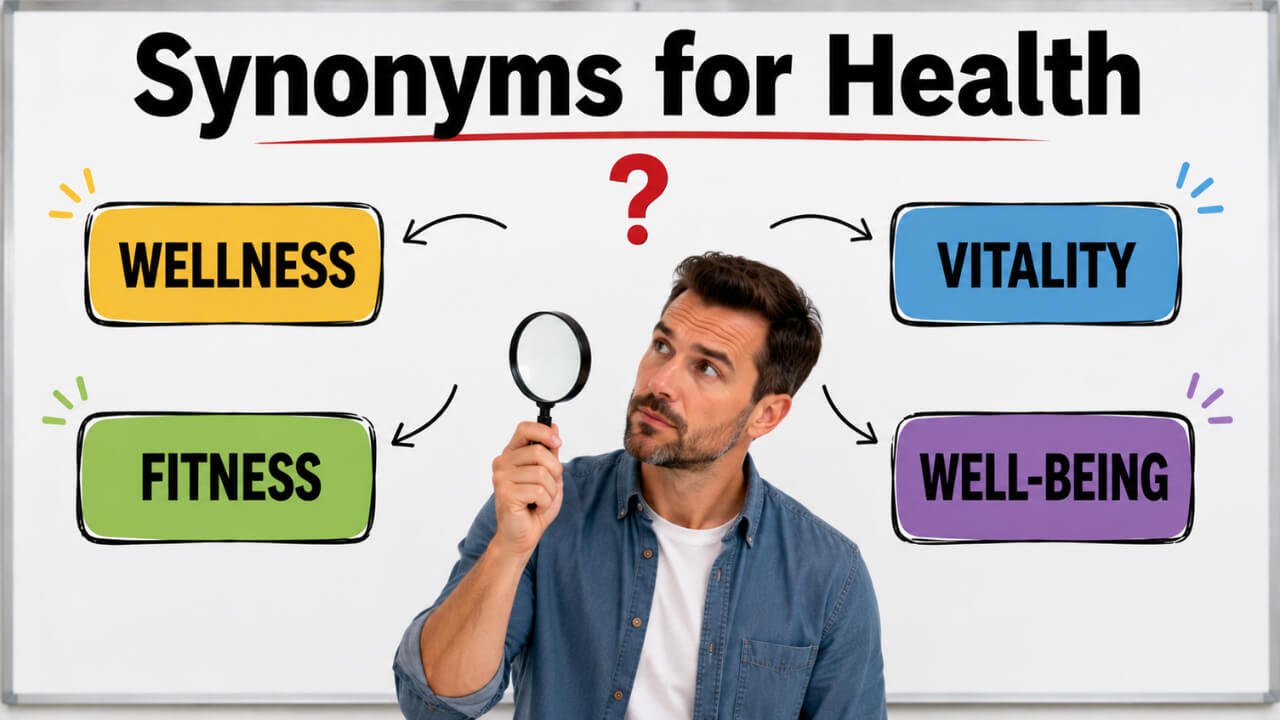
Quick Answer: The best synonyms for health include wellness, wellbeing, fitness, vitality, vigor, soundness, welfare, condition, resilience, and wholeness. Wellness is a broad choice for a healthy lifestyle, while wellbeing includes physical, mental, and emotional comfort. Fitness is best for physical ability and exercise. Vitality and vigor emphasize energy and strength. Soundness suits formal or technical writing, welfare focuses on safety and quality of life, and condition describes a person’s current medical or physical state.
Pronunciation and Word Details
Word: Health.
Pronunciation: /helθ/
Part of Speech: Noun.
Meaning: The condition of a person’s body and mind, especially whether they are well, strong, and free from illness.
US Pronunciation:
UK Pronunciation:
What Does “Health” Mean?
Health means the physical, mental, and emotional condition of a person. It is a noun commonly used to describe whether someone is well, strong, functioning properly, or affected by illness.
The word can refer to the general state of the body, the condition of the mind, or the overall quality of a person’s life. It can also describe the condition of organizations, relationships, communities, systems, and the environment.
Physical Meaning: Health describes how well the body is functioning.
Example: Regular movement can support physical health.
Mental Meaning: Health can refer to emotional stability, clear thinking, and psychological wellbeing.
Example: Rest is important for mental health.
Medical Meaning: Health may describe a person’s current medical condition.
Example: Her health improved after several weeks of recovery.
General Meaning: Health can describe the strength and condition of something that is not a person.
Example: The report examined the financial health of the organization.
The meaning of health therefore depends on whether the sentence discusses the body, mind, lifestyle, community, environment, or another system.
Meaning, Tone, and Context of “Health”
Health has a neutral and widely understood tone. It appears naturally in everyday conversation, education, medical discussions, academic writing, public communication, fitness guidance, psychology, nutrition, and professional reports.
The word can sound personal when someone discusses an illness or recovery. It can also sound formal and technical when used in research, reports, policies, or medical information.
Conversational Context: Health refers to how someone feels or whether the person is physically well.
Example: He has been taking better care of his health.
Formal Context: Health may describe a measurable physical, mental, social, or organizational condition.
Example: The study examined the health of older adults.
Medical Context: Health refers to symptoms, treatment, recovery, disease prevention, and bodily function.
Example: The nurse asked several questions about his health.
Lifestyle Context: Health describes habits connected to food, movement, sleep, stress, and personal care.
Example: A balanced routine can improve overall health.
Figurative Context: Health can describe the strength or stability of an organization, economy, relationship, or natural system.
Example: Trust is essential to the health of a working relationship.
Health is usually a positive word, but its emotional effect depends on the situation. Discussions of good health often feel encouraging, while references to declining health may feel serious or sensitive.
When and How to Use “Health”
For Physical Condition: Use health when describing how well the body functions.
Example: Daily activity may support heart health.
For Mental Condition: Use health when discussing thoughts, emotions, stress, and psychological stability.
Example: The school introduced programs that support mental health.
For Medical Information: Use health when referring to illness, symptoms, treatment, recovery, or medical history.
Example: The doctor asked about her recent health concerns.
For Lifestyle Choices: Use health when discussing habits that may influence physical or mental wellbeing.
Example: Sleep plays an important role in long term health.
For Public Welfare: Use health when discussing the wellbeing of groups, communities, or populations.
Example: Clean water is essential for community health.
For Organizational Strength: Use health when describing the stability or performance of a company, institution, or system.
Example: Strong leadership improved the financial health of the organization.
For Environmental Conditions: Use health when describing the condition of natural places or living systems.
Example: Researchers monitored the health of the forest.
For Relationships: Use health when discussing the quality, stability, or strength of a relationship.
Example: Honest communication supports the health of a friendship.
Best Synonyms for Health
Wellness: A balanced state of physical, mental, and emotional wellbeing.
Example: The program encourages wellness through movement, rest, and healthy habits.
Wellbeing: A state of feeling healthy, safe, comfortable, and satisfied.
Example: Flexible working hours improved employee wellbeing.
Fitness: Physical strength, endurance, and ability gained through activity.
Example: Walking regularly helped improve her fitness.
Vitality: Strong physical or mental energy.
Example: Proper rest restored his vitality.
Vigor: Active strength, energy, and enthusiasm.
Example: She returned to work with renewed vigor.
Soundness: The condition of being healthy, strong, stable, or free from serious weakness.
Example: The examination confirmed the soundness of his heart.
Welfare: The health, safety, comfort, and general wellbeing of a person or group.
Example: The new rules were created to protect public welfare.
Condition: A person’s current physical or medical state.
Example: His condition remained stable throughout the night.
Resilience: The ability to recover from illness, difficulty, stress, or change.
Example: Her emotional resilience helped her manage a difficult period.
Wholeness: A balanced state in which physical, emotional, and mental needs are considered together.
Example: The approach focuses on healing and personal wholeness.
50 Synonyms for Health with Short Meanings
- Wellness: A balanced state of physical and mental health.
- Wellbeing: The condition of feeling healthy, safe, and comfortable.
- Fitness: Physical strength, ability, and endurance.
- Vitality: Strong energy and liveliness.
- Vigor: Active physical or mental strength.
- Strength: The ability to function, resist pressure, or remain active.
- Soundness: A healthy, stable, or reliable condition.
- Robustness: Strong health and resistance to weakness.
- Healthiness: The quality of being healthy.
- Welfare: Health, safety, comfort, and general wellbeing.
- Wholeness: A complete and balanced state of body and mind.
- Balance: A stable condition among physical, mental, and emotional needs.
- Stability: A steady physical, emotional, or mental condition.
- Resilience: The ability to recover from illness or difficulty.
- Hardiness: The ability to remain strong in difficult conditions.
- Stamina: The ability to continue physical or mental effort.
- Energy: The power needed for activity and movement.
- Flourishing: A state of growing, developing, and living well.
- Prosperity: A healthy and successful condition, especially in a figurative sense.
- Condition: A person’s present physical or medical state.
- Constitution: The natural physical condition and strength of a person.
- Fettle: A person’s state of health or physical condition.
- Form: A person’s current level of health, ability, or performance.
- Tone: The healthy firmness and condition of muscles or the body.
- Sound Health: A strong and healthy physical condition.
- Good Health: A state of being physically or mentally well.
- Physical Wellbeing: The healthy condition of the body.
- Mental Wellbeing: A stable and healthy mental condition.
- Emotional Wellbeing: The ability to understand and manage emotions.
- Bodily Wellbeing: The comfort and proper functioning of the body.
- General Wellbeing: A broad state of health, safety, and satisfaction.
- Overall Wellness: Balanced health across several areas of life.
- Physical Fitness: Strength, endurance, flexibility, and bodily ability.
- Physical Condition: The present state of the body.
- Bodily Condition: The physical state of a person.
- Healthy State: A condition of being free from serious illness or weakness.
- Sound Condition: A stable and properly functioning state.
- Good Condition: A healthy, strong, or satisfactory state.
- Peak Condition: The best possible level of health or fitness.
- Quality of Life: A measure of comfort, health, ability, and satisfaction.
- Physical Soundness: The condition of being physically healthy and strong.
- Mental Soundness: The condition of thinking clearly and functioning mentally.
- Emotional Balance: A stable and controlled emotional state.
- Mental Stability: A steady condition of thought and emotion.
- Physical Strength: The body’s ability to perform and resist strain.
- Bodily Vigor: Strong physical energy and activity.
- Physical Resilience: The body’s ability to recover from strain or illness.
- Functional Fitness: The ability to perform normal daily activities safely.
- Holistic Wellness: Health that considers the body, mind, emotions, and lifestyle.
- Public Wellbeing: The health, safety, and quality of life of a community.
Read Also:
Synonyms for Snitch

Synonyms for Health by Context
When Health Means General Wellbeing
Wellness, wellbeing, wholeness, balance, flourishing, and quality of life describe a broad state of living well.
Example With Health: The program was designed to support student health.
Example With Wellbeing: The program was designed to support student wellbeing.
Wellness often focuses on healthy habits and prevention. Wellbeing is broader because it can include physical comfort, emotional security, relationships, safety, and life satisfaction.
Wholeness is useful when discussing the connection between the body, mind, emotions, and personal values.
When Health Means Physical Fitness
Fitness, stamina, strength, vigor, vitality, hardiness, and physical condition are useful when the sentence focuses on the body.
Example With Health: Regular swimming improved his health.
Example With Fitness: Regular swimming improved his fitness.
Fitness is best when referring to exercise ability, strength, flexibility, or endurance. Stamina emphasizes the ability to continue an activity, while vitality describes energy and liveliness.
When Health Means Medical Condition
Condition, constitution, bodily condition, physical soundness, and healthy state work well in medical or personal contexts.
Example With Health: Her health became more stable after treatment.
Example With Condition: Her condition became more stable after treatment.
Condition is more specific when describing a person’s current medical state. Constitution refers to someone’s natural physical strength and ability to resist illness.
When Health Means Mental or Emotional Stability
Mental wellbeing, emotional wellbeing, mental stability, emotional balance, and resilience describe psychological or emotional health.
Example With Health: The routine helped protect his mental health.
Example With Wellbeing: The routine helped protect his mental wellbeing.
Mental wellbeing is broad and positive. Mental stability emphasizes steadiness, while resilience focuses on recovering from stress, loss, or difficulty.
When Health Means Strength of a System
Soundness, stability, robustness, prosperity, condition, and resilience can describe organizations, economies, relationships, or natural systems.
Example With Health: The report reviewed the health of the local economy.
Example With Stability: The report reviewed the stability of the local economy.
Soundness is useful in formal reports. Stability focuses on consistency, while resilience describes the ability of a system to recover after disruption.
Another Word for Health
Wellbeing is one of the best general replacements for health because it includes physical, mental, emotional, and social conditions. However, the best alternative depends on what the sentence is describing.
Use fitness for exercise and physical ability, condition for a current medical state, vitality for energy, and welfare for the safety and wellbeing of a person or group.
Original: The course teaches students how to protect their health.
Better Option: The course teaches students how to protect their wellbeing.
Original: Exercise improved his health significantly.
Better Option: Exercise improved his physical fitness significantly.
Original: The patient’s health remained stable.
Better Option: The patient’s condition remained stable.
Original: The new policy aims to improve the health of the community.
Better Option: The new policy aims to improve the welfare of the community.
When Not to Use “Health”
Avoid health when a more precise synonym communicates the intended meaning more clearly.
Weak: Running improved her health for the competition.
Better: Running improved her fitness for the competition.
Fitness is more specific when discussing physical performance and exercise.
Weak: The patient’s health was described as serious.
Better: The patient’s condition was described as serious.
Condition sounds more natural when referring to a current medical situation.
Weak: The company is studying the health of its income.
Better: The company is studying the stability of its income.
Stability is clearer when discussing consistency in financial results.
Weak: The counselor helped improve his health after a stressful experience.
Better: The counselor helped improve his emotional wellbeing after a stressful experience.
Emotional wellbeing identifies the exact area being discussed.
Health can also become vague when it is used without explaining whether it refers to physical, mental, emotional, social, environmental, or financial conditions.
Weak: The change was good for health.
Better: The change supported the mental wellbeing of employees.
Use a precise synonym when readers need to understand exactly what kind of health is involved.
Words Commonly Confused With Health
Health vs Wellness: Health is a person’s physical or mental condition. Wellness often describes an active process of building healthy habits and maintaining balance.
Health vs Wellbeing: Health commonly focuses on the body and mind. Wellbeing can also include comfort, safety, relationships, satisfaction, and quality of life.
Health vs Fitness: Health is broader than fitness. Fitness mainly concerns physical strength, endurance, flexibility, and exercise ability.
Health vs Welfare: Health describes physical or mental condition. Welfare includes health, safety, protection, comfort, and access to basic needs.
Health vs Condition: Health describes overall wellness, while condition often refers to a person’s current medical or physical state.
Health vs Vitality: Health means being well or functioning properly. Vitality emphasizes energy, liveliness, and enthusiasm.
Health vs Hygiene: Health is the condition of the body or mind. Hygiene refers to practices that help maintain cleanliness and prevent illness.
Health vs Medicine: Health is a state or condition. Medicine involves the study, prevention, diagnosis, and treatment of illness.
Health vs Healing: Health is the state of being well. Healing is the process of recovering from injury, illness, or emotional pain.
Which Synonym Should You Choose?
Choose wellness when discussing healthy habits, prevention, lifestyle choices, and personal balance.
Choose wellbeing when describing physical, mental, emotional, or social comfort in a broad way.
Choose fitness when writing about exercise, physical performance, strength, flexibility, or endurance.
Choose vitality when emphasizing energy, liveliness, enthusiasm, or active strength.
Choose vigor when describing powerful physical or mental energy.
Choose condition when referring to a person’s current medical or physical state.
Choose soundness in formal reports when describing stability, strength, or proper functioning.
Choose welfare when discussing the safety, health, protection, and comfort of people or animals.
Choose resilience when focusing on recovery from illness, pressure, emotional stress, or major change.
Choose wholeness when discussing a complete approach that connects the body, mind, emotions, and personal life.
Choose quality of life when evaluating comfort, independence, mobility, health, and daily satisfaction.
Choose stability when describing the health of an organization, economy, relationship, or system.
Real Life Examples of “Health” in Sentences
Original: Regular sleep is important for your health.
Better Option: Regular sleep is important for your overall wellbeing.
Original: Walking every morning improved her health.
Better Option: Walking every morning improved her physical fitness.
Original: The doctor carefully monitored his health.
Better Option: The doctor carefully monitored his condition.
Original: The holiday helped restore her health and energy.
Better Option: The holiday helped restore her vitality and energy.
Original: The school created a plan to support student health.
Better Option: The school created a plan to support student wellness.
Original: Strong communication improved the health of their relationship.
Better Option: Strong communication improved the stability of their relationship.
Original: The report examined the health of the local economy.
Better Option: The report examined the soundness of the local economy.
Original: Fresh food can contribute to better health.
Better Option: Fresh food can contribute to better physical wellbeing.
Original: The support program protected the health of vulnerable families.
Better Option: The support program protected the welfare of vulnerable families.
Original: Her health allowed her to recover quickly from the setback.
Better Option: Her resilience allowed her to recover quickly from the setback.
Synonym Groups and Usage Differences
General Wellness Group
Wellness, wellbeing, wholeness, balance, and flourishing describe a broad and positive state of living well.
Wellness often relates to habits and lifestyle. Wellbeing includes comfort and satisfaction, while flourishing suggests growth, purpose, and positive development.
Example: The retreat focused on relaxation, balance, and emotional wellbeing.
Physical Fitness Group
Fitness, strength, stamina, vigor, vitality, tone, and hardiness focus on physical ability and energy.
Fitness is the broadest word in this group. Stamina refers to endurance, strength refers to physical power, and tone refers to the condition and firmness of muscles.
Example: Cycling helped improve her strength and stamina.
Medical Condition Group
Condition, constitution, bodily condition, sound health, and physical soundness describe a person’s physical or medical state.
Condition is common in medical updates. Constitution usually refers to a person’s natural bodily strength.
Example: The patient was in good condition after the procedure.
Mental Wellness Group
Mental wellbeing, emotional wellbeing, emotional balance, mental stability, and resilience describe mental and emotional health.
Emotional balance focuses on managing feelings. Mental stability suggests steadiness, while resilience describes recovery after pressure or hardship.
Example: Rest and support helped her regain emotional balance.
Public Welfare Group
Welfare, public wellbeing, quality of life, general wellbeing, and prosperity describe the health and comfort of communities or populations.
Welfare includes safety and protection. Quality of life considers comfort, independence, access, and satisfaction.
Example: Safe housing can improve public wellbeing and quality of life.
System Strength Group
Soundness, stability, robustness, resilience, and good condition describe the health of systems, organizations, relationships, and economies.
Soundness suggests reliability. Robustness emphasizes strength, while resilience focuses on the ability to recover.
Example: Careful planning improved the financial stability of the organization.
Antonyms of Health
The opposite of health depends on whether the sentence refers to physical wellness, mental stability, strength, or the condition of a system.
Illness: A condition in which the body or mind is not well.
Sickness: The state of being physically unwell.
Disease: A disorder that affects the body or mind.
Infirmity: Physical weakness, especially because of age or illness.
Weakness: A lack of physical strength or energy.
Frailty: Physical delicacy and reduced resistance to illness or injury.
Poor Condition: An unhealthy, weak, or damaged state.
Unwellness: The condition of not feeling physically or mentally well.
Instability: A lack of steadiness, balance, or reliable function.
Distress: Serious physical, emotional, or mental discomfort.
Decline: A gradual reduction in health, strength, or quality.
Deterioration: The process of becoming weaker, less healthy, or less effective.
Comparison: Health vs Related Words
Health vs Wellness
Health describes a person’s physical or mental condition. Wellness often describes the habits and choices used to maintain or improve that condition.
Example With Health: Good sleep supports physical health.
Example With Wellness: Her wellness routine includes sleep, movement, and relaxation.
Health vs Wellbeing
Health commonly refers to the condition of the body and mind. Wellbeing is broader and can include safety, comfort, satisfaction, relationships, and emotional security.
Example With Health: The treatment improved his physical health.
Example With Wellbeing: Support from his family improved his overall wellbeing.
Health vs Fitness
Health includes physical, mental, and emotional conditions. Fitness mainly refers to physical ability, strength, flexibility, and endurance.
Example With Health: A balanced diet can support good health.
Example With Fitness: Regular training can improve physical fitness.
Health vs Vitality
Health means being well and functioning properly. Vitality highlights energy, liveliness, and enthusiasm.
Example With Health: Her health improved after a period of rest.
Example With Vitality: She returned with renewed vitality.
Health vs Condition
Health is a broad description of wellness. Condition often describes a specific physical or medical state at a particular time.
Example With Health: His health has improved over the past year.
Example With Condition: His condition is stable today.
Health vs Welfare
Health concerns physical and mental condition. Welfare also includes protection, safety, comfort, and basic needs.
Example With Health: The clinic supports children’s health.
Example With Welfare: The organization protects the welfare of children.
Health vs Resilience
Health describes a state of wellness. Resilience describes the ability to recover from stress, illness, or difficulty.
Example With Health: Rest helped protect her mental health.
Example With Resilience: Support helped strengthen her emotional resilience.
Health vs Soundness
Health is common in both conversation and formal writing. Soundness is more formal and often describes strength, stability, or correct functioning.
Example With Health: The inspection assessed the health of the system.
Example With Soundness: The inspection assessed the structural soundness of the system.
Common Phrases and Expressions With “Health”
Good Health: A condition of being physically or mentally well.
Poor Health: A condition involving illness, weakness, or reduced function.
Physical Health: The condition and functioning of the body.
Mental Health: Emotional, psychological, and cognitive wellbeing.
Emotional Health: The ability to understand, express, and manage emotions.
Public Health: The protection and improvement of health within communities.
Overall Health: The combined condition of the body, mind, and lifestyle.
Health Condition: A medical problem or state that affects the body or mind.
Health Concern: A possible or existing issue related to physical or mental wellbeing.
Health Benefits: Positive effects that support physical or mental wellness.
Health Care: Services and actions used to prevent, manage, or treat illness.
Health and Safety: Practices intended to protect people from illness, injury, and danger.
Common Mistakes to Avoid
Repeating Health Too Often: Using health several times in the same paragraph can make writing sound vague or repetitive. Replace some uses with wellbeing, wellness, fitness, condition, or welfare.
Choosing Fitness for Every Context: Fitness mainly concerns physical ability. It should not replace health when the sentence discusses emotions, medical treatment, or community welfare.
Confusing Wellness With Medical Health: Wellness often focuses on habits and balance. It may sound too broad when describing a serious medical condition.
Using Condition Without Context: Condition can refer to many states. Explain whether it is physical, medical, mental, or environmental when necessary.
Confusing Health and Hygiene: Hygiene means cleanliness practices. It is not a direct replacement for health.
Using Welfare Only for Physical Health: Welfare includes safety, protection, comfort, and basic needs in addition to health.
Writing Vague Claims: Statements such as “This is good for health” may lack useful detail. Explain whether something supports physical fitness, mental wellbeing, sleep, energy, or another area.
Choosing an Unnatural Phrase: Do not replace health with a synonym only because the words have similar meanings. The replacement must fit the sentence naturally.
Incorrect: The doctor checked her wellness during the emergency.
Correct: The doctor checked her condition during the emergency.
Ignoring Figurative Meaning: Health can describe organizations, economies, relationships, and ecosystems. In these contexts, stability, soundness, strength, or resilience may be more precise.
Conclusion
The strongest synonyms for health depend on the type of wellbeing being described. Wellness and wellbeing are useful broad alternatives, while fitness suits physical ability and vitality emphasizes energy. Condition is best for medical updates, welfare includes safety and comfort, and soundness works well in formal reports. Resilience highlights recovery, while stability can describe relationships, organizations, or systems. Choosing the right synonym makes writing clearer, more accurate, and better suited to its specific context.
FAQs About Synonyms for Health
What is the best synonym for health?
Wellbeing is one of the best general synonyms because it can include physical, mental, emotional, and social conditions.
Is wellness another word for health?
Yes. Wellness is a close alternative, especially when discussing healthy habits, prevention, balance, and lifestyle choices.
What is a formal synonym for health?
Soundness, wellbeing, welfare, physical condition, and physical soundness are useful formal alternatives.
What synonym for health is best for exercise?
Fitness is the best choice when discussing physical performance, strength, endurance, flexibility, or exercise ability.
What is the difference between health and wellbeing?
Health usually focuses on physical and mental condition. Wellbeing can also include safety, comfort, satisfaction, relationships, and quality of life.
Can condition replace health?
Condition can replace health when referring to a person’s current physical or medical state. It is especially natural in medical updates.
What is the opposite of health?
Common opposites include illness, sickness, disease, weakness, frailty, poor condition, and physical decline.
