
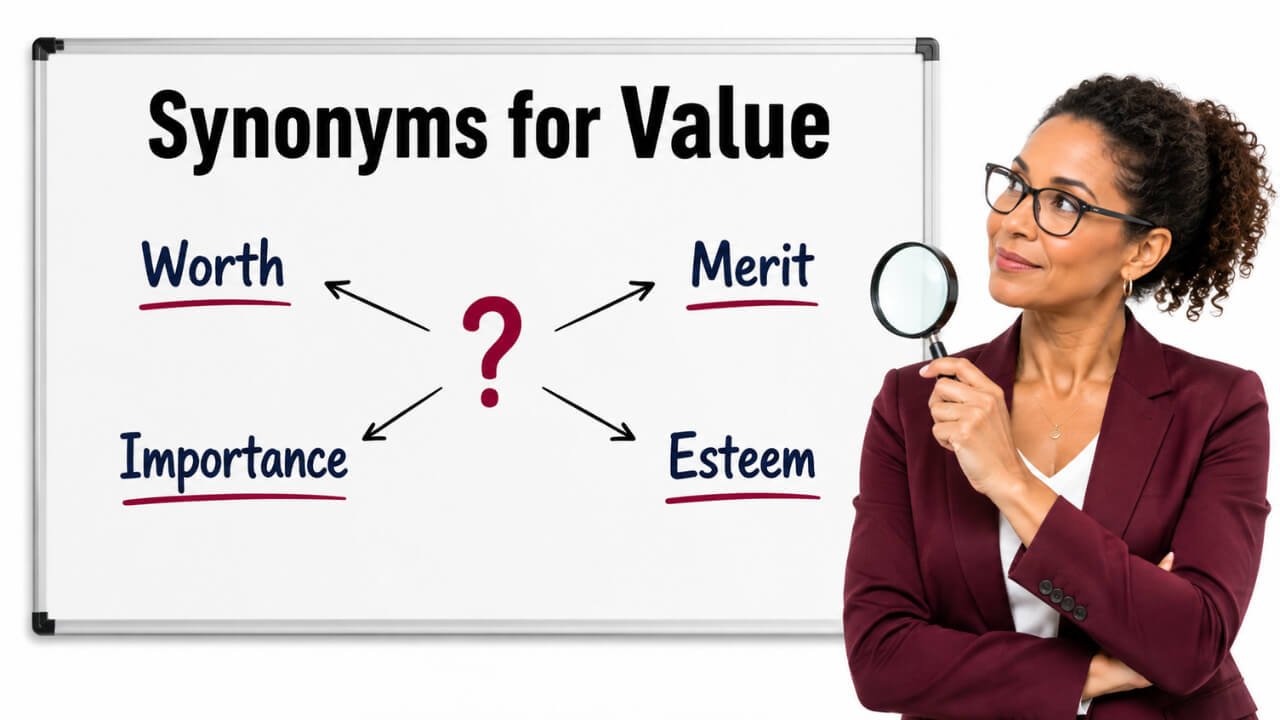
Quick Answer: Synonyms for value include worth, importance, merit, benefit, usefulness, significance, price, cost, esteem, and appreciate. Use worth when talking about what something deserves or is equal to, importance for meaning or priority, merit for quality, benefit for advantage, usefulness for practical function, price for money, esteem for respect, and appreciate when value is used as a verb.
Pronunciation and Word Details
Word: Value.
Pronunciation: /ˈvæljuː/
Part of Speech: Noun and verb.
Meaning: Value means the worth, importance, usefulness, price, or respect given to someone or something.
US Pronunciation:
UK Pronunciation:
What Does “Value” Mean?
Value means the worth, importance, usefulness, or price of something.
The word value can be a noun or a verb. As a noun, it refers to how much something matters, how useful it is, how much money it costs, or how strongly someone respects it. As a verb, it means to consider something important, useful, or worthy of care.
In a sentence, value can describe money, meaning, usefulness, principles, personal respect, or judgment. For example, a product can have value, a lesson can have value, a person can value honesty, and a business can value customer trust.
Meaning, Tone, and Context of “Value”
Value is a neutral and flexible word. It can sound formal, professional, academic, emotional, or conversational depending on context. In business, value often means usefulness, benefit, or return. In money related writing, it means price or worth. In personal writing, it can mean respect, care, or importance.
The word is common in essays, reports, product descriptions, everyday speech, personal beliefs, economics, education, and workplace communication. It is not usually too casual or too formal. However, more exact synonyms can make writing clearer when value has a specific meaning.
When and How to Use “Value”
For Worth: Use value when describing how much something is worth in money, quality, or importance.
Example: The painting has great value because it is rare and well preserved.
For Importance: Use value when something matters deeply or deserves attention.
Example: Education has lasting value in personal and professional life.
For Usefulness: Use value when something gives practical help or benefit.
Example: The guide offers real value to beginners.
For Respect: Use value when someone is admired, appreciated, or treated as important.
Example: Good leaders value honest feedback from their teams.
For Principles: Use value when talking about beliefs, standards, or ideas people care about.
Example: Kindness is a value that shapes strong relationships.
For Price: Use value when discussing cost, market worth, or financial judgment.
Example: The house increased in value over the past year.
Best Synonyms for Value
Worth: The quality or amount something deserves, costs, or represents.
Example: The antique table has great worth because of its age and condition.
Importance: The degree to which something matters.
Example: The importance of clean water cannot be ignored.
Merit: The good quality or deserving nature of something.
Example: Her proposal has merit and should be considered.
Benefit: A helpful result or advantage.
Example: Daily reading has clear benefits for vocabulary growth.
Usefulness: The practical help or function something provides.
Example: The usefulness of this tool becomes clear during research.
Significance: Deep meaning, importance, or impact.
Example: The discovery has great significance for medical study.
Price: The amount of money needed to buy something.
Example: The price of the laptop was lower than expected.
Cost: The money, effort, or loss required for something.
Example: The cost of the project was higher than planned.
Esteem: Respect or admiration for someone or something.
Example: The teacher was held in high esteem by her students.
Appreciate: To recognize the worth or importance of something.
Example: I appreciate the value of your advice.
50 Synonyms for Value with Short Meanings
- Worth: Deserved importance, usefulness, or price.
- Importance: The quality of mattering.
- Merit: Good quality that deserves attention.
- Benefit: A helpful result or advantage.
- Usefulness: Practical ability to help.
- Significance: Meaning, importance, or impact.
- Price: Money needed to buy something.
- Cost: Money, effort, or sacrifice required.
- Esteem: Respect and high regard.
- Appreciation: Recognition of worth or quality.
- Utility: Practical usefulness or function.
- Advantage: A helpful or favorable quality.
- Gain: Something useful or positive received.
- Profit: Financial or practical benefit.
- Meaning: Importance or deeper sense.
- Purpose: Reason or useful aim.
- Relevance: Connection and importance to a topic.
- Weight: Seriousness or influence.
- Priority: Greater importance than other things.
- Impact: Strong effect or influence.
- Influence: Power to affect people or results.
- Quality: Degree of excellence or usefulness.
- Excellence: Very high quality.
- Virtue: Moral goodness or strong quality.
- Asset: Something useful or valuable.
- Treasure: Something highly valued or loved.
- Gem: A person or thing of special worth.
- Prize: Something considered valuable or desirable.
- Richness: Depth, quality, or abundance.
- Substance: Real meaning, value, or importance.
- Use: Practical purpose or function.
- Helpfulness: Quality of giving useful support.
- Service: Useful action or assistance.
- Return: Benefit gained from effort or money.
- Reward: Benefit received for effort.
- Meaningfulness: Quality of having deep value.
- Respect: Admiration or serious regard.
- Regard: Attention, respect, or consideration.
- Honor: High respect or moral worth.
- Dignity: Serious worth and respect.
- Desirability: Quality of being wanted or valued.
- Rarity: Uncommon quality that increases worth.
- Premium: Higher value or special quality.
- Market Price: Current selling value.
- Face Value: Stated or apparent worth.
- Estimated Worth: Judged value based on opinion or calculation.
- Appraisal: Formal judgment of worth.
- Assessment: Careful judgment of value or importance.
- Valuation: Calculation of financial worth.
- Appraise: To judge or estimate value.
Read Also:
Synonyms for Inspire

Synonyms for Value by Context
When Value Means Worth
Use these synonyms when value refers to what something is worth in money, quality, or importance.
Worth: The house has increased in worth over time.
Price: The price of the watch is too high for its condition.
Cost: The cost of repairs was more than expected.
Valuation: The valuation of the land changed after development.
Appraisal: The appraisal showed that the ring was rare.
When Value Means Importance
Use these words when value means something matters or deserves attention.
Importance: The importance of honesty appears in every strong relationship.
Significance: The event has lasting significance for the community.
Weight: Her opinion carries weight in the final decision.
Priority: Safety should be the main priority.
Relevance: The data has relevance to the research question.
When Value Means Usefulness
Use these alternatives when value refers to practical help, benefit, or function.
Usefulness: The usefulness of the checklist is clear during planning.
Utility: The tool has strong utility for daily tasks.
Benefit: The main benefit is faster communication.
Advantage: Experience gives her an advantage in the interview.
Helpfulness: The helpfulness of the guide makes it ideal for beginners.
When Value Means Respect
Use these synonyms when value means admiration, respect, or emotional importance.
Esteem: The doctor is held in high esteem by patients.
Respect: A healthy workplace is built on respect.
Regard: He has great regard for his mentor.
Honor: The award shows honor for years of service.
Appreciation: Her appreciation for kindness is clear in her actions.
When Value Means Principles
Use these words when value refers to beliefs, morals, or standards.
Principle: Fairness is a guiding principle in the classroom.
Virtue: Patience is a virtue in difficult conversations.
Standard: Quality is an important standard for the company.
Belief: Her belief in honesty shapes her choices.
Ideal: Freedom is an ideal many people protect.
Another Word for Value
Another word for value is worth. It is the best single replacement when you mean how much something matters, deserves, or is equal to. However, the best alternative depends on context. Use importance for priority, benefit for usefulness, price for money, and esteem for respect.
Original: This course has great value for new writers.
Better Option: This course has great usefulness for new writers.
Original: The value of patience is easy to forget.
Better Option: The importance of patience is easy to forget.
Original: They value honest communication.
Better Option: They appreciate honest communication.
Original: The value of the car dropped quickly.
Better Option: The price of the car dropped quickly.
When Not to Use “Value”
Do not use value when a more exact word would make the meaning clearer. In formal writing, value can sound vague if you do not explain whether you mean worth, price, benefit, importance, or respect. In money related writing, price, cost, or valuation may be more accurate. In emotional writing, appreciate, respect, or treasure may sound warmer.
Weak: The report shows the value of the plan.
Better: The report shows the benefits of the plan.
Weak: I value the number at 500 dollars.
Better: I estimate the price at 500 dollars.
Weak: She has value in the office.
Better: She is an important member of the office.
Weak: The value of the rule is strong.
Better: The importance of the rule is clear.
Words Commonly Confused With Value
Value vs Worth: Value can mean worth, usefulness, importance, or respect. Worth usually focuses on deserved importance or amount.
Value vs Price: Value is broader. Price only refers to the amount of money something costs.
Value vs Cost: Cost means what you pay, lose, or spend. Value means what something gives, means, or is worth.
Value vs Benefit: Benefit means a helpful result. Value can include benefit, but it can also mean price, meaning, or respect.
Value vs Merit: Merit means good quality that deserves praise or attention. Value can be practical, financial, emotional, or moral.
Value vs Significance: Significance means importance or meaning. Value can mean importance, but it can also refer to money, use, or appreciation.
Value vs Utility: Utility means practical usefulness. Value can include usefulness but is not limited to practical function.
Which Synonym Should You Choose?
Choose worth when writing about deserved importance, quality, or financial amount.
Choose importance when writing about something that matters or needs attention.
Choose merit when writing about quality, strength, or reasons something deserves approval.
Choose benefit when writing about a helpful result, advantage, or positive effect.
Choose usefulness when writing about practical help, function, or purpose.
Choose significance when writing about deeper meaning, influence, or serious importance.
Choose price when writing about the amount of money paid for something.
Choose cost when writing about money, effort, loss, or sacrifice.
Choose esteem when writing about respect, admiration, or high regard.
Choose appreciate when value is a verb and means to recognize importance or worth.
Real Life Examples of “Value” in Sentences
Original: I value your advice.
Better Option: I appreciate your advice.
Original: The value of this book is clear to students.
Better Option: The usefulness of this book is clear to students.
Original: The value of the old watch increased.
Better Option: The worth of the old watch increased.
Original: We need to understand the value of teamwork.
Better Option: We need to understand the importance of teamwork.
Original: The product gives good value for the price.
Better Option: The product gives good benefits for the price.
Original: She values honesty in every relationship.
Better Option: She respects honesty in every relationship.
Original: The value of the data is high.
Better Option: The significance of the data is high.
Original: The value of the service depends on customer needs.
Better Option: The usefulness of the service depends on customer needs.
Original: They added value to the project.
Better Option: They added merit to the project.
Original: The value of the property changed last year.
Better Option: The valuation of the property changed last year.
Synonym Groups and Usage Differences
Worth Group
This group includes worth, price, cost, valuation, appraisal, and market price. Use these words when value refers to money, amount, or financial judgment.
Example: The appraisal confirmed the value of the house.
Importance Group
This group includes importance, significance, weight, priority, and relevance. Use these words when value means something matters or affects a decision.
Example: The significance of the result became clear after the study.
Usefulness Group
This group includes usefulness, utility, benefit, advantage, helpfulness, and service. Use these words when value means practical help or positive function.
Example: The utility of the tool makes it useful for daily work.
Respect Group
This group includes esteem, respect, regard, honor, appreciation, and dignity. Use these words when value refers to how someone or something is admired or treated.
Example: Her honesty earned the respect of her colleagues.
Quality Group
This group includes merit, quality, excellence, virtue, substance, and richness. Use these words when value refers to strong qualities or meaningful depth.
Example: The essay has merit because its argument is clear and thoughtful.
Antonyms of Value
Worthlessness: Lack of worth or usefulness.
Uselessness: No practical help or function.
Insignificance: Lack of importance or meaning.
Unimportance: Low priority or little need for attention.
Costliness: High expense without equal benefit.
Loss: Something negative instead of a gain.
Disadvantage: A harmful or unfavorable quality.
Neglect: Lack of care, respect, or attention.
Disrespect: Lack of regard or honor.
Waste: Something used with little or no benefit.
Inferiority: Lower quality or weaker merit.
Triviality: Lack of seriousness or importance.
Comparison: Value vs Related Words
Value vs Worth
Value is broader than worth. It can refer to money, usefulness, importance, respect, or beliefs. Worth usually focuses on what something deserves or is equal to.
Example With Value: The value of clean water is impossible to ignore.
Example With Worth: The worth of the painting increased after the artist became famous.
Value vs Price
Value can include meaning, usefulness, or respect. Price only means the amount of money paid for something.
Example With Value: The value of the lesson stayed with her for years.
Example With Price: The price of the lesson was affordable.
Value vs Cost
Cost means what must be paid, spent, or sacrificed. Value means what is gained, appreciated, or considered important.
Example With Value: The program offers great value to beginners.
Example With Cost: The cost of the program is low.
Value vs Benefit
Benefit means a positive result or advantage. Value can mean benefit, but it can also mean worth, importance, or price.
Example With Value: The value of the training depends on the learner’s goals.
Example With Benefit: The main benefit of the training is better confidence.
Value vs Significance
Significance focuses on meaning or importance. Value can include significance, but it can also describe financial worth or practical usefulness.
Example With Value: The value of the tool is its simple design.
Example With Significance: The significance of the speech was felt across the room.
Value vs Merit
Merit means quality that deserves approval. Value is wider and can refer to usefulness, money, meaning, or respect.
Example With Value: The idea has value for small businesses.
Example With Merit: The idea has merit because it solves a real problem.
Common Phrases and Expressions With Value
Add Value: To make something more useful, important, or beneficial.
Great Value: Strong worth or usefulness for the cost.
Market Value: The price something can sell for in the market.
Face Value: The stated or surface worth of something.
Core Values: Main beliefs or principles that guide behavior.
Value for Money: Good quality or benefit compared with the price.
High Value: Great importance, usefulness, or financial worth.
Low Value: Little importance, usefulness, or financial worth.
Value Judgment: An opinion based on personal beliefs or standards.
Moral Value: A principle connected to right and wrong behavior.
Common Mistakes to Avoid
A common mistake is using value too often when a more exact synonym would be clearer. If you mean money, use price, cost, worth, or valuation. If you mean usefulness, use benefit, utility, or usefulness. If you mean importance, use significance, priority, or importance.
Another mistake is confusing value with cost. Cost is what you pay or give up. Value is what you receive, gain, or consider important. Writers also weaken sentences by saying something has value without explaining what kind of value it has. Clear writing names the exact type of value.
Conclusion
Synonyms for value help you write with more accuracy, depth, and natural expression. Use worth for general importance or amount, price for money, benefit for positive results, usefulness for practical help, significance for deeper meaning, and esteem for respect. When value is a verb, appreciate is often the clearest choice. The best synonym depends on whether you mean money, meaning, usefulness, importance, quality, principles, or respect.
FAQs About Synonyms for Value
What are the best synonyms for value?
The best synonyms for value are worth, importance, merit, benefit, usefulness, significance, price, cost, esteem, and appreciate.
What is another word for value in writing?
Another word for value in writing is worth. Use importance, benefit, or significance when you need a more specific meaning.
What is a formal synonym for value?
A formal synonym for value is significance, merit, valuation, or importance, depending on the sentence.
What is a synonym for value as a verb?
A good synonym for value as a verb is appreciate. Other options include respect, esteem, treasure, and prize.
Is price the same as value?
Price and value are not always the same. Price means the amount of money paid, while value can mean usefulness, importance, worth, or benefit.
What is the best synonym for value in business writing?
In business writing, benefit, usefulness, return, advantage, and worth are often strong synonyms for value.
What is the opposite of value?
The opposite of value can be worthlessness, uselessness, insignificance, loss, disadvantage, neglect, or waste, depending on the context.
