
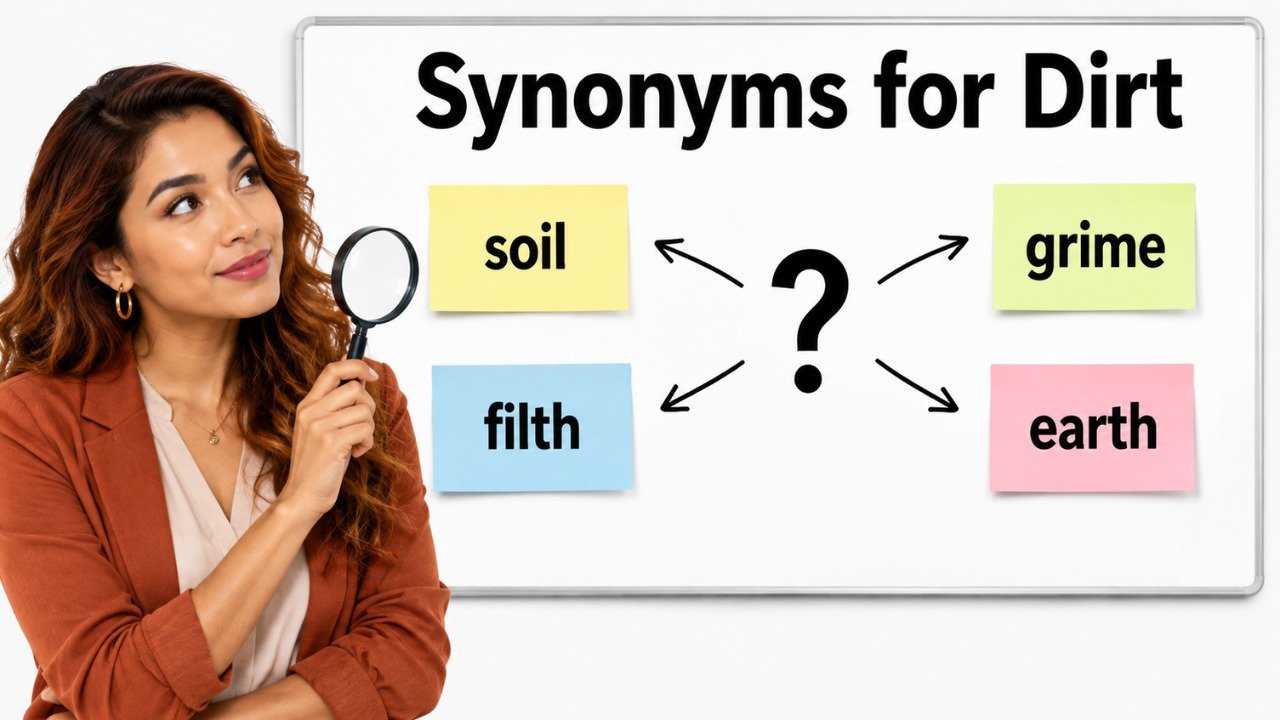
Quick Answer: The best synonyms for dirt include soil, earth, mud, dust, grime, filth, muck, gunk, residue, and scandal. Use soil or earth for the natural material in the ground. Choose mud when soil is wet, and dust for fine, dry particles. Grime and gunk describe stubborn unclean matter, while filth is a stronger and more emotional word. Muck works for wet or unpleasant dirt. Residue suits formal cleaning or technical contexts. Scandal can replace dirt when the word means damaging information about someone.
Pronunciation and Word Details
Word: Dirt.
Pronunciation: /dɜːrt/
Part of Speech: Noun, with occasional verb use.
Meaning: Soil, unclean matter, or damaging information about a person.
US Pronunciation:
UK Pronunciation:
What Does “Dirt” Mean?
Dirt means soil, unclean material, or unwanted matter found on a surface, object, person, or place.
As a noun, dirt commonly refers to the loose material that forms the ground. A gardener may dig in the dirt, while a child may come indoors with dirt on their shoes.
Dirt can also mean dust, grease, grime, mud, or another substance that makes something unclean. In this sense, the exact meaning depends on the substance and where it appears.
The word also has an informal figurative meaning. Dirt can refer to embarrassing, damaging, secret, or incriminating information about a person or organization.
Ground Context: The workers moved several piles of dirt.
Cleaning Context: There was dirt around the edge of the window.
Figurative Context: The reporter tried to uncover dirt about the candidate.
Dirt is often an uncountable noun. People normally say “some dirt” rather than “a dirt.” However, the plural form “dirts” may appear in technical discussions about different soil materials, although it is uncommon in everyday English.
Meaning, Tone, and Context of “Dirt”
Dirt is a common, neutral, and conversational word. It is easy to understand and works naturally in everyday speech.
When dirt means soil or ground material, its tone is usually neutral. However, gardeners, farmers, scientists, and landscape professionals may prefer soil because it is more precise and respectful of the material being discussed.
When dirt means unclean matter, the tone can range from neutral to negative. A small amount of dirt may simply need cleaning. Filth, however, suggests something extremely dirty, unhealthy, or disgusting.
In informal conversation, dirt can describe private or damaging information. This use is often dramatic, judgmental, or sensational. Formal writing should normally use a more specific term such as allegations, evidence, misconduct, or damaging information.
Neutral Use: Dirt covered the garden path.
Casual Use: Wipe the dirt off your shoes.
Strong Use: The room was filled with filth.
Formal Use: The inspection found contamination on the equipment.
Figurative Use: They were searching for damaging information about their rival.
When and How to Use “Dirt”
For Soil or Ground Material
Use dirt when speaking generally about loose material on the ground. Soil is often better in gardening, farming, environmental, and scientific contexts.
Example: The children built a small hill from dirt.
For Unclean Surfaces
Use dirt for unwanted matter that makes a surface look or feel unclean.
Example: A damp cloth removed the dirt from the table.
For Muddy Material
Dirt can describe soil that has become messy, especially when the exact moisture level is not important. Use mud when the material is clearly wet.
Example: Dirt from the path covered the bottom of his trousers.
For Fine Particles
Use dirt as a general word for small particles. Choose dust, grit, soot, or sediment when the substance can be identified more precisely.
Example: Dirt collected in the corners of the room.
For Cleaning Instructions
Dirt works well in simple instructions for homes, clothing, vehicles, tools, and everyday objects.
Example: Rinse the brush to remove any remaining dirt.
For Damaging Information
In casual speech, dirt can mean private, embarrassing, or harmful information.
Example: The journalist refused to publish unverified dirt about the actor.
For Insults or Negative Treatment
Dirt appears in expressions that describe worthlessness or unfair treatment.
Example: The supervisor treated the temporary workers like dirt.
Best Synonyms for Dirt
Soil: The natural upper layer of the ground in which plants grow.
Example: The soil in this garden is rich and dark.
Earth: Natural ground material, especially when viewed as part of the land.
Example: The roots were firmly planted in the earth.
Mud: Wet soil that has become soft and sticky.
Example: Thick mud covered the walking trail.
Dust: Fine, dry particles that settle on surfaces or float in the air.
Example: A thin layer of dust covered the shelves.
Grime: Dirt that collects gradually and is often difficult to remove.
Example: Soap helped remove the grime from the oven door.
Filth: Extremely unpleasant, unhealthy, or disgusting dirt.
Example: The abandoned building was filled with filth.
Muck: Wet, sticky, or unpleasant dirt and waste material.
Example: His boots were covered in muck.
Gunk: Thick, sticky, and unpleasant dirt or residue.
Example: The mechanic cleaned the gunk from the engine part.
Residue: Material that remains after a process, substance, or cleaning attempt.
Example: The solution left a powdery residue on the glass.
Scandal: Damaging information or conduct that causes public embarrassment.
Example: The investigation uncovered a serious scandal.
50 Synonyms for Dirt with Short Meanings
- Soil: Natural material in which plants grow.
- Earth: The ground or natural land material.
- Ground: The solid surface of the land.
- Topsoil: The upper layer of soil.
- Loam: Rich soil containing balanced natural materials.
- Clay: Heavy soil made of very fine particles.
- Sand: Loose grains of rock or mineral material.
- Silt: Fine material carried and deposited by water.
- Dust: Fine, dry particles on a surface.
- Grit: Small, rough particles of sand or stone.
- Mud: Wet and soft soil.
- Muck: Wet, sticky, and unpleasant dirt.
- Mire: Deep, wet, and difficult ground.
- Sludge: Thick, wet, and dirty material.
- Ooze: Soft mud or thick liquid matter.
- Grime: Dirt that has collected over time.
- Filth: Extremely unpleasant or unhealthy dirt.
- Gunk: Thick, sticky dirt or residue.
- Crud: Unpleasant dirt or unwanted material.
- Scum: A dirty layer on a liquid or surface.
- Soot: Black powder produced by smoke.
- Grease: Oily dirt that sticks to surfaces.
- Slime: Wet, slippery, and unpleasant matter.
- Residue: Material remaining after a process.
- Sediment: Particles that settle at the bottom of a liquid.
- Debris: Scattered pieces of unwanted material.
- Detritus: Waste material or broken remains.
- Impurity: An unwanted substance within another material.
- Contamination: Harmful or unwanted matter in a substance.
- Pollution: Harmful material introduced into the environment.
- Stain: A discolored mark that is difficult to remove.
- Smudge: A dirty or blurred mark.
- Mess: A dirty, untidy, or disordered condition.
- Rubbish: Unwanted material that should be discarded.
- Refuse: Formal term for waste material.
- Waste: Material that is no longer useful.
- Litter: Waste left carelessly in a public place.
- Trash: Informal term for unwanted material.
- Dross: Worthless matter or impurities separated from something valuable.
- Organic Matter: Natural material from plants or animals.
- Compost: Decayed natural material used to improve soil.
- Manure: Animal waste used to enrich soil.
- Dung: Animal waste found on the ground.
- Uncleanness: The state of not being clean.
- Foulness: An unpleasant or extremely dirty condition.
- Gossip: Informal talk about private matters.
- Scandal: Damaging conduct or embarrassing information.
- Smear: A damaging claim intended to harm a reputation.
- Damaging Information: Facts or claims that may harm someone.
- Incriminating Evidence: Information suggesting involvement in wrongdoing.
Read Also:
Synonyms for Precarious

Synonyms for Dirt by Context
When Dirt Means Soil or Earth
Soil, earth, ground, topsoil, loam, clay, and silt describe natural ground material. Soil is usually the best choice for gardening, agriculture, and plant growth.
Example With Dirt: The gardener added nutrients to the dirt.
Example With Soil: The gardener added nutrients to the soil.
Earth has a broader and more literary tone. It often refers to land, natural ground, or material removed while digging.
Example: Fresh earth surrounded the newly planted tree.
Topsoil is the fertile upper layer of the ground.
Example: The landscapers spread topsoil across the yard.
When Dirt Means Grime or Filth
Grime, filth, crud, gunk, grease, soot, and scum refer to substances that make something unclean.
Grime usually develops slowly on frequently used or neglected surfaces.
Example: Years of grime had darkened the kitchen walls.
Filth is much stronger. It describes an extremely dirty, offensive, or unhealthy condition.
Example: The authorities closed the kitchen because of the filth.
Gunk and crud are informal words for unpleasant matter that is difficult to identify.
Example: Sticky gunk had formed around the lid.
When Dirt Means Mud or Muck
Mud, muck, mire, sludge, and ooze describe wet forms of dirt.
Mud is the most common and neutral choice.
Example: The heavy rain turned the field into mud.
Muck is more informal and unpleasant. It may include soil, water, waste, or decaying material.
Example: The workers cleared the muck from the drain.
Mire describes deep, wet ground that makes movement difficult. It can also describe a difficult situation figuratively.
Example: The vehicle became trapped in the mire.
When Dirt Means Dust or Fine Particles
Dust, grit, soot, silt, sediment, and debris describe smaller particles.
Dust consists of fine, dry particles found in the air or on surfaces.
Example: Dust gathered beneath the furniture.
Grit consists of rough particles that can be felt.
Example: She noticed grit inside her shoe.
Soot is the black powder created by smoke or incomplete burning.
Example: Soot covered the wall above the fireplace.
When Dirt Means Unwanted Material
Debris, residue, impurity, waste, litter, rubbish, and contamination are more specific alternatives.
Debris refers to scattered pieces left after damage, work, or destruction.
Example: Crews removed debris from the roadway.
Residue is what remains after a substance or process.
Example: The cleaner left a cloudy residue.
Contamination is suitable when the unwanted material may be harmful.
Example: Testing revealed contamination in the water supply.
When Dirt Means Damaging Information
Gossip, scandal, smear, damaging information, and incriminating evidence can replace dirt in figurative contexts.
Gossip may be personal but is not always true or harmful.
Example: The conversation quickly turned into gossip.
A scandal involves actions or information that cause serious public embarrassment.
Example: The financial scandal damaged public confidence.
A smear is a claim or accusation intended to damage someone’s reputation.
Example: The spokesperson described the accusation as a smear.
Another Word for Dirt
The best single replacement for dirt depends on its meaning. Soil is the best general alternative when dirt means natural ground material. Grime is better when dirt means stubborn unclean matter. Mud suits wet soil, while dust describes fine, dry particles.
Original: She planted the seeds in the dirt.
Better Option: She planted the seeds in the soil.
Original: Dirt had collected around the cooker.
Better Option: Grime had collected around the cooker.
Original: The children tracked wet dirt through the hallway.
Better Option: The children tracked mud through the hallway.
Original: The investigation uncovered dirt about the official.
Better Option: The investigation uncovered damaging information about the official.
When Not to Use “Dirt”
Avoid dirt when a more exact word would make the meaning clearer.
In Gardening and Scientific Writing
Dirt may sound too casual or imprecise when discussing plant growth, soil structure, nutrients, or agriculture.
Weak: The experiment measured the nutrients in the dirt.
Better: The experiment measured the nutrients in the soil.
When Describing Wet Ground
Dirt does not clearly show that the material is wet.
Weak: Rain covered the path with dirt.
Better: Rain covered the path with mud.
In Health and Safety Reports
Dirt may be too vague when the substance presents a specific risk.
Weak: The inspection found dirt in the drinking water.
Better: The inspection found contamination in the drinking water.
When Describing Smoke Deposits
Use soot when the black material comes from smoke.
Weak: Dirt had formed above the fireplace.
Better: Soot had formed above the fireplace.
When Making Serious Accusations
Using dirt for allegations or misconduct can sound casual, sensational, or unsupported.
Weak: The report contained dirt about the director.
Better: The report contained allegations of misconduct involving the director.
When the Word Becomes Repetitive
Repeated use of dirt can make a description sound flat.
Weak: Dirt covered the floor, and dirt was visible on the walls.
Better: Mud covered the floor, and grime was visible on the walls.
Words Commonly Confused With Dirt
Dirt vs Soil: Dirt is a broad everyday word for ground material or unclean matter. Soil is the natural material that supports plant growth and is more appropriate in gardening and scientific contexts.
Dirt vs Dust: Dirt can include many substances. Dust specifically refers to fine, dry particles that settle on surfaces or float in the air.
Dirt vs Mud: Dirt may be dry or wet. Mud is soil mixed with enough water to become soft and sticky.
Dirt vs Grime: Dirt is general. Grime is dirt that has collected over time and often requires effort to remove.
Dirt vs Filth: Dirt may be minor and ordinary. Filth suggests an extreme, offensive, or unhealthy level of uncleanness.
Dirt vs Stain: Dirt is unwanted matter on a surface. A stain is a visible mark or discoloration that may remain after the original substance has been removed.
Dirt vs Debris: Dirt usually consists of soil or unclean particles. Debris consists of scattered fragments, remains, or waste materials.
Dirt vs Contamination: Dirt may be harmless. Contamination suggests unwanted material that affects safety, quality, purity, or usefulness.
Dirt vs Pollution: Dirt commonly affects a particular surface or place. Pollution describes harmful substances affecting the wider environment.
Dirt vs Scandal: Dirt can informally mean damaging information. Scandal refers to the conduct or public controversy caused by such information.
Which Synonym Should You Choose?
Choose soil when discussing gardening, farming, roots, nutrients, plant growth, or land quality.
Choose earth when describing natural ground, digging, burial, construction, or the land in a broad or literary way.
Choose mud when soil is wet, soft, sticky, and difficult to walk or drive through.
Choose dust when describing fine, dry particles on furniture, shelves, clothing, or in the air.
Choose grime when unclean matter has collected gradually on frequently used surfaces.
Choose filth when the condition is extremely dirty, offensive, unhealthy, or emotionally shocking.
Choose muck when describing wet, unpleasant material in drains, fields, ponds, or work areas.
Choose gunk in casual speech for sticky, thick, or unidentified dirt.
Choose residue in reports, instructions, cleaning guides, manufacturing documents, or technical writing.
Choose contamination when unwanted matter may affect health, safety, purity, or quality.
Choose debris when referring to broken pieces, scattered material, or remains after construction or damage.
Choose scandal when dirt means publicly damaging conduct or information.
Choose damaging information when formal or neutral wording is needed in an essay, report, email, or professional discussion.
Real Life Examples of “Dirt” in Sentences
Original: Dirt covered the roots of the plant.
Better Option: Soil covered the roots of the plant.
Original: The rain turned the dirt into a slippery surface.
Better Option: The rain turned the soil into slippery mud.
Original: Dirt had collected on the unused shelves.
Better Option: Dust had collected on the unused shelves.
Original: She scrubbed the dirt from the kitchen tiles.
Better Option: She scrubbed the grime from the kitchen tiles.
Original: His boots were covered in dirt from the flooded field.
Better Option: His boots were covered in muck from the flooded field.
Original: Dirt remained on the glass after it was washed.
Better Option: Residue remained on the glass after it was washed.
Original: The workers cleared dirt from the damaged building.
Better Option: The workers cleared debris from the damaged building.
Original: Tests found dirt in the food preparation area.
Better Option: Tests found contamination in the food preparation area.
Original: The article revealed dirt about the company leader.
Better Option: The article revealed damaging information about the company leader.
Original: Do not spread dirt about people without evidence.
Better Option: Do not spread gossip about people without evidence.
Synonym Groups and Usage Differences
Soil and Ground Group
Soil, earth, ground, topsoil, loam, clay, sand, and silt describe natural land materials.
Soil is the most useful term for plant growth. Earth is broader and sometimes more literary. Ground refers to the surface beneath a person or object. Topsoil is the fertile upper layer.
Example: Rich loam helped the vegetables grow quickly.
Dry Particle Group
Dust, grit, soot, sediment, and silt describe small particles.
Dust is light and dry. Grit feels rough. Soot is black and comes from smoke. Sediment settles in a liquid.
Example: Fine sediment collected at the bottom of the container.
Wet Dirt Group
Mud, muck, mire, sludge, ooze, and slime describe wet or thick substances.
Mud is ordinary wet soil. Muck is unpleasant and may contain waste. Sludge is thick and often linked to drains, industry, or treatment processes.
Example: Thick sludge blocked the pipe.
Unclean Matter Group
Grime, filth, gunk, crud, scum, and grease describe substances that make surfaces unclean.
Grime is built up dirt. Filth is extreme dirtiness. Gunk and crud are informal. Grease is specifically oily.
Example: Grease had collected around the cooking area.
Mark and Residue Group
Residue, stain, smudge, and impurity describe matter or marks that remain.
A residue is leftover material. A stain changes the appearance of a surface. A smudge is a blurred or dirty mark.
Example: A dark smudge appeared on the white wall.
Waste and Debris Group
Debris, detritus, refuse, rubbish, waste, litter, and trash refer to unwanted material.
Debris often follows damage or construction. Litter is waste carelessly left in public. Refuse is more formal than rubbish or trash.
Example: Volunteers collected litter from the park.
Reputation and Information Group
Gossip, scandal, smear, damaging information, and incriminating evidence relate to the figurative meaning of dirt.
Gossip is informal talk. A smear is intended to damage a reputation. Incriminating evidence suggests possible involvement in wrongdoing.
Example: The lawyer questioned whether the material was reliable evidence or merely gossip.
Antonyms of Dirt
The opposite of dirt depends on whether dirt means unclean matter, soil, disorder, impurity, or damaging information.
Cleanliness: The condition of being free from dirt.
Purity: Freedom from unwanted substances or impurities.
Sanitation: The maintenance of clean and healthy conditions.
Tidiness: A neat and orderly condition.
Spotlessness: Complete freedom from marks, stains, or dirt.
Hygiene: Practices that support cleanliness and health.
Clarity: Freedom from cloudiness, residue, or confusing material.
Sterility: Complete freedom from living microorganisms.
Order: A neat and properly arranged condition.
Innocence: Freedom from blame or wrongdoing.
Good Reputation: A positive public opinion of a person or group.
Clean Record: A history without proven misconduct or wrongdoing.
Comparison: Dirt vs Related Words
Dirt vs Soil
Dirt is a broad everyday term. Soil is more exact when discussing plants, nutrients, farming, or natural ground composition.
Example With Dirt: The child filled the bucket with dirt.
Example With Soil: The gardener tested the soil before planting.
Dirt vs Earth
Dirt often suggests loose soil or unclean matter. Earth usually refers to natural ground or land and may sound broader or more literary.
Example With Dirt: Dirt fell from the bottom of the flowerpot.
Example With Earth: The workers removed earth to create the foundation.
Dirt vs Mud
Dirt can be dry, damp, or wet. Mud is specifically soil mixed with water.
Example With Dirt: Dry dirt blew across the path.
Example With Mud: Mud stuck to the bottom of her boots.
Dirt vs Dust
Dirt is a general category. Dust consists of very fine, dry particles.
Example With Dirt: Dirt marked the outside of the container.
Example With Dust: Dust settled across the unused desk.
Dirt vs Grime
Dirt can be newly deposited or easy to remove. Grime usually builds up gradually and may be sticky or stubborn.
Example With Dirt: She brushed the dirt from her coat.
Example With Grime: She scrubbed the grime from the cooker.
Dirt vs Filth
Dirt is neutral and may refer to a minor mess. Filth is much stronger and suggests an offensive or unhealthy condition.
Example With Dirt: Some dirt remained near the doorway.
Example With Filth: The neglected room was filled with filth.
Dirt vs Gunk
Dirt is broad and neutral. Gunk is informal and describes thick, sticky, or unpleasant material.
Example With Dirt: Dirt covered the metal tool.
Example With Gunk: Gunk had formed inside the old machine.
Dirt vs Residue
Dirt is unwanted matter in general. Residue is material left behind after another substance, action, or process.
Example With Dirt: Dirt appeared on the window.
Example With Residue: Soap residue appeared on the window.
Dirt vs Debris
Dirt often consists of soil or particles. Debris consists of scattered pieces, fragments, or remains.
Example With Dirt: Dirt entered through the open doorway.
Example With Debris: Debris from the broken roof covered the floor.
Dirt vs Contamination
Dirt may be harmless and easy to remove. Contamination affects safety, purity, quality, or suitability.
Example With Dirt: Dirt was visible on the storage box.
Example With Contamination: Contamination made the stored food unsafe.
Dirt vs Scandal
Dirt is an informal term for harmful information. Scandal describes serious wrongdoing or the public controversy connected to it.
Example With Dirt: The writer searched for dirt about the official.
Example With Scandal: The evidence led to a national scandal.
Common Phrases and Expressions With “Dirt”
Dirt Road: A road made from natural ground rather than a hard paved surface.
Example: The cabin is located at the end of a narrow dirt road.
Dirt Cheap: Extremely inexpensive.
Example: The used furniture was dirt cheap.
Dig Up Dirt: Search for embarrassing or damaging information about someone.
Example: The investigators refused to dig up dirt without a valid reason.
Dish the Dirt: Share private, embarrassing, or scandalous information.
Example: The interview encouraged former employees to dish the dirt.
Hit the Dirt: Drop quickly to the ground, often to avoid danger.
Example: Everyone hit the dirt when they heard the sudden noise.
Pay Dirt: A valuable discovery or successful result.
Example: After weeks of research, the team finally struck pay dirt.
Dirt Poor: Extremely poor.
Example: The character grew up dirt poor but remained determined.
Treat Someone Like Dirt: Treat a person with disrespect or cruelty.
Example: No employee should be treated like dirt.
Get Your Hands Dirty: Become directly involved in difficult or practical work.
Example: A good manager is willing to get their hands dirty.
Dirt Under the Fingernails: Visible evidence of physical or outdoor work.
Example: The dirt under his fingernails showed that he had spent the day gardening.
Common Mistakes to Avoid
Using Dirt and Soil as Exact Synonyms
Dirt and soil overlap, but they are not always interchangeable. Soil is the natural living material that supports plants. Dirt often means displaced soil or unwanted matter.
Incorrect: Healthy dirt contains nutrients needed by plants.
Better: Healthy soil contains nutrients needed by plants.
Using Filth for a Small Amount of Dirt
Filth is a strong and emotional word. It should not describe a minor mark or light dust unless the speaker intends to sound dramatic.
Too Strong: A little filth was visible on the shelf.
Better: A little dust was visible on the shelf.
Using Mud for Dry Material
Mud must contain water. Use soil, earth, dust, or dirt for dry material.
Incorrect: Dry mud blew across the road.
Better: Dry dust blew across the road.
Using Dirt in Technical Reports
Dirt can be too vague in scientific, medical, manufacturing, or safety writing. Identify the substance whenever possible.
Vague: Dirt was discovered in the sample.
Better: Mineral sediment was discovered in the sample.
Confusing Dirt With a Stain
Dirt may sit on a surface and be removed. A stain changes the surface’s color or appearance and may remain after cleaning.
Unclear: Dirt remained after the juice was cleaned.
Better: A stain remained after the juice was cleaned.
Using Scandal Without Evidence
Dirt, scandal, and incriminating evidence carry different levels of certainty. Do not describe rumors as evidence or established misconduct.
Misleading: The gossip provided incriminating evidence.
Better: The gossip contained unverified allegations.
Repeating Dirt Too Often
Use specific alternatives to make descriptions clearer and more engaging.
Repetitive: Dirt covered the boots, dirt marked the floor, and dirt remained near the door.
Better: Mud covered the boots, grime marked the floor, and soil remained near the door.
Using Dirt as a Countable Noun
Dirt is normally uncountable in everyday English.
Incorrect: There were several dirts on the carpet.
Better: There were several patches of dirt on the carpet.
Conclusion
The most useful synonyms for dirt depend on what the word describes. Choose soil or earth for natural ground material, mud or muck for wet conditions, and dust for fine, dry particles. Grime, filth, gunk, and grease describe different forms of unclean matter, while residue and contamination suit formal or technical writing. In figurative contexts, scandal, gossip, or damaging information may be more precise. Understanding these differences helps you choose clear, natural, and accurate synonyms for dirt in every context.
FAQs About Synonyms for Dirt
What Is the Best Synonym for Dirt?
Soil is the best synonym when dirt means natural ground material. Grime is better when it means stubborn unclean matter.
What Is a Formal Word for Dirt?
Residue, contamination, impurity, sediment, and debris are formal alternatives. The correct choice depends on the substance being described.
What Is Another Word for Dirt in a Garden?
Soil, earth, topsoil, and loam are useful choices. Soil is the most natural and widely suitable term.
What Is Another Word for Dirt on a Surface?
Grime, dust, gunk, grease, residue, soot, and smudges may describe dirt on a surface more precisely.
Are Dirt and Mud the Same?
No. Dirt can be dry or wet, while mud is soil mixed with enough water to become soft and sticky.
Can Scandal Be a Synonym for Dirt?
Yes. In informal contexts, dirt can mean embarrassing or damaging information. Scandal is suitable when the information involves serious wrongdoing or public controversy.
Is Filth Stronger Than Dirt?
Yes. Filth suggests extreme, offensive, or unhealthy dirtiness. Dirt is more neutral and can describe an ordinary mess.
