
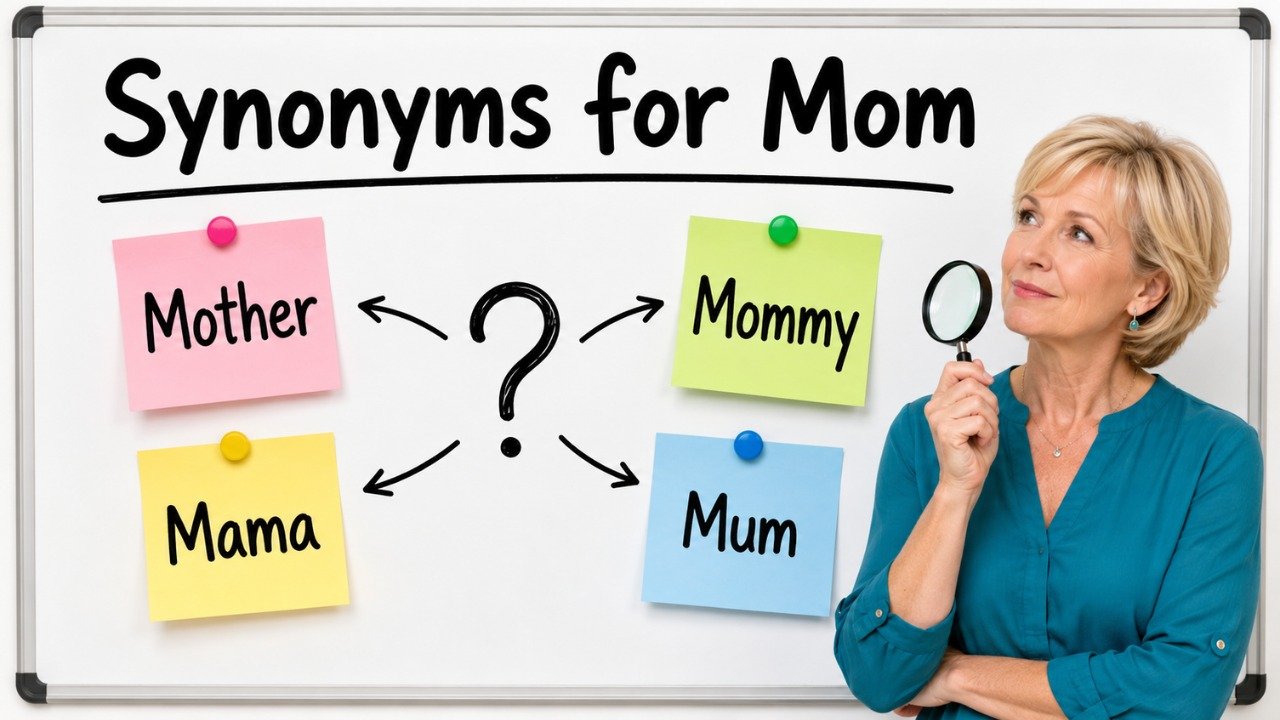
Quick Answer: The best synonyms for mom include mother, mama, mommy, mum, mummy, ma, momma, parent, maternal figure, and matriarch. Use mother in formal, respectful, or neutral writing. Mama, mommy, ma, and momma express affection in casual speech. Mum and mummy are common British alternatives. Parent works when gender is not important, while maternal figure describes someone who provides motherly care without being a biological mother. Matriarch is best for an influential mother who leads a family.
Pronunciation and Word Details
Word: Mom.
Pronunciation: /mɑːm/.
Part of Speech: Noun.
Meaning: A common and affectionate word for a female parent or mother figure.
US Pronunciation:
UK Pronunciation:
What Does “Mom” Mean?
Mom means a female parent, especially when spoken about with affection, familiarity, or closeness. It is a countable noun and is commonly used by children and adults when referring to their mother.
The word can identify a biological mother, an adoptive mother, a stepmother, or another woman who performs a motherly role. Its exact meaning depends on the family relationship and sentence context.
As a common noun: She is a caring mom.
As a personal form of address: Mom, can you help me?
As a family title: My mom works at a local school.
As an emotional description: She became a second mom to me.
Mom is usually less formal than mother. It sounds warm, personal, and conversational. In formal documents, official records, academic writing, or legal discussions, mother or female parent is often more suitable.
When Mom is used as a name in direct address, it is normally capitalized.
Example: Thank you for helping me, Mom.
When it is used as a general noun, it is normally written in lowercase.
Example: Her mom prepared dinner.
Meaning, Tone, and Context of “Mom”
Mom has a warm, familiar, and affectionate tone. It is strongly connected with family, care, childhood, support, protection, and emotional closeness.
The word is usually conversational rather than formal. It appears naturally in personal conversations, family messages, stories, greetings, and informal descriptions.
Casual tone: Mom is one of the most natural words used in everyday family conversation.
Affectionate tone: The word often communicates love, trust, gratitude, and emotional attachment.
Neutral tone: It can also identify a person’s female parent without adding strong emotion.
Respectful tone: The word may sound respectful when used sincerely, although mother is generally more formal.
Emotional tone: In personal writing, mom may express comfort, memory, loss, admiration, or appreciation.
Formal context: Mother, parent, legal guardian, or maternal parent may be more precise in official writing.
British context: Mum is more common than mom in many British conversations.
Childlike context: Mommy and mummy are especially common among young children.
Leadership context: Matriarch describes a mother or senior woman who has authority and influence within a family.
When and How to Use “Mom”
For Everyday Family Conversation
Use mom when speaking naturally about your female parent in an informal setting.
Example: My mom is picking me up after class.
For Direct Address
Use Mom as a name when speaking directly to your mother. Capitalize it because it functions like a proper name.
Example: Mom, where did you put the keys?
For Affection and Appreciation
Use mom when expressing love, gratitude, admiration, or emotional closeness.
Example: My mom has always believed in me.
For Describing Parenthood
Use mom when discussing the experiences, responsibilities, or identity of a female parent.
Example: She is a busy mom who manages work and family life.
For Informal Storytelling
Mom works naturally in personal stories, memories, and conversations.
Example: My mom taught me how to bake when I was young.
For Formal Writing
Use mother instead of mom in formal essays, reports, applications, or official documents.
Example: The child’s mother signed the permission form.
For Legal or Administrative Contexts
Use female parent, legal guardian, biological mother, or adoptive mother when the exact relationship matters.
Example: The legal guardian must provide written consent.
For a Nonbiological Relationship
Use mother figure or maternal figure for a woman who provides care, guidance, and emotional support without being the person’s biological mother.
Example: My aunt became an important mother figure in my life.
For Family Leadership
Use matriarch when describing a respected woman who leads or influences an extended family.
Example: The family matriarch organized every important gathering.
Best Synonyms for Mom
Mother
Mother: The standard, neutral, and more formal word for a female parent.
Example: Her mother attended the school meeting.
Mama
Mama: A warm and affectionate word for one’s mother.
Example: She called her mama to share the good news.
Mommy
Mommy: A loving and childlike word commonly used by young children.
Example: The little boy held his mommy’s hand.
Mum
Mum: A common British alternative to mom.
Example: My mum makes wonderful soup.
Mummy
Mummy: An affectionate British term commonly used by children.
Example: The girl asked her mummy for a bedtime story.
Ma
Ma: A short, informal, and traditional word for mother.
Example: Ma always gives practical advice.
Momma
Momma: An affectionate and informal variation of mom.
Example: He thanked his momma for supporting him.
Parent
Parent: A general word for a mother or father.
Example: Every parent wants their child to feel safe.
Maternal Figure
Maternal figure: A woman who provides motherly care, support, or guidance.
Example: Her teacher became a trusted maternal figure.
Matriarch
Matriarch: A respected mother or senior woman who leads a family.
Example: Their grandmother was the matriarch of the family.
50 Synonyms for Mom with Short Meanings
Not every term below is interchangeable in every sentence. Some identify a particular type of mother, while others describe a motherly role, family position, or style of care.
- Mother: The standard word for a female parent.
- Mama: An affectionate and familiar name for a mother.
- Mommy: A loving term often used by young children.
- Mum: A common British word for mother.
- Mummy: A childlike British term for mother.
- Ma: A short and informal name for mother.
- Mam: A regional term for mother.
- Mamma: A traditional affectionate spelling of mama.
- Momma: A warm informal variation of mom.
- Mother dear: An affectionate way to address or describe one’s mother.
- Dear mother: A loving and respectful description of a mother.
- Maternal parent: A formal term for a female parent.
- Female parent: A clear and neutral description of a mother.
- Birth mother: The woman who gave birth to a child.
- Biological mother: A mother related to a child by birth.
- Adoptive mother: A woman who legally becomes a child’s mother through adoption.
- Foster mother: A woman who provides temporary parental care.
- Stepmother: A woman married to a person’s parent who takes a parental role.
- Surrogate mother: A woman who carries a pregnancy for another person or family.
- Expectant mother: A woman who is pregnant and preparing for motherhood.
- New mother: A woman who has recently become a parent.
- Single mother: A mother raising a child without a partner in the household.
- Working mother: A mother who combines employment with parenting responsibilities.
- Stay at home mother: A mother whose main daily work involves caring for the home and family.
- Nursing mother: A mother who feeds her baby with breast milk.
- Legal mother: A woman officially recognized as a child’s mother.
- Custodial mother: A mother who has primary legal or physical care of a child.
- Mother figure: A woman who behaves like a caring mother.
- Maternal figure: A woman who offers motherly support and guidance.
- Motherly figure: A caring woman who displays qualities associated with motherhood.
- Matriarch: A senior woman who leads or strongly influences a family.
- Family matriarch: The leading or most respected woman in a family.
- Materfamilias: A formal word for the female head of a household or family.
- Parent: A general term for a mother or father.
- Parent figure: Someone who provides parental guidance and support.
- Caregiver: A person responsible for another person’s care.
- Primary caregiver: The person who provides most of a child’s daily care.
- Maternal caregiver: A woman who gives care in a motherly role.
- Family caregiver: A relative who regularly supports and cares for family members.
- Guardian: A person responsible for protecting and caring for a child.
- Legal guardian: A person legally authorized to care for a child.
- Caretaker: A person who looks after another person’s needs.
- Carer: A person who regularly provides care and support.
- Nurturer: Someone who encourages emotional, physical, or personal growth.
- Protector: Someone who keeps a child or family safe.
- Provider: Someone who supplies emotional or practical family needs.
- Homemaker: A person who manages the home and household responsibilities.
- Family anchor: A person who gives a family stability and emotional strength.
- Mother hen: An informal expression for a very protective and caring woman.
- Den mother: A woman who supervises, supports, or cares for a group in a motherly way.
Read Also:
Synonyms for Humor

Synonyms for Mom by Context
When Mom Means a Female Parent
Mother is the clearest replacement when the sentence simply identifies a female parent. Female parent and maternal parent are more formal and descriptive.
Mom: My mom attended the meeting.
Mother: My mother attended the meeting.
Female parent: A female parent must sign the form.
Maternal parent: The study included information from each maternal parent.
When Mom Expresses Affection
Mama, mommy, ma, momma, and mother dear communicate warmth and emotional closeness.
Mama: I miss you, Mama.
Mommy: Mommy, please read me a story.
Ma: Thanks for everything, Ma.
Momma: Her momma encouraged her to keep trying.
When Mom Refers to a Specific Family Relationship
More precise terms include biological mother, adoptive mother, foster mother, stepmother, birth mother, and surrogate mother.
Biological mother: He inherited his eye color from his biological mother.
Adoptive mother: Her adoptive mother supported her education.
Foster mother: The child developed a close bond with his foster mother.
Stepmother: His stepmother treated him with kindness.
When Mom Means a Motherly Supporter
Mother figure, maternal figure, caregiver, nurturer, and guardian describe someone who performs a motherly role.
Mother figure: My older sister became a mother figure to me.
Maternal figure: The coach was a supportive maternal figure.
Nurturer: She was a patient nurturer who encouraged every child.
Guardian: His guardian made sure he received proper care.
When Mom Means a Family Leader
Matriarch, family matriarch, materfamilias, and family anchor describe leadership, authority, or emotional stability.
Matriarch: The matriarch guided the family through difficult times.
Family matriarch: Their family matriarch preserved important traditions.
Family anchor: She remained the family anchor during every challenge.
When Mom Describes a Parenting Situation
Single mother, working mother, new mother, expectant mother, and stay at home mother describe different stages or circumstances of motherhood.
New mother: The new mother was learning her baby’s routine.
Working mother: As a working mother, she carefully planned her schedule.
Expectant mother: The expectant mother attended a health appointment.
Another Word for Mom
Mother is usually the best single replacement for mom because it is natural, widely understood, and suitable for both neutral and formal contexts. However, the best alternative depends on the relationship, tone, region, and level of formality.
Use mama, mommy, ma, or momma when the sentence should feel affectionate. Use mum in British conversation. Use maternal figure when the person is not a biological mother but provides motherly support.
Original: My mom spoke to the teacher.
Better Option: My mother spoke to the teacher.
Original: I called my mom because I needed comfort.
Better Option: I called my mama because I needed comfort.
Original: My aunt was like a mom to me.
Better Option: My aunt was a mother figure to me.
Original: My mom is the leader of our extended family.
Better Option: My mother is the matriarch of our extended family.
When Not to Use “Mom”
Mom is not always the most accurate choice. Avoid it when the context requires formality, legal precision, regional accuracy, or a clearer explanation of the relationship.
In Formal Academic Writing
Mom may sound too conversational in an essay, report, or research discussion.
Weak: The mom completed the family questionnaire.
Better: The mother completed the family questionnaire.
In Legal Documents
Mom may be too vague when legal responsibility or biological relationships matter.
Weak: The mom has permission to make medical decisions.
Better: The legal guardian has permission to make medical decisions.
When the Exact Relationship Matters
Mom does not explain whether the woman is a biological, adoptive, foster, or stepmother.
Weak: His mom welcomed him into her family through adoption.
Better: His adoptive mother welcomed him into her family.
When Describing a Nonbiological Supporter
Calling someone mom may incorrectly suggest a biological or legal relationship.
Weak: My teacher was my mom during a difficult year.
Better: My teacher became an important maternal figure during a difficult year.
When Writing for a British Audience
Mom may sound less natural than mum in many British contexts.
Weak: My mom is preparing dinner.
Better: My mum is preparing dinner.
When Repetition Weakens the Paragraph
Repeating mom in every sentence can make writing sound basic or monotonous.
Weak: My mom is caring. My mom is patient. My mom helps everyone.
Better: My mother is caring and patient, and she willingly helps everyone.
When a General Term Is More Inclusive
Use parent when the gender of the caregiver is unknown or unimportant.
Weak: Every student must ask their mom to sign the form.
Better: Every student must ask a parent or guardian to sign the form.
Words Commonly Confused With Mom
Mom vs Mother: Mom is informal, familiar, and affectionate. Mother is neutral and more appropriate for formal writing.
Mom vs Mama: Mom is a common everyday term, while mama often sounds more affectionate, traditional, or emotionally expressive.
Mom vs Mommy: Mom can be used by people of any age. Mommy is more strongly associated with young children or very affectionate speech.
Mom vs Mum: Both mean mother. Mom is common in American English, while mum is common in British English.
Mom vs Parent: Mom specifically refers to a female parent. Parent can refer to a mother, father, or another legally recognized parent.
Mom vs Guardian: A mom is a female parent. A guardian is someone legally or practically responsible for a child and may not be a parent.
Mom vs Caregiver: Mom describes a family relationship. Caregiver describes the responsibility of providing care and can refer to many different people.
Mom vs Mother Figure: Mom usually identifies an actual parent. Mother figure describes someone who provides motherly support without necessarily being a parent.
Mom vs Matriarch: Mom identifies a mother. Matriarch emphasizes leadership, authority, age, or influence within a family.
Mom vs Homemaker: Mom is a family relationship. Homemaker describes a person who manages household responsibilities and is not necessarily a mother.
Which Synonym Should You Choose?
Choose mother for formal writing, respectful descriptions, essays, reports, and neutral communication.
Choose mama when expressing warmth, closeness, comfort, or family affection.
Choose mommy when writing dialogue for a young child or showing a child’s close relationship with a mother.
Choose mum when using natural British vocabulary.
Choose ma for informal dialogue, traditional family speech, or a relaxed conversational tone.
Choose momma for affectionate, personal, or regional speech.
Choose parent when gender is unknown, irrelevant, or intentionally inclusive.
Choose female parent when clarity is more important than emotional tone.
Choose biological mother when referring specifically to a genetic or birth relationship.
Choose birth mother when discussing the woman who gave birth to a child, especially in an adoption context.
Choose adoptive mother when describing a mother who became a parent through adoption.
Choose foster mother when referring to a woman providing temporary family care.
Choose stepmother when referring to the wife of a person’s parent who has a family role.
Choose legal guardian when legal authority and responsibility are the main focus.
Choose mother figure when someone behaves like a mother without holding a biological or legal relationship.
Choose caregiver when the sentence focuses on daily care rather than family identity.
Choose matriarch when describing a powerful, respected, or influential female family leader.
Choose family anchor when emphasizing emotional stability, unity, and support.
Real Life Examples of “Mom” in Sentences
Original: My mom helped me prepare for the interview.
Better Option: My mother helped me prepare for the interview.
Original: I always call my mom when I need advice.
Better Option: I always call my mama when I need advice.
Original: My mom signed the official document.
Better Option: My legal guardian signed the official document.
Original: Her mom adopted her when she was two years old.
Better Option: Her adoptive mother adopted her when she was two years old.
Original: My aunt became my mom after my parents died.
Better Option: My aunt became a mother figure after my parents died.
Original: Every mom should review the school notice.
Better Option: Every parent or guardian should review the school notice.
Original: His mom is the most respected person in the family.
Better Option: His mother is the family matriarch.
Original: The mom provided food and emotional support.
Better Option: The primary caregiver provided food and emotional support.
Original: Her mom is expecting a baby in October.
Better Option: Her expectant mother is preparing for the baby’s arrival in October.
Original: The child asked his mom to stay beside him.
Better Option: The child asked his mommy to stay beside him.
Synonym Groups and Usage Differences
Formal Parent Terms
Mother, female parent, maternal parent, and legal mother belong to the formal parent group. These words work best in reports, school documents, medical discussions, and official communication.
Mother is the most natural option. Female parent and maternal parent sound more technical. Legal mother emphasizes official recognition.
Example: The child’s mother completed the registration form.
Affectionate Family Terms
Mama, mommy, ma, momma, mummy, and mother dear express closeness and affection. The correct choice often depends on age, family tradition, and regional speech.
Mommy and mummy sound childlike. Mama and momma often sound warm and emotional. Ma is brief and informal.
Example: Mama always knows how to make me feel better.
Motherhood Type Terms
Biological mother, adoptive mother, foster mother, stepmother, surrogate mother, and birth mother describe a specific form of motherhood.
These alternatives should be used carefully because each identifies a different biological, legal, or family relationship.
Example: His foster mother provided a safe and supportive home.
Care and Support Terms
Caregiver, nurturer, protector, guardian, caretaker, and carer emphasize actions rather than biological relationships.
These terms are helpful when the person’s role involves care, safety, guidance, or emotional support.
Example: She was the child’s primary caregiver during his early years.
Motherly Relationship Terms
Mother figure, maternal figure, and motherly figure describe someone who offers guidance and affection similar to a mother.
These terms are useful for teachers, relatives, mentors, older friends, or guardians who perform a motherly role.
Example: My grandmother became a strong maternal figure in my life.
Family Leadership Terms
Matriarch, family matriarch, materfamilias, and family anchor highlight leadership, strength, unity, and influence.
Matriarch focuses on authority. Family anchor focuses more on emotional stability.
Example: As the family matriarch, she guided several generations.
Antonyms of Mom
Mom does not have one exact antonym because it names a family relationship rather than a quality. However, several words can function as relational or contextual opposites.
Father: A male parent.
Dad: An informal word for a male parent.
Paternal parent: A formal term for a male parent.
Child: A son or daughter in relation to a parent.
Son: A male child in relation to a mother or parent.
Daughter: A female child in relation to a mother or parent.
Dependent: A person who receives care rather than providing parental care.
Nonparent: A person who is not a parent.
Stranger: Someone with no established family or personal relationship.
Absent parent: A parent who is not present or actively involved in a child’s life.
The correct opposite depends on the intended contrast. Father is the closest gender based counterpart, while child is the opposite side of the parent and child relationship.
Comparison: Mom vs Related Words
Mom vs Mother
Mom is casual, familiar, and affectionate. Mother is more neutral and formal.
Example With Mom: My mom is taking me to the appointment.
Example With Mother: My mother signed the official consent form.
Mom vs Mama
Mom is a common everyday term. Mama often communicates stronger warmth, affection, or family tradition.
Example With Mom: I spoke to my mom this morning.
Example With Mama: I hugged Mama when I arrived home.
Mom vs Mommy
Mom works naturally for speakers of any age. Mommy is usually associated with young children or highly affectionate speech.
Example With Mom: My mom gave me useful career advice.
Example With Mommy: Mommy, will you sit beside me?
Mom vs Mum
Mom and mum have the same basic meaning but differ mainly by regional preference.
Example With Mom: My mom is visiting this weekend.
Example With Mum: My mum is visiting this weekend.
Mom vs Parent
Mom identifies a female parent. Parent is broader and does not specify gender.
Example With Mom: Her mom attended the ceremony.
Example With Parent: A parent must attend the ceremony.
Mom vs Guardian
Mom describes a parental relationship. Guardian emphasizes legal or practical responsibility.
Example With Mom: His mom prepared his lunch.
Example With Guardian: His legal guardian approved the school trip.
Mom vs Caregiver
Mom refers to identity and family relationship. Caregiver focuses on the task of providing care.
Example With Mom: Her mom comforted her after the accident.
Example With Caregiver: Her caregiver helped with medication and meals.
Mom vs Mother Figure
Mom usually refers to an actual parent. Mother figure refers to someone who acts like a mother.
Example With Mom: My mom raised me with patience.
Example With Mother Figure: My aunt became a mother figure during my teenage years.
Mom vs Matriarch
Mom simply identifies a mother. Matriarch describes a woman with family leadership or authority.
Example With Mom: My mom planned the family dinner.
Example With Matriarch: As the family matriarch, she maintained important traditions.
Common Phrases and Expressions With Mom
Mom and dad: A common phrase referring to both parents.
Proud mom: A mother who feels pleased about her child’s success.
New mom: A woman who has recently become a mother.
Working mom: A mother who balances employment and parenting.
Single mom: A mother raising a child without a partner in the household.
Stay at home mom: A mother whose main daily responsibility is caring for the home and family.
Mom to be: A woman who is expecting a baby.
Like a mom to me: A phrase describing someone who provides motherly love and support.
Mom knows best: An expression suggesting that a mother often understands what is best for her child.
Mom friend: An informal expression for a caring and responsible friend who looks after others.
Common Mistakes to Avoid
Capitalizing Mom Incorrectly
Capitalize Mom when it replaces the person’s name in direct address. Use lowercase when a possessive word or article comes before it.
Incorrect: I asked my Mom for help.
Correct: I asked my mom for help.
Correct: I asked Mom for help.
Using Mom in Very Formal Writing
Mom may sound too informal in academic, legal, professional, or administrative writing.
Weak: The mom provided written permission.
Better: The mother provided written permission.
Treating Every Alternative as Interchangeable
Mother, guardian, caregiver, matriarch, and mother figure do not have identical meanings. Choose the word that accurately describes the relationship.
Incorrect: Her teacher was her biological mother at school.
Correct: Her teacher was a supportive mother figure at school.
Confusing Mom With Parent
Mom identifies a female parent, while parent is gender neutral. Do not use mom when the sentence refers to all parents.
Weak: Every mom must submit the form.
Better: Every parent or guardian must submit the form.
Using Mommy in Adult Formal Writing
Mommy may sound childish outside family dialogue or personal storytelling.
Weak: The applicant’s mommy attended the interview.
Better: The applicant’s mother attended the interview.
Repeating Mom Too Often
Frequent repetition can make a paragraph sound unnatural. Replace some uses with mother, parent, she, caregiver, or another accurate term.
Repetitive: My mom called me because my mom wanted my mom’s book returned.
Improved: My mom called because she wanted her book returned.
Choosing a Word Based Only on Emotion
Affectionate terms may not communicate the exact legal or biological relationship.
Vague: The child returned to his mom.
Precise: The child returned to his foster mother.
Using Matriarch for Any Mother
A matriarch is not simply any mom. The word usually suggests leadership, authority, seniority, or strong family influence.
Weak: She became a matriarch when her first child was born.
Better: She became the family matriarch after guiding several generations.
Confusing Birth Mother and Adoptive Mother
A birth mother gives birth to the child. An adoptive mother becomes the child’s legal parent through adoption.
Incorrect: His adoptive mother gave birth to him before placing him for adoption.
Correct: His birth mother gave birth to him before the adoption.
Conclusion
The best synonyms for mom depend on tone, region, relationship, and context. Mother is the strongest formal and neutral alternative, while mama, mommy, ma, and momma create a warmer, more affectionate tone. Mum and mummy are common British choices. Parent and female parent work well when clarity matters, while mother figure and maternal figure describe supportive nonbiological relationships. Matriarch is ideal for a respected family leader. Choosing among synonyms for mom carefully makes every sentence clearer, more natural, and more emotionally accurate.
FAQs About Synonyms for Mom
What Is the Best Synonym for Mom?
Mother is the best general synonym for mom. It works in neutral, formal, and respectful contexts.
What Is a More Affectionate Word for Mom?
Mama, mommy, momma, ma, and mother dear are affectionate alternatives. Mama is especially warm without sounding as childlike as mommy.
What Is a Formal Word for Mom?
Mother is the most natural formal word. Female parent, maternal parent, or legal mother may be suitable when greater precision is required.
What Is Another Word for Mom in British English?
Mum is the most common British alternative. Young children may also use mummy.
What Can I Call Someone Who Is Like a Mom?
Mother figure and maternal figure are the best choices for someone who provides motherly care, guidance, or emotional support.
Are Parent and Mom the Same?
Not exactly. Mom specifically refers to a female parent, while parent can refer to a mother, father, or another recognized parent.
Is Matriarch a Synonym for Mom?
Matriarch is a contextual alternative rather than an exact synonym. It describes a mother or senior woman who leads or strongly influences a family.
