
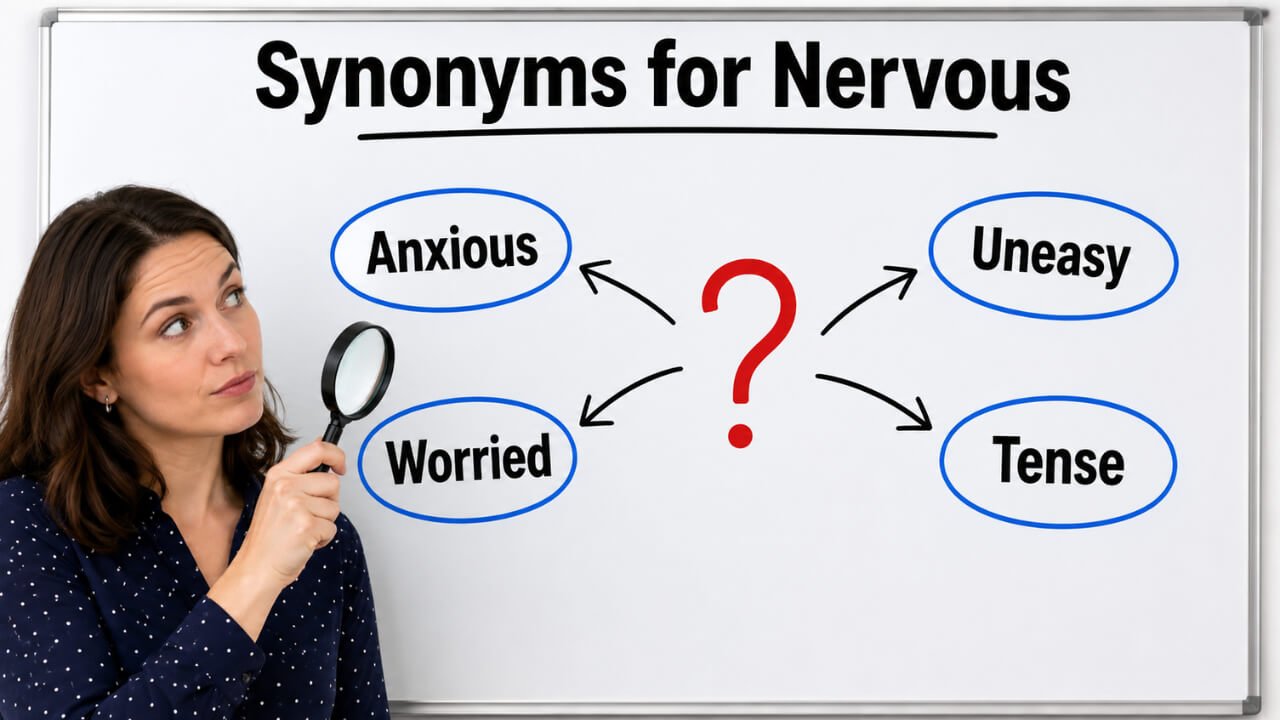
Quick Answer: The best synonyms for nervous include anxious, worried, uneasy, tense, apprehensive, jittery, edgy, restless, fearful, and unsettled. Use anxious when someone feels strong worry about what may happen. Use worried for common everyday concern. Use uneasy when someone feels uncomfortable or unsure. Use tense for physical or emotional tightness. Use apprehensive in formal writing. Use jittery or edgy for visible nervous energy. The best choice depends on whether nervous means worried, afraid, tense, restless, uncertain, or easily upset.
Pronunciation and Word Details
Word: Nervous.
Pronunciation: /ˈnɜːrvəs/.
Part of Speech: Adjective.
Meaning: Nervous means worried, anxious, uneasy, or tense because of fear, pressure, uncertainty, or expectation.
US Pronunciation:
UK Pronunciation:
What Does “Nervous” Mean?
Nervous means feeling worried, tense, uneasy, or afraid about something that may happen. It is an adjective used to describe a person, mood, reaction, voice, smile, feeling, or situation.
Nervous can describe mild worry before a test, strong anxiety before a speech, or physical signs like shaking hands and a tense voice. It can also describe behavior, such as a nervous laugh, a nervous glance, or nervous energy. In some contexts, nervous can relate to the nerves or nervous system, but in everyday vocabulary it most often means anxious or worried.
Meaning, Tone, and Context of “Nervous”
Nervous is a neutral and common word. It is used in casual conversation, school writing, emotional descriptions, stories, essays, workplace communication, and everyday speech. It is not too formal, but it is still clear enough for professional and academic writing.
The tone of nervous is usually emotional and slightly negative. It often suggests discomfort, worry, fear, or pressure. In soft contexts, nervous can mean shy or unsure. In stronger contexts, it can mean anxious, panicked, or frightened. Choosing the right synonym helps show the exact level of emotion.
When and How to Use “Nervous”
For Worry: Use nervous when someone feels concerned about something that may happen.
Example: She felt nervous before the interview.
For Fear: Use nervous when a person feels afraid, unsafe, or unsure.
Example: The dark hallway made him nervous.
For Pressure: Use nervous when someone feels stress before a performance, test, meeting, or speech.
Example: He was nervous before speaking in front of the class.
For Physical Tension: Use nervous when worry shows through body language, voice, or movement.
Example: Her nervous hands shook slightly.
For Uncertainty: Use nervous when someone feels unsure about a decision or result.
Example: They were nervous about the final score.
For Emotional Reaction: Use nervous when someone reacts with discomfort or unease.
Example: He gave a nervous smile when everyone looked at him.
Best Synonyms for Nervous
Anxious: Feeling worried or troubled about something uncertain.
Example: She was anxious about the exam results.
Worried: Feeling concern about a problem or possible bad result.
Example: He looked worried after reading the message.
Uneasy: Feeling uncomfortable, unsure, or slightly afraid.
Example: I felt uneasy walking through the empty street.
Tense: Feeling physically or emotionally tight because of stress.
Example: The room became tense before the announcement.
Apprehensive: Worried that something bad may happen.
Example: She was apprehensive about starting a new job.
Jittery: Shaky, restless, or nervous in a visible way.
Example: Too much pressure made him jittery.
Edgy: Nervous, easily upset, or unable to relax.
Example: Everyone felt edgy before the final decision.
Restless: Unable to stay calm because of worry or energy.
Example: He was restless the night before the trip.
Fearful: Feeling afraid or full of fear.
Example: The child looked fearful during the storm.
Unsettled: Not calm, comfortable, or emotionally steady.
Example: She felt unsettled after the strange phone call.
50 Synonyms for Nervous with Short Meanings
- Anxious: Worried about what may happen.
- Worried: Concerned about a problem.
- Uneasy: Uncomfortable or unsure.
- Tense: Tight with stress or pressure.
- Apprehensive: Worried about a possible problem.
- Jittery: Shaky and restless from nerves.
- Edgy: Nervous and easily upset.
- Restless: Unable to relax or stay still.
- Fearful: Full of fear.
- Unsettled: Not calm or steady.
- Alarmed: Suddenly worried or frightened.
- Afraid: Feeling fear.
- Scared: Frightened or worried.
- Frightened: Strongly afraid.
- Panicky: Feeling sudden fear or panic.
- Terrified: Extremely afraid.
- Shaky: Physically or emotionally unsteady.
- Trembling: Shaking because of fear or worry.
- Flustered: Confused and nervous.
- Agitated: Upset and disturbed.
- Disturbed: Emotionally troubled.
- Troubled: Worried or bothered.
- Concerned: Worried about something important.
- Distressed: Very upset or anxious.
- Stressed: Under emotional pressure.
- Strained: Tense because of pressure.
- Pressured: Feeling forced or stressed.
- Overwrought: Extremely nervous or upset.
- Fretful: Worried and unable to relax.
- Fidgety: Moving often because of nerves.
- Skittish: Easily frightened or nervous.
- Timid: Shy and easily nervous.
- Shy: Nervous around people.
- Self conscious: Uncomfortable because of attention.
- Insecure: Lacking confidence.
- Hesitant: Unsure and slow to act.
- Uncertain: Not sure or confident.
- Doubtful: Unsure about something.
- Suspicious: Nervous because of mistrust.
- Cautious: Careful because of possible danger.
- Wary: Careful and slightly suspicious.
- Watchful: Alert because of concern.
- On edge: Very tense or nervous.
- Ill at ease: Uncomfortable and nervous.
- Worked up: Emotionally upset or excited.
- Rattled: Shaken or disturbed.
- Spooked: Suddenly frightened or nervous.
- Intimidated: Nervous because of fear or pressure.
- Overanxious: Too worried or nervous.
- Discomposed: Upset and not calm.
Read Also:
Synonyms for Claim
Synonyms for Nervous by Context
When Nervous Means Anxious
Use these synonyms when nervous means worried about something that may happen.
Anxious: Worried about an uncertain result.
Example: She felt anxious before the final interview.
Apprehensive: Worried that something unpleasant may happen.
Example: He was apprehensive about the difficult conversation.
Overanxious: Too worried or tense.
Example: The overanxious student checked the answer again and again.
Concerned: Worried in a serious or thoughtful way.
Example: The parents were concerned about the delay.
When Nervous Means Worried
Use these synonyms when nervous means concerned about a problem, result, or responsibility.
Worried: Troubled by a possible problem.
Example: She looked worried after the phone call.
Troubled: Bothered or emotionally uneasy.
Example: He seemed troubled by the news.
Fretful: Worried and unable to relax.
Example: The child became fretful before the doctor’s visit.
Distressed: Very upset or anxious.
Example: She was distressed by the sudden change.
When Nervous Means Uneasy
Use these synonyms when nervous means uncomfortable, unsure, or not fully calm.
Uneasy: Not comfortable or confident.
Example: I felt uneasy in the silent room.
Unsettled: Not calm or emotionally steady.
Example: The strange message left him unsettled.
Ill at ease: Uncomfortable in a place or situation.
Example: She felt ill at ease among strangers.
Discomposed: Upset and not calm.
Example: The unexpected question left him discomposed.
When Nervous Means Tense
Use these synonyms when nervous shows pressure, tightness, or stress.
Tense: Tight with worry or pressure.
Example: The team was tense before the result.
Stressed: Feeling emotional pressure.
Example: He felt stressed before the deadline.
Strained: Showing stress or tension.
Example: Her voice sounded strained during the call.
On edge: Very tense and unable to relax.
Example: Everyone was on edge before the announcement.
When Nervous Means Shaky or Restless
Use these synonyms when nervous appears in movement, body language, or energy.
Jittery: Shaky and restless from worry.
Example: He felt jittery before going on stage.
Fidgety: Moving often because of nervousness.
Example: The fidgety student tapped his pencil on the desk.
Shaky: Unsteady because of fear or pressure.
Example: Her voice was shaky during the speech.
Restless: Unable to stay calm or still.
Example: He was restless all night before the exam.
When Nervous Means Afraid
Use these synonyms when nervous means fear, alarm, or panic.
Afraid: Feeling fear.
Example: She was afraid to enter the dark room.
Fearful: Full of fear or worry.
Example: The dog looked fearful during the storm.
Scared: Frightened or worried.
Example: He was scared before the surgery.
Panicky: Feeling sudden fear and loss of calm.
Example: She became panicky when she lost her keys.
Another Word for Nervous
Another word for nervous is anxious when you mean worried about something uncertain. The best alternative depends on context. Use worried for everyday concern, uneasy for discomfort, tense for pressure, jittery for visible nervous energy, and apprehensive for formal writing.
Original: She was nervous before the exam.
Better Option: She was anxious before the exam.
Original: He gave a nervous smile.
Better Option: He gave an uneasy smile.
Original: The room felt nervous before the result.
Better Option: The room felt tense before the result.
Original: I felt nervous about meeting them.
Better Option: I felt apprehensive about meeting them.
When Not to Use “Nervous”
Do not use nervous when another word gives a clearer level of emotion. If the feeling is mild, uneasy or worried may be better. If the feeling is strong, terrified, panicky, or frightened may be more accurate. If the feeling comes from stress, tense or stressed may be stronger.
Nervous can also sound vague if you do not explain why someone feels that way. Instead of saying someone is nervous, show the cause or the visible reaction.
Weak: She was very nervous about the thing.
Better: She was anxious about the final interview.
Weak: He felt nervous because of the scary dog.
Better: He felt frightened by the barking dog.
Weak: The meeting was nervous.
Better: The meeting felt tense.
Weak: I am nervous from too much work.
Better: I am stressed from too much work.
Weak: His nervous was clear.
Better: His nervousness was clear.
Words Commonly Confused With Nervous
Nervous vs Anxious: Nervous often means worried before a specific event. Anxious can mean stronger or longer lasting worry about uncertainty.
Nervous vs Worried: Nervous can include physical tension or fear. Worried focuses more on concern about a problem.
Nervous vs Uneasy: Nervous often suggests fear or pressure. Uneasy suggests discomfort, doubt, or a strange feeling.
Nervous vs Tense: Nervous describes a worried feeling. Tense describes emotional or physical tightness.
Nervous vs Afraid: Nervous can be mild or moderate. Afraid is more directly connected to fear.
Nervous vs Jittery: Nervous is general. Jittery means nervous in a shaky or restless way.
Nervous vs Shy: Nervous can happen in many situations. Shy usually describes discomfort around people or attention.
Nervous vs Stressed: Nervous often comes from fear or uncertainty. Stressed comes from pressure, work, responsibility, or overload.
Which Synonym Should You Choose?
Choose anxious when someone feels worried about an uncertain result, future event, or possible problem.
Choose worried when the concern is simple, everyday, or connected to a specific issue.
Choose uneasy when someone feels uncomfortable, doubtful, or unsure without strong fear.
Choose tense when the situation feels tight, serious, or full of pressure.
Choose apprehensive for formal writing, essays, reports, or professional descriptions of worry.
Choose jittery when nervousness shows through shaking, fidgeting, or restless movement.
Choose edgy when someone is nervous, irritable, and unable to relax.
Choose fearful when the feeling is clearly connected to fear.
Choose shy when nervousness comes from social attention.
Choose stressed when the nervous feeling comes from pressure, responsibility, or too much work.
Real Life Examples of “Nervous” in Sentences
Original: She was nervous before her speech.
Better Option: She was anxious before her speech.
Original: He looked nervous during the interview.
Better Option: He looked tense during the interview.
Original: I felt nervous in the dark room.
Better Option: I felt uneasy in the dark room.
Original: The student was nervous about the exam.
Better Option: The student was worried about the exam.
Original: Her nervous hands shook.
Better Option: Her shaky hands showed her fear.
Original: He became nervous when the phone rang.
Better Option: He became alarmed when the phone rang.
Original: The team was nervous before the final match.
Better Option: The team was tense before the final match.
Original: She gave a nervous laugh.
Better Option: She gave an uneasy laugh.
Original: I feel nervous around large crowds.
Better Option: I feel self conscious around large crowds.
Original: He was nervous about asking for help.
Better Option: He was hesitant about asking for help.
Synonym Groups and Usage Differences
Worry Group
This group includes anxious, worried, concerned, troubled, fretful, and overanxious. Use these words when nervous means concern about a result, problem, or future event.
Example: She was anxious about the test results.
Fear Group
This group includes afraid, scared, fearful, frightened, terrified, and panicky. Use these words when nervous means fear or alarm.
Example: The child was frightened by the loud noise.
Tension Group
This group includes tense, stressed, strained, pressured, on edge, and worked up. Use these words when nervous means emotional or physical tightness.
Example: The room felt tense before the announcement.
Restless Group
This group includes jittery, fidgety, shaky, restless, trembling, and agitated. Use these words when nervousness shows through movement or behavior.
Example: He became jittery before the performance.
Social Discomfort Group
This group includes shy, self conscious, timid, hesitant, insecure, and ill at ease. Use these words when nervousness comes from people, attention, or lack of confidence.
Example: She felt self conscious during the introduction.
Uncertainty Group
This group includes uneasy, unsettled, doubtful, uncertain, wary, and cautious. Use these words when nervous means unsure or uncomfortable about what might happen.
Example: He felt uneasy about the sudden change.
Antonyms of Nervous
The opposite of nervous depends on the exact meaning. If nervous means worried, the opposite may be calm or relaxed. If nervous means afraid, the opposite may be brave or confident. If nervous means tense, the opposite may be composed or steady.
Calm: Peaceful and not worried.
Relaxed: Free from tension or pressure.
Confident: Sure of oneself or the result.
Composed: In control and calm.
Steady: Stable and not shaken.
Brave: Able to face fear.
Fearless: Not afraid.
Comfortable: At ease in a situation.
Secure: Safe and confident.
Certain: Sure and not doubtful.
Assured: Confident and calm.
Cool: Calm under pressure.
Untroubled: Not worried or bothered.
Peaceful: Quiet and calm in feeling.
At ease: Relaxed and comfortable.
Comparison: Nervous vs Related Words
Nervous vs Anxious
Nervous usually describes worry before a specific event or situation. Anxious can describe deeper or more serious worry about uncertainty.
Example With Nervous: She was nervous before the interview.
Example With Anxious: She was anxious about the future.
Nervous vs Worried
Nervous often includes physical tension, fear, or discomfort. Worried focuses on concern about a problem or possible result.
Example With Nervous: He felt nervous before the speech.
Example With Worried: He was worried about his father’s health.
Nervous vs Uneasy
Nervous suggests worry, fear, or pressure. Uneasy suggests discomfort, suspicion, or a feeling that something is not right.
Example With Nervous: I was nervous before meeting the manager.
Example With Uneasy: I felt uneasy after hearing the strange noise.
Nervous vs Tense
Nervous describes the feeling of worry or fear. Tense describes tightness in the body, voice, atmosphere, or situation.
Example With Nervous: She felt nervous before the test.
Example With Tense: Her voice sounded tense during the call.
Nervous vs Jittery
Nervous is a general word. Jittery means nervous in a restless, shaky, or jumpy way.
Example With Nervous: He was nervous before the meeting.
Example With Jittery: He felt jittery after waiting too long.
Nervous vs Afraid
Nervous can be mild or moderate. Afraid is more direct and stronger when fear is the main emotion.
Example With Nervous: She was nervous about driving alone.
Example With Afraid: She was afraid of driving in the storm.
Nervous vs Shy
Nervous can happen in any stressful or uncertain situation. Shy describes social nervousness around people or attention.
Example With Nervous: He was nervous before the exam.
Example With Shy: He was shy around new classmates.
Common Phrases and Expressions With Nervous
Nervous Feeling: A feeling of worry, fear, or tension.
Nervous Smile: A smile that shows discomfort or worry.
Nervous Laugh: A laugh caused by discomfort or anxiety.
Nervous Energy: Restless energy caused by worry or excitement.
Nervous Habit: A repeated action caused by tension.
Nervous Wreck: A person who is extremely worried or upset.
Nervous Reaction: A response caused by fear or anxiety.
Nervous Voice: A voice that sounds shaky or tense.
Nervous Before: Worried before an event or action.
Nervous About: Worried or uneasy about something.
Common Mistakes to Avoid
A common mistake is using nervous for every kind of worry. If someone is deeply afraid, use frightened or scared. If someone is under work pressure, use stressed. If someone is socially uncomfortable, use shy or self conscious. If someone is unsure about a decision, use hesitant or uncertain.
Another mistake is using nervous as a noun in the wrong way. Nervous is an adjective. The noun form is nervousness. Also avoid unclear phrases like nervous situation when tense situation would sound more natural.
Weak: His nervous was obvious.
Better: His nervousness was obvious.
Weak: The room was nervous.
Better: The room was tense.
Weak: She is nervous from workload.
Better: She is stressed from the workload.
Weak: He was nervous of the loud sound.
Better: He was frightened by the loud sound.
Conclusion
The keyword synonyms for nervous help you describe worry, fear, pressure, discomfort, and uncertainty more clearly. Use anxious, worried, or apprehensive when someone feels concern about what may happen. Use uneasy or unsettled for discomfort. Use tense, stressed, or on edge for pressure. Use jittery, shaky, or fidgety when nervousness appears in body language. Use fearful, scared, or frightened when the feeling is stronger. The best synonym depends on the exact emotion and situation.
FAQs About Synonyms for Nervous
What are the best synonyms for nervous?
The best synonyms for nervous are anxious, worried, uneasy, tense, apprehensive, jittery, edgy, restless, fearful, and unsettled.
What is another word for nervous in formal writing?
In formal writing, use anxious, apprehensive, uneasy, tense, concerned, unsettled, or distressed depending on the meaning.
What is another word for nervous before an exam?
Use anxious, worried, tense, apprehensive, jittery, or stressed when someone feels nervous before an exam.
What is another word for nervous around people?
Use shy, self conscious, timid, insecure, hesitant, or ill at ease when nervousness happens in social situations.
Are nervous and anxious the same?
They are close, but not always the same. Nervous often describes worry before a specific event, while anxious can describe stronger or longer worry about uncertainty.
What is a stronger word than nervous?
Stronger words than nervous include terrified, panicky, frightened, distressed, overwrought, and alarmed.
What is the opposite of nervous?
The opposite of nervous can be calm, relaxed, confident, composed, steady, brave, comfortable, secure, or at ease.
