
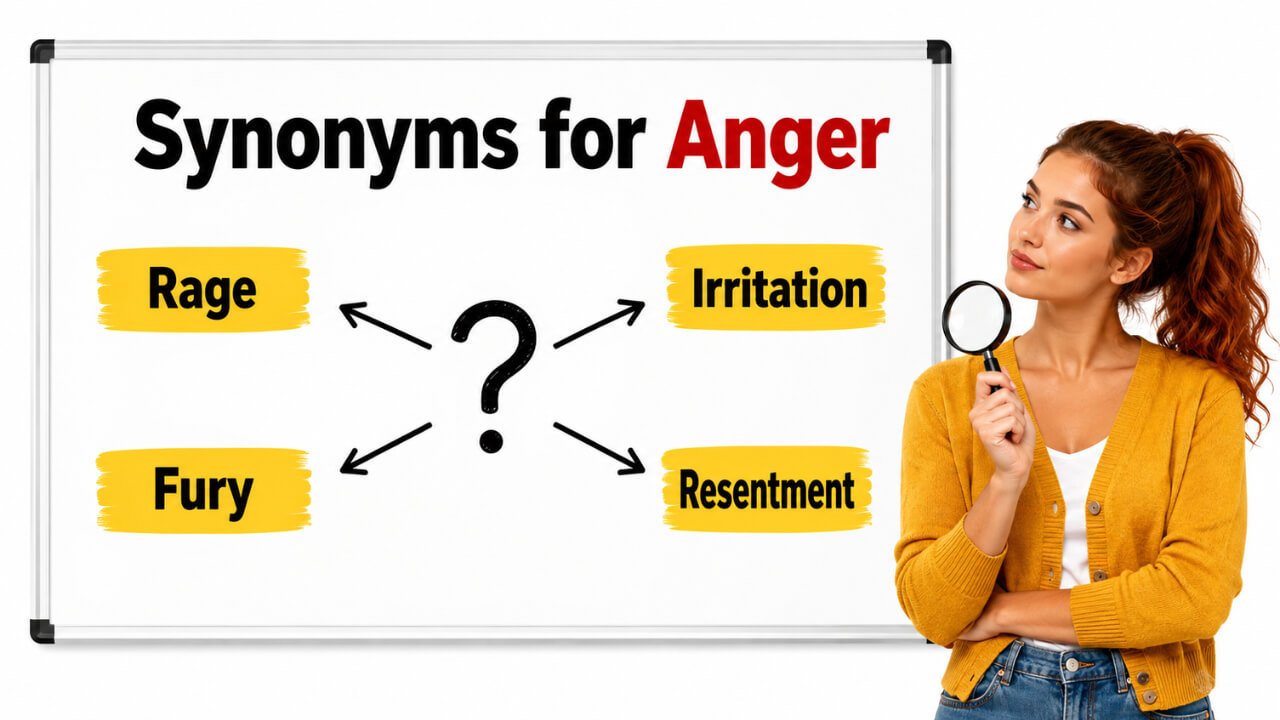
Quick Answer: Synonyms for anger include rage, fury, wrath, irritation, annoyance, resentment, outrage, indignation, frustration, and displeasure. Use rage or fury for very strong emotion, irritation for mild anger, resentment for lasting bitterness, outrage for anger about unfairness, indignation for moral anger, and displeasure for formal or polite writing. The best synonym depends on intensity, tone, cause, and whether the anger is brief, deep, controlled, or explosive.
Pronunciation and Word Details
Word: Anger.
Pronunciation: /ˈæŋɡər/.
Part of Speech: Noun and verb.
Meaning: Anger means a strong feeling of displeasure, irritation, or hostility caused by something unfair, wrong, painful, or frustrating.
US Pronunciation:
UK Pronunciation:
What Does “Anger” Mean?
Anger means a strong emotional reaction to something that feels wrong, unfair, annoying, threatening, or hurtful. As a noun, anger names the feeling itself, such as anger over a rude comment. As a verb, anger means to make someone feel angry, such as “The decision angered many people.”
Anger can appear in personal, professional, academic, emotional, and social contexts. It may describe a quick reaction, a deep feeling, a moral response, or a strong conflict. In writing, anger is a general word, so a more specific synonym can often make your sentence clearer.
Meaning, Tone, and Context of “Anger”
Anger is a neutral but emotional word. It is not too formal or too casual, which makes it useful in everyday speech, essays, reports, stories, and serious discussions. It can sound calm when used in a factual sentence, but it can also feel intense depending on the situation.
In casual speech, anger often describes irritation, frustration, or annoyance. In formal writing, it may describe public reaction, emotional response, conflict, or disagreement. In academic or psychological contexts, anger can refer to an emotional state. In storytelling, stronger words like rage, fury, or wrath create a more dramatic tone.
When and How to Use “Anger”
For Strong Emotion: Use anger when describing a clear feeling of emotional upset or displeasure.
Example: His anger grew when nobody listened to his concerns.
For Mild Irritation: Use anger carefully when the feeling is stronger than simple annoyance.
Example: Her anger was brief, but the rude reply still bothered her.
For Moral Reaction: Use anger when someone feels upset because something seems unfair or wrong.
Example: The decision caused anger among people who wanted equal treatment.
For Personal Conflict: Use anger when describing tension between people.
Example: Their anger made the conversation harder than it needed to be.
For Formal Writing: Use anger when you need a clear, general word for emotional displeasure.
Example: The report described public anger after the announcement.
Best Synonyms for Anger
Rage: Extreme and uncontrolled anger.
Example: He spoke with rage after hearing the unfair accusation.
Fury: Intense anger that feels powerful and forceful.
Example: Her fury was clear in the way she answered.
Wrath: Strong anger, often serious, moral, or dramatic.
Example: The leader faced the wrath of the disappointed crowd.
Irritation: Mild anger caused by something annoying.
Example: His irritation showed when the noise continued.
Annoyance: A light form of anger caused by inconvenience or bother.
Example: She felt annoyance when the meeting started late.
Resentment: Anger that lasts because of unfair treatment or hurt.
Example: Years of resentment damaged their friendship.
Outrage: Strong anger caused by unfairness, cruelty, or injustice.
Example: The unfair rule caused public outrage.
Indignation: Anger caused by something seen as insulting or morally wrong.
Example: She expressed indignation at the disrespectful remark.
Frustration: Anger mixed with disappointment because something is difficult or blocked.
Example: His frustration grew after several failed attempts.
Displeasure: Polite or formal anger, often controlled.
Example: The manager showed displeasure with the careless work.
50 Synonyms for Anger with Short Meanings
- Rage: Extreme anger.
- Fury: Intense and powerful anger.
- Wrath: Serious or dramatic anger.
- Ire: Formal anger or displeasure.
- Outrage: Anger caused by unfairness.
- Indignation: Moral anger over insult or injustice.
- Irritation: Mild anger from annoyance.
- Annoyance: Slight anger from bother.
- Resentment: Lasting anger from unfair treatment.
- Frustration: Anger from blocked progress.
- Hostility: Angry opposition or unfriendly feeling.
- Bitterness: Deep anger mixed with hurt.
- Aggravation: Annoyed anger caused by trouble.
- Exasperation: Tired anger from repeated problems.
- Vexation: Mild anger or irritation.
- Pique: Slight anger from wounded pride.
- Temper: Angry mood or emotional heat.
- Crossness: Mild bad temper.
- Displeasure: Controlled or polite anger.
- Infuriation: Extreme anger caused by provocation.
- Enragement: A state of being made very angry.
- Umbrage: Offended anger.
- Acrimony: Bitter anger in speech or behavior.
- Animosity: Strong dislike with anger.
- Antagonism: Active anger or opposition.
- Belligerence: Aggressive angry attitude.
- Ferocity: Fierce anger or intensity.
- Seething: Silent but intense anger.
- Fuming: Visible or strong anger.
- Stewing: Quiet anger that continues inside.
- Offense: Hurt or anger caused by insult.
- Grudge: Lasting anger against someone.
- Rancor: Deep bitter anger.
- Spite: Anger with a wish to hurt or annoy.
- Heat: Emotional anger in a tense moment.
- Soreness: Informal hurt anger.
- Tension: Strained anger between people.
- Impatience: Irritated anger from delay.
- Discontent: Unhappy anger about a situation.
- Dissatisfaction: Anger or unhappiness with results.
- Disapproval: Negative judgment that may include anger.
- Contempt: Anger mixed with disrespect.
- Loathing: Strong angry dislike.
- Hatred: Deep and lasting angry dislike.
- Enmity: Hostile anger between people or groups.
- Peevishness: Easily irritated anger.
- Testiness: Quick irritation or bad temper.
- Crabbiness: Informal bad mood or irritation.
- Sullenness: Quiet, gloomy anger.
- Sulkiness: Silent anger shown through mood.
Read Also:
Synonyms for Clear

Synonyms for Anger by Context
When Anger Means Strong Rage
Use these synonyms when anger is intense, forceful, or difficult to control.
Rage: His rage made the argument worse.
Fury: She left the room in fury.
Wrath: The unfair decision brought the wrath of the crowd.
Infuriation: His infuriation grew after the repeated delays.
When Anger Means Mild Irritation
Use these words when the emotion is lighter than rage.
Irritation: The constant noise caused irritation.
Annoyance: Her annoyance faded after a few minutes.
Vexation: He felt vexation when the same error returned.
Peevishness: His peevishness made the conversation unpleasant.
When Anger Means Lasting Bitterness
Use these synonyms when anger stays for a long time.
Resentment: Resentment grew after years of unfair treatment.
Bitterness: Her bitterness came from being ignored.
Rancor: The debate left rancor between both sides.
Grudge: He carried a grudge after the insult.
When Anger Means Moral Outrage
Use these words when anger comes from injustice, insult, or wrongdoing.
Outrage: The unfair policy caused outrage.
Indignation: She spoke with indignation about the rude behavior.
Umbrage: He took umbrage at the insulting comment.
Disapproval: The decision met with strong disapproval.
When Anger Means Conflict or Hostility
Use these synonyms when anger appears in opposition, argument, or tension.
Hostility: There was hostility between the two groups.
Animosity: Years of animosity made peace difficult.
Antagonism: His antagonism was clear in every reply.
Belligerence: Her belligerence turned the discussion into a fight.
Another Word for Anger
Another word for anger is rage when the feeling is very strong. However, the best replacement depends on context. For mild anger, irritation or annoyance is better. For formal writing, displeasure may sound more controlled. For unfairness, outrage or indignation is more accurate.
Original: His anger was obvious after the decision.
Better Option: His frustration was obvious after the decision.
Original: The public showed anger over the unfair rule.
Better Option: The public showed outrage over the unfair rule.
Original: She tried to hide her anger during the meeting.
Better Option: She tried to hide her irritation during the meeting.
Original: Years of anger remained between them.
Better Option: Years of resentment remained between them.
When Not to Use “Anger”
Do not use anger when a more exact word would explain the feeling better. Anger is clear, but it can be too general. If the feeling is mild, annoyance or irritation may be better. If the anger is explosive, rage or fury is stronger. If the anger lasts for years, resentment or bitterness is more accurate.
Weak: She felt anger because the line was moving slowly.
Better: She felt irritation because the line was moving slowly.
Weak: The crowd had anger after the cruel decision.
Better: The crowd felt outrage after the cruel decision.
Weak: His anger stayed for ten years.
Better: His resentment stayed for ten years.
Weak: The teacher showed anger about the late assignment.
Better: The teacher showed displeasure about the late assignment.
Words Commonly Confused With Anger
Anger vs Rage: Anger is a general feeling of displeasure, while rage is extreme anger that may feel uncontrolled.
Anger vs Annoyance: Anger is stronger, while annoyance is usually mild and caused by small problems.
Anger vs Irritation: Anger can be deep or intense, while irritation often comes from repeated bother or discomfort.
Anger vs Resentment: Anger can be temporary, while resentment is anger that lasts because of hurt or unfairness.
Anger vs Outrage: Anger is general, while outrage is strong anger about injustice or something morally wrong.
Anger vs Frustration: Anger focuses on displeasure, while frustration comes from blocked goals, delays, or failed efforts.
Which Synonym Should You Choose?
Choose rage when the anger is extreme, explosive, or hard to control.
Choose fury when the anger is intense, emotional, and forceful.
Choose irritation when the anger is mild and caused by repeated annoyance.
Choose annoyance when the feeling is light and connected to inconvenience.
Choose resentment when the anger lasts because of unfair treatment.
Choose outrage when writing about injustice, cruelty, or public reaction.
Choose indignation when the anger has a moral tone.
Choose displeasure when you need a polite, formal, or professional word.
Choose frustration when anger comes from difficulty, delay, or blocked progress.
Choose hostility when anger appears as opposition, aggression, or conflict.
Real Life Examples of “Anger” in Sentences
Original: His anger grew when the answer was delayed.
Better Option: His frustration grew when the answer was delayed.
Original: She could not hide her anger after the rude comment.
Better Option: She could not hide her indignation after the rude comment.
Original: The public expressed anger about the unfair law.
Better Option: The public expressed outrage about the unfair law.
Original: His anger made him speak too harshly.
Better Option: His rage made him speak too harshly.
Original: Her anger faded after she understood the mistake.
Better Option: Her irritation faded after she understood the mistake.
Original: Years of anger affected their relationship.
Better Option: Years of resentment affected their relationship.
Original: The email showed anger about the poor service.
Better Option: The email showed displeasure about the poor service.
Original: Anger filled the room after the argument.
Better Option: Tension filled the room after the argument.
Original: He felt anger when his work was ignored.
Better Option: He felt bitterness when his work was ignored.
Original: Her anger was calm but clear.
Better Option: Her disapproval was calm but clear.
Synonym Groups and Usage Differences
Intense Anger Group
Words like rage, fury, wrath, and infuriation describe anger at a high emotional level. They are useful in dramatic writing, personal conflict, and situations where the feeling is powerful.
Example: His fury made the room go silent.
Mild Anger Group
Words like irritation, annoyance, vexation, and impatience describe lighter anger. These are useful for daily problems, delays, noise, mistakes, or small frustrations.
Example: Her irritation increased when the call kept dropping.
Lasting Anger Group
Words like resentment, bitterness, rancor, and grudge describe anger that remains over time. These words often connect to unfair treatment, hurt feelings, or unresolved conflict.
Example: His resentment grew after being treated unfairly.
Moral Anger Group
Words like outrage, indignation, umbrage, and disapproval describe anger caused by unfairness, insult, or wrongdoing. These words work well in essays, reports, and serious discussions.
Example: The decision caused widespread indignation.
Conflict Anger Group
Words like hostility, animosity, antagonism, and belligerence describe anger shown through opposition or aggression. These words are useful when describing tense relationships or arguments.
Example: There was clear hostility between the two speakers.
Antonyms of Anger
Calm: A peaceful emotional state without anger.
Peace: A state of harmony or absence of conflict.
Patience: The ability to stay calm during delay or difficulty.
Contentment: A feeling of satisfaction and ease.
Pleasure: A positive feeling opposite to displeasure.
Approval: Acceptance or positive judgment.
Kindness: Gentle behavior that is opposite to hostility.
Forgiveness: Letting go of anger or resentment.
Tolerance: Willingness to accept difficulty without anger.
Serenity: Deep calm and emotional quiet.
Comparison: Anger vs Related Words
Anger vs Rage
Anger is a broad word for strong displeasure. Rage is much stronger and suggests a powerful emotional outburst.
Example With Anger: His anger showed in his voice.
Example With Rage: His rage made him shout across the room.
Anger vs Fury
Anger can be mild, moderate, or strong. Fury is intense anger that feels fierce and active.
Example With Anger: She felt anger after the unfair comment.
Example With Fury: She answered with fury after the insult.
Anger vs Irritation
Anger is stronger and more general. Irritation is usually mild and caused by repeated bother.
Example With Anger: His anger came from being lied to.
Example With Irritation: His irritation came from the loud tapping.
Anger vs Resentment
Anger may pass quickly. Resentment lasts longer and often comes from unfair treatment.
Example With Anger: Her anger faded after the apology.
Example With Resentment: Her resentment remained for years.
Anger vs Outrage
Anger is general emotional displeasure. Outrage is strong anger caused by injustice, cruelty, or moral offense.
Example With Anger: People showed anger after the news.
Example With Outrage: People showed outrage after the unfair decision.
Common Phrases and Expressions With Anger
Burning Anger: Strong anger that feels intense inside.
Public Anger: Anger shared by many people.
Deep Anger: Strong anger that comes from serious hurt.
Sudden Anger: Anger that appears quickly.
Controlled Anger: Anger that is felt but not shown wildly.
Righteous Anger: Anger caused by moral unfairness or injustice.
Anger Issues: Difficulty controlling angry reactions.
Pent Up Anger: Anger that has been held inside for a long time.
Flash of Anger: A quick moment of anger.
Anger Management: The practice of controlling angry feelings and reactions.
Common Mistakes to Avoid
One common mistake is using anger for every level of emotional upset. If the feeling is small, use irritation or annoyance. If it is extreme, use rage or fury. If it is connected to unfairness, use outrage or indignation.
Another mistake is confusing anger with frustration. Frustration usually comes from blocked progress, while anger can come from insult, harm, unfairness, or conflict. Writers should also avoid repeating anger too often in the same paragraph. A precise synonym can improve clarity, tone, and emotional accuracy.
Conclusion
Synonyms for anger help you describe emotion with better accuracy, tone, and depth. Use rage, fury, or wrath for powerful anger, irritation or annoyance for mild anger, resentment or bitterness for lasting anger, and outrage or indignation for anger caused by injustice. In formal writing, displeasure can sound more controlled. The best choice depends on intensity, cause, duration, and context. Choosing the right synonym makes your writing clearer, stronger, and more natural.
FAQs About Synonyms for Anger
What are the best synonyms for anger?
The best synonyms for anger are rage, fury, wrath, irritation, annoyance, resentment, outrage, indignation, frustration, and displeasure.
What is a formal synonym for anger?
A formal synonym for anger is displeasure. Ire and indignation can also work in formal writing, depending on the context.
What is a stronger word than anger?
Rage, fury, and wrath are stronger words than anger. They describe intense or powerful emotional reactions.
What is a mild synonym for anger?
Irritation and annoyance are mild synonyms for anger. They are useful when the feeling is not very strong.
What is the difference between anger and resentment?
Anger can be temporary, while resentment is anger that lasts because of unfair treatment, hurt, or disappointment.
Which synonym means anger about unfairness?
Outrage and indignation mean anger about unfairness, insult, injustice, or something morally wrong.
Can anger be used as a verb?
Yes. Anger can be used as a verb meaning to make someone angry. For example, “The rude response angered her.”
