
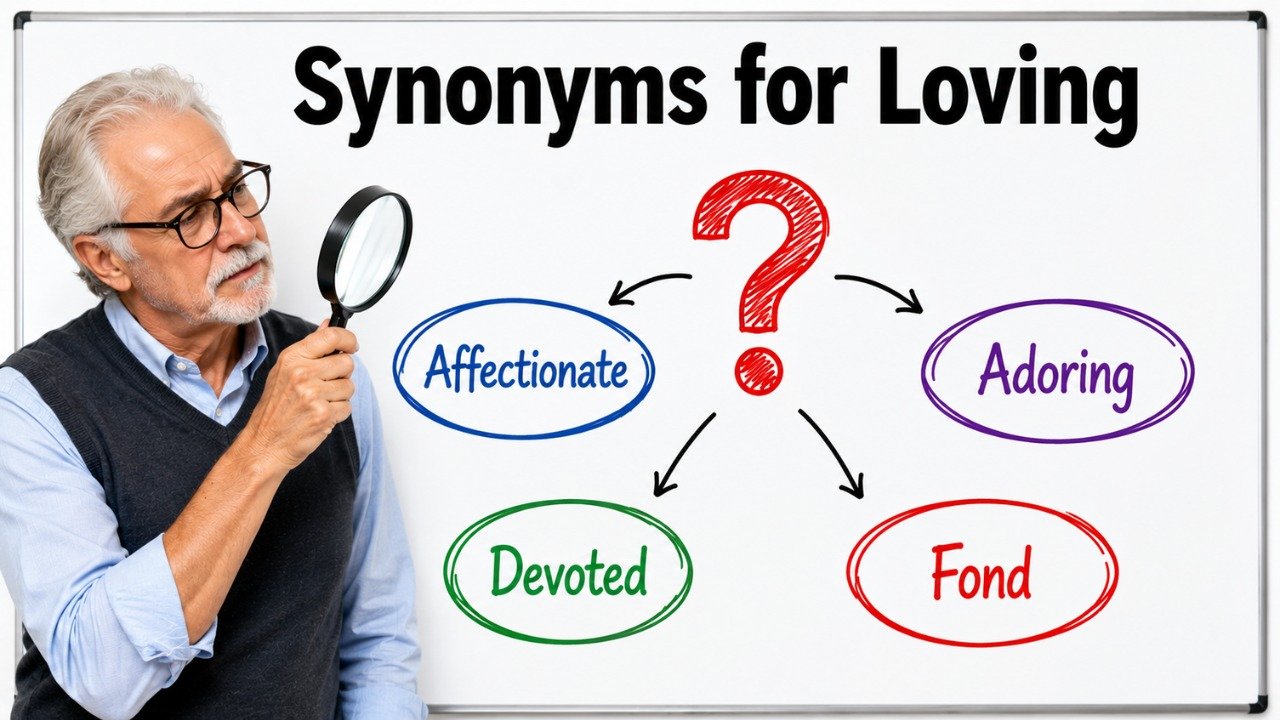
Quick Answer: The best synonyms for loving include affectionate, caring, devoted, tender, warm, fond, adoring, compassionate, nurturing, and kind. Use affectionate for openly expressed warmth, caring for concern shown through actions, devoted for deep loyalty, tender for gentle emotion, and adoring for intense admiration. Compassionate works well in formal writing, while warm and fond sound natural in casual conversation. Romantic describes love between partners, while nurturing is especially suitable for parental, family, or supportive care.
Pronunciation and Word Details
Word: Loving.
Pronunciation: /ˈlʌvɪŋ/.
Part of Speech: Adjective and verb form.
Meaning: Showing deep affection, care, warmth, or emotional attachment toward someone or something.
US Pronunciation:
UK Pronunciation:
What Does “Loving” Mean?
Loving means showing affection, care, tenderness, or emotional warmth toward another person, animal, place, activity, or idea.
As an adjective, loving describes someone or something that expresses love.
Example: She grew up in a loving family.
In this sentence, loving describes a family whose members regularly show care, affection, and emotional support.
Loving can also be the present participle of the verb love.
Example: He is loving his new job.
Here, loving means enjoying or appreciating something greatly. This conversational use is common when someone wants to emphasize strong enjoyment.
The word can describe romantic affection, parental care, close friendship, kindness, loyalty, emotional support, or enthusiasm.
Romantic Context: They have a loving relationship.
Family Context: He is a loving father.
Friendly Context: She sent a loving message to her closest friend.
Compassionate Context: The nurse provided loving care.
Enjoyment Context: We are loving the peaceful atmosphere.
Meaning, Tone, and Context of “Loving”
Loving usually has a warm, positive, and emotional tone. It suggests that affection is not merely felt but also expressed through words, behavior, care, attention, or support.
The word is common in both formal and casual English. However, its precise meaning depends on the relationship or situation being described.
Emotional Tone: Loving expresses genuine warmth, affection, and closeness.
Romantic Tone: It can describe affection between partners or spouses.
Family Tone: It often describes parents, children, siblings, and supportive households.
Compassionate Tone: It may refer to gentle care shown toward people who need comfort or protection.
Conversational Tone: People often use loving informally to express strong enjoyment.
Formal Tone: In reports, essays, or professional writing, compassionate, devoted, nurturing, or supportive may sometimes be more precise.
Loving is stronger than friendly because it suggests deeper emotional attachment. However, it is usually softer than passionate, which often communicates powerful romantic feeling or intense enthusiasm.
When and How to Use “Loving”
For Romantic Affection
Use loving to describe a relationship filled with tenderness, trust, care, and emotional closeness.
Example: They remained loving and supportive throughout their marriage.
For Family Relationships
Use loving when describing parents, children, siblings, or relatives who express warmth and care.
Example: She was raised by loving grandparents.
For Emotional Support
Use loving when someone provides reassurance, encouragement, or comfort.
Example: His loving words helped her feel less alone.
For Gentle Care
Use loving to describe actions performed with patience, kindness, and tenderness.
Example: The injured animal received loving care.
For Loyalty and Dedication
Use loving when affection is connected with commitment, faithfulness, or long lasting support.
Example: He was a loving and devoted partner.
For Friendship
Use loving for close friendships where affection is openly expressed.
Example: She wrote a loving note to her childhood friend.
For Enjoyment
Use loving in casual conversation to show that someone is enjoying an experience greatly.
Example: We are loving the new garden.
For Personal Qualities
Use loving to describe someone who naturally behaves with affection and kindness.
Example: Everyone knew her as a loving and generous person.
Best Synonyms for Loving
Affectionate
Synonym: Showing fondness through words, touch, or behavior.
Example: The affectionate child hugged her mother before leaving.
Caring
Synonym: Concerned about another person’s needs, feelings, or wellbeing.
Example: He is a caring teacher who listens carefully to his students.
Devoted
Synonym: Deeply loyal, committed, and emotionally attached.
Example: She remained devoted to her family throughout her life.
Tender
Synonym: Gentle, soft, and emotionally warm.
Example: He gave the frightened child a tender smile.
Warm
Synonym: Friendly, emotionally open, and welcoming.
Example: Her warm manner made every guest feel comfortable.
Fond
Synonym: Feeling affection or personal liking for someone or something.
Example: He was especially fond of his youngest niece.
Adoring
Synonym: Showing intense love, admiration, or affection.
Example: The actor thanked his adoring family for their support.
Compassionate
Synonym: Showing sympathy and a desire to help someone who is suffering.
Example: The compassionate volunteer treated everyone with dignity.
Nurturing
Synonym: Providing encouragement, protection, and support for growth.
Example: The children benefited from a nurturing home environment.
Kind
Synonym: Helpful, considerate, and concerned about others.
Example: Her kind response made the difficult conversation easier.
50 Synonyms for Loving with Short Meanings
- Affectionate: Openly showing fondness and emotional warmth.
- Caring: Concerned about another person’s needs and feelings.
- Devoted: Deeply loyal and committed.
- Tender: Gentle and emotionally warm.
- Warm: Friendly, welcoming, and emotionally open.
- Fond: Feeling personal affection or liking.
- Adoring: Showing intense love and admiration.
- Compassionate: Showing sympathy and a desire to help.
- Nurturing: Supporting someone’s emotional or personal growth.
- Kind: Considerate, helpful, and thoughtful.
- Gentle: Calm, soft, and careful in behavior.
- Attentive: Carefully noticing and responding to another person’s needs.
- Considerate: Thinking about how actions affect others.
- Thoughtful: Showing care through attention and helpful actions.
- Supportive: Providing encouragement, help, or emotional strength.
- Loyal: Remaining faithful to a person or relationship.
- Faithful: Consistently committed and dependable.
- Passionate: Expressing powerful love or enthusiasm.
- Romantic: Connected with love between partners.
- Amorous: Showing romantic attraction or desire.
- Doting: Giving someone a great amount of love and attention.
- Cherishing: Treating someone as deeply valuable and important.
- Appreciative: Feeling grateful and recognizing someone’s value.
- Admiring: Feeling respect, approval, or warm appreciation.
- Attached: Emotionally connected to someone or something.
- Enamored: Filled with romantic affection or fascination.
- Smitten: Strongly attracted or suddenly in love.
- Infatuated: Experiencing intense but sometimes temporary attraction.
- Besotted: Completely absorbed by strong affection or admiration.
- Worshipful: Showing extremely deep admiration or devotion.
- Protective: Wanting to keep someone safe from harm.
- Comforting: Providing emotional relief and reassurance.
- Reassuring: Helping someone feel safe, calm, or confident.
- Sympathetic: Understanding and sharing concern about another person’s difficulty.
- Empathetic: Understanding another person’s emotions and experience.
- Benevolent: Showing kindness and goodwill toward others.
- Warmhearted: Naturally kind, affectionate, and generous.
- Tenderhearted: Easily moved by affection, sympathy, or concern.
- Softhearted: Emotionally gentle and easily touched by others’ needs.
- Bighearted: Generous, forgiving, and caring.
- Generous: Willing to give time, help, attention, or resources.
- Selfless: Placing another person’s needs before personal benefit.
- Solicitous: Showing careful concern for someone’s wellbeing.
- Sweet: Pleasantly kind, gentle, and affectionate.
- Affectionate by Nature: Naturally comfortable expressing warmth and fondness.
- Full of Affection: Filled with obvious emotional warmth.
- Deeply Caring: Showing sincere and meaningful concern.
- Filled with Love: Expressing strong emotional attachment.
- Emotionally Warm: Openly communicating kindness and affection.
- Openly Affectionate: Willingly expressing love through words or actions.
Read Also:
Synonyms for Wanted
Synonyms for Loving by Context
When Loving Means Affectionate
Affectionate, warm, tender, fond, and sweet are useful when love is shown through words, gestures, touch, or friendly behavior.
Example With Loving: She gave her son a loving hug.
Example With Affectionate: She gave her son an affectionate hug.
Affectionate is often the closest general replacement because it communicates visible or openly expressed fondness.
When Loving Means Caring
Caring, compassionate, thoughtful, considerate, empathetic, and kind work well when the focus is concern for another person’s needs or feelings.
Example With Loving: The staff provided loving support during her recovery.
Example With Caring: The staff provided caring support during her recovery.
Caring is more practical than loving because it often emphasizes helpful actions rather than emotional attachment alone.
When Loving Means Devoted
Devoted, loyal, faithful, committed, and cherishing are suitable when love involves dedication or lasting support.
Example With Loving: He remained a loving husband throughout their life together.
Example With Devoted: He remained a devoted husband throughout their life together.
Devoted emphasizes commitment, while loving emphasizes affection.
When Loving Means Romantic
Romantic, passionate, amorous, enamored, smitten, and adoring describe love or attraction between partners.
Example With Loving: They shared a loving relationship.
Example With Romantic: They shared a romantic relationship.
Romantic focuses specifically on love between partners. Loving can describe romantic, family, or friendly relationships.
When Loving Means Nurturing
Nurturing, protective, attentive, supportive, and reassuring are useful when someone encourages growth, safety, or emotional wellbeing.
Example With Loving: The child needed a loving home.
Example With Nurturing: The child needed a nurturing home.
Nurturing is especially effective when discussing parenting, education, emotional development, or supportive environments.
When Loving Means Gentle
Tender, gentle, comforting, softhearted, and tenderhearted describe a soft and sensitive form of affection.
Example With Loving: She spoke in a loving voice.
Example With Tender: She spoke in a tender voice.
Tender focuses on the softness of an action, expression, or emotion.
When Loving Means Strong Enjoyment
Fond of, enthusiastic about, delighted by, enjoying, and passionate about can replace loving when the word refers to an activity or experience.
Example With Loving: I am loving this book.
Example With Enjoying: I am enjoying this book.
Enjoying is more neutral and standard, while loving sounds more enthusiastic and conversational.
Another Word for Loving
Affectionate is often the best single replacement for loving because it describes someone who openly expresses fondness and emotional warmth.
However, the best alternative depends on the intended meaning. Caring is better for helpful behavior, devoted is better for loyalty, romantic is better for relationships between partners, and compassionate is better when responding to suffering.
Original: She is a loving mother.
Better Option: She is an affectionate mother.
Original: He provided loving support during her illness.
Better Option: He provided compassionate support during her illness.
Original: They remained loving throughout their marriage.
Better Option: They remained devoted throughout their marriage.
Original: The teacher created a loving classroom.
Better Option: The teacher created a nurturing classroom.
When Not to Use “Loving”
Loving is useful, but it may sound vague when a more specific word could explain the type of affection, care, or commitment being described.
When the Meaning Is Strictly Professional
Loving may sound overly emotional in formal workplace writing. Supportive, considerate, respectful, or compassionate may be more suitable.
Weak: The manager created a loving workplace.
Better: The manager created a supportive workplace.
When Describing Medical or Practical Care
Loving can describe emotional warmth, but attentive, compassionate, or professional may provide clearer information.
Weak: The patient received loving medical treatment.
Better: The patient received attentive and compassionate medical treatment.
When Describing Loyalty
Loving does not always communicate long lasting commitment. Devoted or faithful may be more precise.
Weak: She was a loving supporter of the organization’s mission.
Better: She was a devoted supporter of the organization’s mission.
When Describing Romantic Attraction
Loving may sound broad if the sentence specifically concerns romance or attraction.
Weak: He gave her a loving invitation to dinner.
Better: He gave her a romantic invitation to dinner.
When Expressing Simple Enjoyment
In formal writing, enjoying or appreciating may sound more natural than loving.
Weak: The researchers were loving the results of the study.
Better: The researchers were pleased with the results of the study.
When the Word Becomes Repetitive
Repeated use of loving can make writing sound limited or overly sentimental.
Weak: She was a loving mother with a loving voice and a loving personality.
Better: She was an affectionate mother with a gentle voice and a caring personality.
Words Commonly Confused With Loving
Loving vs Affectionate: Loving describes the presence of love, while affectionate focuses on how fondness is visibly expressed through words, touch, or behavior.
Loving vs Caring: Loving suggests emotional attachment, while caring emphasizes concern and helpful action.
Loving vs Devoted: Loving communicates affection, while devoted emphasizes loyalty and commitment.
Loving vs Romantic: Loving can describe family, friendship, or romantic affection. Romantic usually refers specifically to attraction or love between partners.
Loving vs Compassionate: Loving involves emotional warmth, while compassionate involves understanding suffering and wanting to help.
Loving vs Fond: Loving is generally stronger. Fond suggests gentle liking or affection without necessarily implying deep love.
Loving vs Passionate: Loving is warm and broad, while passionate expresses stronger emotion, desire, or enthusiasm.
Loving vs Nurturing: Loving describes affection, while nurturing describes actions that encourage safety, development, or growth.
Loving vs Lovable: Loving describes someone who gives love. Lovable describes someone who inspires or deserves love.
Loving vs Beloved: Loving describes the person expressing affection. Beloved describes the person who receives affection and is deeply loved.
Which Synonym Should You Choose?
Choose Affectionate: When someone openly expresses warmth through hugs, words, smiles, or gentle behavior.
Choose Caring: When concern is demonstrated through helpful actions and attention.
Choose Devoted: When emphasizing loyalty, faithfulness, or long lasting commitment.
Choose Tender: When describing gentle words, expressions, touches, or emotional moments.
Choose Warm: When describing a friendly, welcoming, and emotionally open personality.
Choose Fond: When expressing gentle affection or personal liking.
Choose Adoring: When the love or admiration is especially intense.
Choose Compassionate: When discussing kindness toward someone experiencing pain, difficulty, or loss.
Choose Nurturing: When discussing parenting, teaching, emotional development, or supportive environments.
Choose Romantic: When the relationship involves attraction or love between partners.
Choose Passionate: When the feeling is powerful, energetic, or intense.
Choose Supportive: When describing encouragement in professional, educational, family, or personal situations.
Choose Enjoying: When loving means taking pleasure in an activity, object, or experience.
Choose Appreciative: When affection is connected with gratitude or recognition of value.
Choose Kind: When the sentence focuses on considerate and helpful behavior rather than deep emotional attachment.
Real Life Examples of “Loving” in Sentences
Original: She is a loving grandmother who always makes time for her family.
Better Option: She is an affectionate grandmother who always makes time for her family.
Original: He gave his friend a loving message before the interview.
Better Option: He gave his friend a supportive message before the interview.
Original: They created a loving home for their children.
Better Option: They created a nurturing home for their children.
Original: The couple remained loving during a difficult period.
Better Option: The couple remained devoted during a difficult period.
Original: She offered loving care to the frightened animal.
Better Option: She offered compassionate care to the frightened animal.
Original: His loving smile immediately made her feel calmer.
Better Option: His warm smile immediately made her feel calmer.
Original: The father spoke to his child in a loving voice.
Better Option: The father spoke to his child in a tender voice.
Original: She wrote a loving letter to her partner.
Better Option: She wrote a romantic letter to her partner.
Original: He was loving every moment of the journey.
Better Option: He was enjoying every moment of the journey.
Original: The community remembered her as a loving and generous person.
Better Option: The community remembered her as a kind and bighearted person.
Synonym Groups and Usage Differences
Affection Group
Affectionate, warm, fond, sweet, and tender describe emotional closeness and visible expressions of fondness.
Affectionate is useful for physical or verbal expressions. Warm describes a welcoming personality. Fond usually expresses gentle liking. Tender emphasizes softness and sensitivity.
Example: Her affectionate greeting made everyone feel welcome.
Care Group
Caring, compassionate, attentive, considerate, and empathetic describe concern for another person’s feelings or needs.
Caring is broad and practical. Compassionate is strongest when someone is suffering. Attentive focuses on noticing needs. Empathetic emphasizes emotional understanding.
Example: The compassionate counselor listened without judging him.
Devotion Group
Devoted, loyal, faithful, cherishing, and supportive describe love expressed through commitment and consistent presence.
Devoted is useful for family and romantic relationships. Loyal emphasizes reliability. Faithful often refers to trust within a committed relationship.
Example: She remained devoted to her partner during his recovery.
Romantic Group
Romantic, amorous, passionate, enamored, and smitten relate to attraction or love between partners.
Romantic is the most neutral choice. Amorous suggests romantic desire. Passionate expresses powerful emotion. Smitten often suggests sudden attraction.
Example: He planned a romantic evening for their anniversary.
Gentle Emotion Group
Tender, gentle, softhearted, tenderhearted, and comforting describe a soft, sensitive, and reassuring form of love.
These words work well for voices, expressions, gestures, care, and emotional responses.
Example: Her tender response helped the child feel safe.
Support Group
Supportive, reassuring, protective, nurturing, and comforting describe love expressed through assistance, encouragement, or safety.
Supportive emphasizes encouragement. Protective emphasizes safety. Nurturing focuses on growth. Reassuring reduces worry.
Example: His reassuring words gave her confidence.
Intense Affection Group
Adoring, besotted, infatuated, worshipful, and passionate express unusually strong affection or admiration.
Adoring is positive and warm. Infatuated may suggest temporary or unrealistic attraction. Besotted can suggest that someone’s judgment is affected by affection.
Example: The adoring parents proudly watched their daughter perform.
Generous Character Group
Kind, benevolent, generous, selfless, bighearted, and warmhearted describe a personality that expresses love through goodwill and helpful actions.
These words may describe someone who cares broadly for relatives, friends, neighbors, or strangers.
Example: Her warmhearted nature made people feel valued.
Antonyms of Loving
The opposite of loving depends on whether the intended meaning is affection, kindness, care, loyalty, warmth, or enjoyment.
Hateful: Filled with intense dislike or hostility.
Unloving: Not showing affection or emotional warmth.
Uncaring: Showing little concern for another person’s needs.
Cold: Emotionally distant or lacking warmth.
Indifferent: Having little interest, concern, or emotional involvement.
Cruel: Deliberately causing pain or showing no compassion.
Harsh: Severe, rough, or lacking gentleness.
Hostile: Unfriendly, aggressive, or openly opposed.
Neglectful: Failing to provide necessary care or attention.
Detached: Emotionally distant or uninvolved.
Disloyal: Failing to remain faithful or supportive.
Thoughtless: Failing to consider another person’s feelings.
Insensitive: Not recognizing or respecting emotional needs.
Unkind: Lacking kindness or consideration.
Resentful: Feeling bitterness or anger toward someone.
Comparison: Loving vs Related Words
Loving vs Affectionate
Loving describes a person, relationship, or action connected with love. Affectionate focuses more specifically on visible expressions of fondness.
Example With Loving: She was a loving aunt.
Example With Affectionate: She greeted her niece with an affectionate hug.
Loving vs Caring
Loving emphasizes emotional attachment. Caring emphasizes concern, responsibility, and helpful behavior.
Example With Loving: He was a loving brother.
Example With Caring: He checked on his sister every evening because he was caring and attentive.
Loving vs Devoted
Loving expresses affection, while devoted emphasizes loyalty and commitment over time.
Example With Loving: They had a loving marriage.
Example With Devoted: They remained devoted to each other for many years.
Loving vs Tender
Loving is a broad description of affection. Tender emphasizes gentleness, sensitivity, or emotional softness.
Example With Loving: She gave him a loving look.
Example With Tender: She gave him a tender smile.
Loving vs Warm
Loving communicates deep affection. Warm can describe friendliness and openness even when the relationship is not deeply personal.
Example With Loving: He wrote a loving note to his daughter.
Example With Warm: He gave the new employee a warm welcome.
Loving vs Romantic
Loving can describe many types of relationships. Romantic refers specifically to affection or attraction between partners.
Example With Loving: She shared a loving bond with her sister.
Example With Romantic: She planned a romantic dinner with her partner.
Loving vs Compassionate
Loving is based on affection. Compassionate is based on understanding suffering and wanting to reduce it.
Example With Loving: The family offered loving encouragement.
Example With Compassionate: The counselor offered compassionate guidance after the loss.
Loving vs Passionate
Loving sounds warm and steady. Passionate sounds more intense and emotionally powerful.
Example With Loving: They shared a loving relationship.
Example With Passionate: They shared a passionate romance.
Loving vs Fond
Loving usually expresses deeper emotion. Fond communicates gentle affection or liking.
Example With Loving: She was a loving mother.
Example With Fond: She was fond of the neighborhood where she grew up.
Loving vs Lovable
Loving describes someone who gives or shows love. Lovable describes someone who is easy to love.
Example With Loving: The loving dog stayed close to the child.
Example With Lovable: The playful dog had a lovable personality.
Common Phrases and Expressions With “Loving”
Loving Family: A family whose members show affection, support, and care.
Loving Relationship: A close relationship based on warmth, trust, and mutual affection.
Loving Parent: A mother or father who expresses care, protection, and emotional support.
Loving Partner: A partner who shows affection, loyalty, and consideration.
Loving Care: Gentle and attentive support given with affection.
Loving Support: Encouragement offered with warmth and genuine concern.
Loving Embrace: A hug that communicates affection and emotional closeness.
Loving Words: Kind and affectionate statements spoken or written to someone.
Loving Home: A safe household filled with care, warmth, and support.
Loving Memory: A warm and affectionate remembrance of someone or something.
Common Mistakes to Avoid
Repeating Loving Too Often
Using loving several times in one sentence or paragraph can make the writing sound repetitive.
Incorrect: She was a loving parent who created a loving home through her loving actions.
Improved: She was an affectionate parent who created a nurturing home through her thoughtful actions.
Confusing Loving With Lovable
Loving describes someone who expresses love. Lovable describes someone who receives or inspires love.
Incorrect: The child was loving because everyone adored him.
Improved: The child was lovable because everyone adored him.
Using Loving When Caring Is More Accurate
Loving may not clearly describe practical concern or assistance.
Unclear: The assistant gave loving help with the project.
Clearer: The assistant gave thoughtful and supportive help with the project.
Using Loving in Overly Formal Contexts
Loving may sound emotional in reports, policies, or academic discussions.
Too Casual: The program created a loving learning environment.
More Formal: The program created a supportive and nurturing learning environment.
Choosing an Overly Strong Synonym
Adoring, besotted, and passionate express stronger feelings than loving.
Too Strong: The teacher was besotted with her students.
Better: The teacher was caring and devoted to her students.
Using Romantic for Family Affection
Romantic should not replace loving when discussing parents, siblings, children, or ordinary friendship.
Incorrect: He had a romantic bond with his brother.
Correct: He had a loving bond with his brother.
Confusing Affection With Compassion
Affection is based on fondness or emotional attachment. Compassion is a response to another person’s pain or difficulty.
Incorrect: The volunteer felt romantic affection for every person seeking help.
Correct: The volunteer showed compassion toward every person seeking help.
Using Loving Vaguely
A more specific synonym can make the sentence clearer and more informative.
Vague: She gave him a loving response.
Specific: She gave him a reassuring and compassionate response.
Conclusion
The best synonyms for loving depend on the type of emotion or behavior being described. Affectionate suits openly expressed warmth, caring emphasizes helpful concern, devoted communicates loyalty, and tender describes gentle emotion. Choose compassionate for support during hardship, nurturing for growth and protection, and romantic for affection between partners. These synonyms for loving can make descriptions clearer, more natural, and more precise while preserving the warmth and positive meaning of the original word.
FAQs About Synonyms for Loving
What Is the Best Synonym for Loving?
Affectionate is the best general synonym because it describes someone who openly expresses fondness, warmth, and emotional attachment.
What Is a Stronger Word Than Loving?
Adoring, devoted, passionate, or cherishing can sound stronger. The best choice depends on whether the sentence emphasizes admiration, loyalty, romance, or emotional value.
What Is a Formal Synonym for Loving?
Compassionate, devoted, nurturing, benevolent, and supportive are suitable formal alternatives. Choose the word that most accurately describes the intended action or relationship.
What Is a Romantic Synonym for Loving?
Romantic, passionate, amorous, enamored, and adoring can describe romantic love. Romantic is the most neutral, while passionate and enamored express stronger feelings.
What Is a Synonym for a Loving Person?
A loving person may be described as affectionate, caring, kind, warmhearted, compassionate, gentle, or thoughtful.
Is Caring the Same as Loving?
The words are related but not identical. Loving emphasizes emotional affection, while caring emphasizes concern shown through attention, responsibility, or helpful actions.
What Is the Difference Between Loving and Lovable?
Loving describes someone who expresses love. Lovable describes someone or something that inspires affection and is easy to love.
