
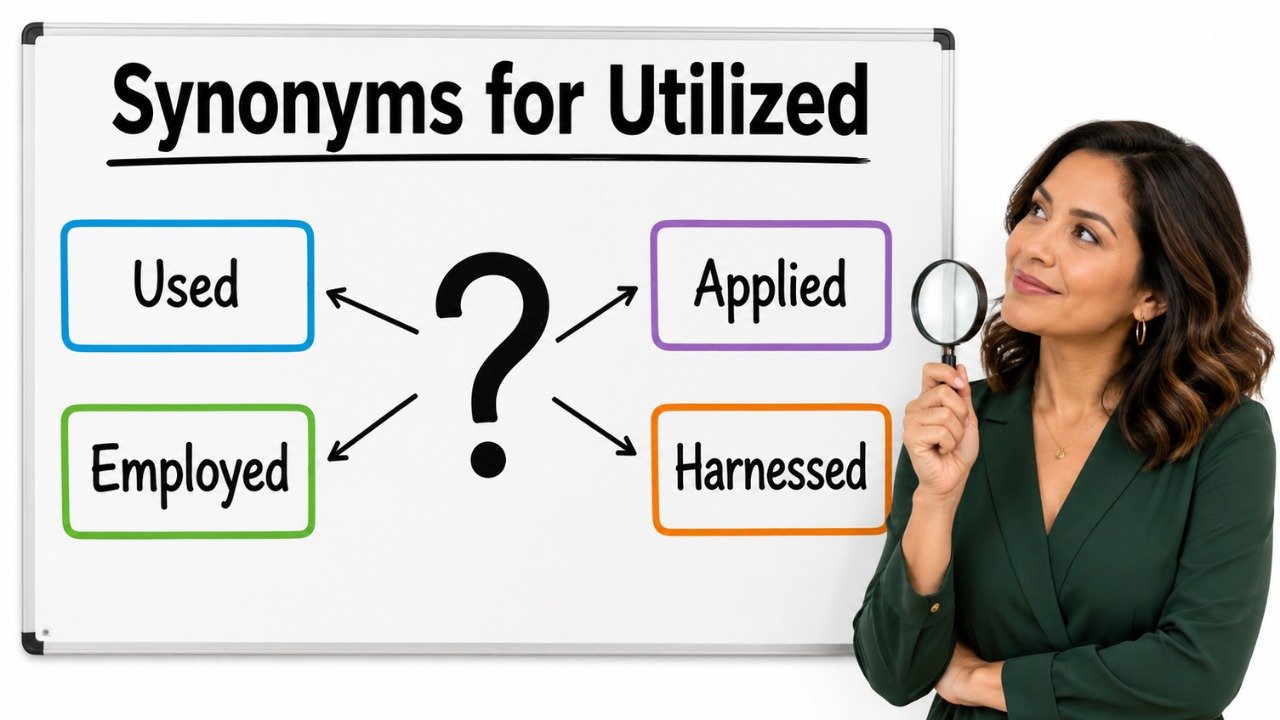
Quick Answer: The best synonyms for utilized include used, employed, applied, harnessed, deployed, implemented, operated, exercised, adopted, and put to use. Used is the clearest choice for everyday writing, while employed and applied work well in formal or academic contexts. Harnessed is useful when a resource or ability produces a benefit, deployed suits resources or equipment, implemented fits methods and plans, and exercised is best for rights, authority, or control.
Pronunciation and Word Details
Word: Utilized
Pronunciation: /ˈjuːtəlaɪzd/
Part of Speech: Verb, past tense and past participle of utilize
Meaning: Used something for a practical purpose or to achieve a particular result.
US Pronunciation:
UK Pronunciation:
What Does “Utilized” Mean?
Utilized means used something for a particular purpose or practical result. It is the past tense and past participle form of the verb utilize.
The word often appears when describing how resources, equipment, information, skills, methods, opportunities, space, or technology were put into use.
Example: The team utilized the available data to improve the report.
In many sentences, utilized can simply be replaced with used.
Example: The team used the available data to improve the report.
However, more specific alternatives can sometimes communicate the action more clearly. Applied works well for knowledge or techniques, employed suits methods or strategies, harnessed emphasizes gaining value from a resource, and deployed often describes equipment, personnel, or resources being placed into use.
Utilized is grammatically correct, but it can sound more formal than necessary when the simpler word used communicates the same meaning.
Meaning, Tone, and Context of “Utilized”
Utilized generally has a neutral to formal tone. It is common in academic, professional, technical, scientific, administrative, and analytical writing.
In ordinary conversation, used is usually more natural.
Formal Example: The researchers utilized several analytical methods.
Conversational Example: The researchers used several methods.
Utilized can sound appropriate when the writer wants to emphasize purposeful or practical use. It often suggests that something was made useful in order to achieve a result.
Example: The unused room was utilized as a temporary workspace.
The word is less emotional than alternatives such as exploited, which can sometimes suggest unfair or selfish use.
In essays and reports, utilized may be useful occasionally, but repeating it can make writing sound unnecessarily complicated. Clear alternatives such as used, applied, employed, implemented, or adopted often improve readability.
When and How to Use “Utilized”
For Resources: Use utilized when describing resources that were put to practical use.
Example: The organization utilized its available resources efficiently.
For Information: Utilized can describe information or data being used to support a decision or conclusion.
Example: The analyst utilized recent data to identify important patterns.
For Skills: Use utilized when someone makes practical use of an ability or area of expertise.
Example: She utilized her communication skills during the discussion.
For Equipment: Utilized can describe tools, machines, or equipment being used for a particular task.
Example: The technicians utilized specialized equipment during the inspection.
For Methods: Use utilized when a particular technique, process, or approach was selected and used.
Example: The study utilized several methods to evaluate the results.
For Space: Utilized may describe an area being put to productive use.
Example: The empty room was utilized for additional storage.
For Opportunities: Utilized can describe making practical use of an available opportunity.
Example: The students utilized the additional study period before the examination.
For Technology: Use utilized when explaining how a technological tool or system supported a task.
Example: The project utilized digital tools to organize large amounts of information.
Best Synonyms for Utilized
Used: Put something into action or service for a purpose.
Example: The students used several sources to prepare their essays.
Employed: Used a method, skill, or resource for a particular purpose.
Example: The researchers employed a different method to examine the results.
Applied: Put knowledge, principles, skills, or techniques into practical use.
Example: She applied her training to solve the problem.
Harnessed: Used the power, value, or potential of something effectively.
Example: The community harnessed local knowledge to improve the plan.
Deployed: Put resources, equipment, people, or systems into effective use.
Example: Additional equipment was deployed during the operation.
Implemented: Put a plan, policy, method, or system into effect.
Example: The team implemented a new procedure.
Operated: Used or controlled machinery, equipment, or a system.
Example: The technician operated the equipment carefully.
Exercised: Made use of a right, power, authority, judgment, or ability.
Example: She exercised her right to request further information.
Adopted: Chose and began using a method, practice, strategy, or system.
Example: The department adopted a simpler reporting process.
Put to Use: Made practical use of something available.
Example: The additional space was put to use as a study area.
50 Synonyms for Utilized with Short Meanings
- Used: Put something to a particular purpose.
- Employed: Made use of something to achieve a result.
- Applied: Put knowledge, methods, or skills into practice.
- Harnessed: Made productive use of power or potential.
- Deployed: Positioned or made resources available for use.
- Implemented: Put a plan, method, or system into effect.
- Operated: Controlled or used equipment or machinery.
- Exercised: Made use of a right, power, skill, or authority.
- Adopted: Chose and began using something.
- Leveraged: Used an advantage or resource to gain a result.
- Exploited: Made full use of a resource or opportunity, sometimes unfairly.
- Engaged: Brought something into active use.
- Activated: Made something active or operational.
- Practiced: Put a skill, method, or principle into use.
- Executed: Carried out a plan, instruction, or procedure.
- Performed: Carried out an action, task, or function.
- Administered: Applied or managed something according to a purpose.
- Handled: Used, managed, or controlled something.
- Manipulated: Controlled or worked with something to produce a result.
- Processed: Used a method to handle or transform information or materials.
- Consumed: Used up a resource, supply, or quantity.
- Expended: Used resources such as time, energy, or money.
- Exercised Control Over: Made practical use of control or authority.
- Put to Use: Made something useful for a purpose.
- Made Use Of: Used something available.
- Put Into Practice: Applied an idea, method, or skill.
- Put Into Operation: Made a system or process active.
- Put Into Service: Began using equipment, resources, or facilities.
- Brought Into Use: Made something available for practical use.
- Took Advantage Of: Used an opportunity or favorable situation.
- Drew On: Used knowledge, experience, information, or resources.
- Called On: Used a resource, skill, or person when needed.
- Relied On: Used something as support or assistance.
- Worked With: Used a material, system, method, or resource.
- Made Productive Use Of: Used something in a beneficial way.
- Made Effective Use Of: Used something successfully for its intended purpose.
- Made Practical Use Of: Applied something to a real task or need.
- Capitalized On: Used a favorable opportunity effectively.
- Tapped Into: Accessed and used a source of knowledge, energy, or potential.
- Accessed: Reached and used information, resources, or systems.
- Integrated: Incorporated something into a larger process or system.
- Incorporated: Included and used something as part of a whole.
- Introduced: Brought a method, tool, or practice into use.
- Assigned: Directed a resource, person, or item toward a particular purpose.
- Allocated: Set aside resources for specific use.
- Mobilized: Organized resources or people for active use.
- Adapted: Modified something so it could be used effectively.
- Converted: Changed something so it could serve another purpose.
- Reused: Used something again.
- Repurposed: Used something for a new or different purpose.
Read Also:
Synonyms for Supernatural

Synonyms for Utilized by Context
When Utilized Means Used
Used, employed, made use of, put to use, and worked with are strong general alternatives.
Example: The team used all available information before making its decision.
Used is usually the clearest option when no special meaning needs to be emphasized.
Example: The students used the library resources for their assignment.
Employed sounds more formal and is especially useful for methods, techniques, and strategies.
Example: The researchers employed several testing methods.
When Utilized Means Applied
Applied, practiced, implemented, executed, and put into practice are useful when knowledge, methods, ideas, or plans are being used.
Example: She applied her previous experience to the new assignment.
Implemented works particularly well when a plan, policy, procedure, or system becomes active.
Example: The organization implemented a new safety procedure.
When Utilized Means Harnessed
Harnessed, tapped into, leveraged, capitalized on, and drew on emphasize using the potential or value of something.
Example: The team harnessed local expertise to improve the project.
Drew on is especially natural for experience, knowledge, memories, or information.
Example: She drew on years of experience when making the decision.
When Utilized Means Deployed
Deployed, mobilized, allocated, assigned, and put into service are useful for resources, personnel, equipment, or systems.
Example: Extra resources were deployed to complete the work.
Allocated focuses on setting resources aside for a particular purpose.
Example: Additional funds were allocated to the project.
When Utilized Means Operated
Operated, handled, activated, engaged, and put into operation suit machinery, equipment, devices, or systems.
Example: The technician operated the machine according to the instructions.
Activated emphasizes making something functional or active.
Example: The emergency system was activated immediately.
When Utilized Means Repurposed
Repurposed, adapted, converted, reused, and made productive use of describe using something in a new or improved way.
Example: The unused room was repurposed as a study area.
Converted emphasizes changing something so that it can perform another function.
Example: The storage area was converted into a workspace.
Another Word for Utilized
The best single replacement for utilized is usually used because it is simple, natural, and suitable for most contexts. However, the best alternative depends on what was utilized and how it was used.
Original: The researchers utilized several methods during the study.
Better Option: The researchers employed several methods during the study.
Original: She utilized her experience to solve the problem.
Better Option: She applied her experience to solve the problem.
Original: The team utilized available resources efficiently.
Better Option: The team harnessed available resources efficiently.
Original: The organization utilized a new procedure.
Better Option: The organization implemented a new procedure.
When Not to Use “Utilized”
Utilized should not automatically replace used. In simple sentences, utilized can sound unnecessarily formal or complicated.
Weak: She utilized a pencil to write the note.
Better: She used a pencil to write the note.
Use a more specific verb when it communicates the action more clearly.
Weak: The technician utilized the machine.
Better: The technician operated the machine.
Utilized can also become repetitive in formal writing.
Weak: The study utilized surveys, utilized interviews, and utilized written records.
Better: The study employed surveys, conducted interviews, and examined written records.
Avoid utilized when the intended meaning is implementation rather than general use.
Weak: The organization utilized a new policy.
Better: The organization implemented a new policy.
Do not choose a sophisticated synonym merely because it sounds more formal. Clarity should determine the word choice.
Words Commonly Confused With Utilized
Utilized vs Used: Both can mean putting something to a purpose. Used is simpler and more common, while utilized can emphasize purposeful or practical use.
Utilized vs Employed: Utilized is broad, while employed is especially natural for methods, techniques, strategies, and resources.
Utilized vs Applied: Applied is more precise when knowledge, skills, principles, or techniques are put into practice.
Utilized vs Implemented: Implemented means putting a plan, policy, process, or system into effect. Utilized means making use of something that is available.
Utilized vs Harnessed: Harnessed emphasizes gaining productive value from energy, ability, knowledge, resources, or potential.
Utilized vs Deployed: Deployed generally refers to positioning or assigning resources, personnel, systems, or equipment so they can be used.
Utilized vs Exploited: Exploited can mean making full use of something, but it may also carry a negative sense of taking unfair advantage of someone or something.
Which Synonym Should You Choose?
Choose used for clear everyday writing, ordinary conversation, simple instructions, and general descriptions.
Choose employed in formal writing when discussing methods, strategies, techniques, or resources.
Choose applied when referring to knowledge, skills, principles, theories, or techniques.
Choose harnessed when emphasizing the productive use of energy, ability, knowledge, potential, or resources.
Choose deployed in reports and professional writing when resources, equipment, systems, or personnel are placed into active use.
Choose implemented when describing a plan, policy, procedure, method, or system that was put into effect.
Choose operated when someone controls or uses machinery, equipment, or a technical system.
Choose exercised for rights, authority, judgment, control, or powers.
Choose adopted when a person or group chooses and begins using a method, practice, approach, or system.
Choose repurposed when something is used for a different purpose from the one originally intended.
In essays and academic writing, employed and applied are often clearer than utilized when the exact kind of use matters. In emails and everyday communication, used is generally the most natural choice.
Real Life Examples of “Utilized” in Sentences
Original: The students utilized several books during their research.
Better Option: The students used several books during their research.
Original: The researchers utilized a different method to analyze the results.
Better Option: The researchers employed a different method to analyze the results.
Original: She utilized her training to resolve the problem.
Better Option: She applied her training to resolve the problem.
Original: The team utilized local knowledge during the planning process.
Better Option: The team drew on local knowledge during the planning process.
Original: The organization utilized additional resources during the project.
Better Option: The organization deployed additional resources during the project.
Original: The technicians utilized specialized equipment.
Better Option: The technicians operated specialized equipment.
Original: The department utilized a new reporting procedure.
Better Option: The department implemented a new reporting procedure.
Original: The group utilized the opportunity to collect more information.
Better Option: The group took advantage of the opportunity to collect more information.
Original: The unused office was utilized as a meeting area.
Better Option: The unused office was repurposed as a meeting area.
Original: She utilized her authority to approve the request.
Better Option: She exercised her authority to approve the request.
Synonym Groups and Usage Differences
General Use Group
Used, employed, made use of, put to use, and worked with describe general practical use.
Used is the simplest and broadest choice. Employed sounds more formal.
Example: The researcher employed several methods to verify the findings.
Knowledge and Skill Group
Applied, practiced, drew on, tapped into, and put into practice work well for abilities, experience, knowledge, and techniques.
Applied emphasizes transferring knowledge or skill into a practical situation.
Example: She applied her technical knowledge to the problem.
Resource Group
Harnessed, deployed, mobilized, allocated, leveraged, and capitalized on focus on gaining value from available resources or opportunities.
Harnessed emphasizes productive potential, while deployed focuses on making resources available for action.
Example: The team harnessed its combined experience to improve the outcome.
Plan and Method Group
Implemented, executed, adopted, introduced, and put into operation are useful for plans, procedures, systems, and methods.
Implemented indicates that something moved from planning into actual practice.
Example: The organization implemented the revised procedure.
Equipment Group
Operated, handled, activated, engaged, and put into service relate to tools, machinery, equipment, or systems.
Operated is usually the most precise choice when someone directly controls a machine.
Example: The operator handled the equipment carefully.
New Purpose Group
Repurposed, adapted, converted, reused, and incorporated describe using something differently or integrating it into another purpose.
Example: The old materials were repurposed for the new project.
Antonyms of Utilized
The opposite of utilized depends on whether something was unused, ignored, rejected, wasted, or removed from service.
Ignored: Gave no attention or practical use to something.
Neglected: Failed to use, manage, or care for something properly.
Discarded: Threw away or stopped using something.
Rejected: Refused to accept or use something.
Abandoned: Stopped using or supporting something.
Avoided: Deliberately chose not to use something.
Overlooked: Failed to notice or make use of something.
Wasted: Used something poorly or failed to gain value from it.
Preserved: Kept something without consuming or using it.
Stored: Kept something for possible later use instead of using it immediately.
Deactivated: Made a system or device inactive.
Withheld: Kept something from being provided or used.
Comparison: Utilized vs Related Words
Utilized vs Used
Utilized and used can often replace each other, but used is shorter and more natural in everyday English. Utilized can emphasize purposeful use.
Example With Utilized: The team utilized the available space for storage.
Example With Used: The team used the available space for storage.
Utilized vs Employed
Employed often sounds more precise when discussing a method, strategy, technique, or approach.
Example With Utilized: The study utilized several research methods.
Example With Employed: The study employed several research methods.
Utilized vs Applied
Applied focuses on putting knowledge, skills, principles, or techniques into practice.
Example With Utilized: She utilized her knowledge during the assignment.
Example With Applied: She applied her knowledge during the assignment.
Utilized vs Harnessed
Harnessed suggests gaining productive value from something with useful potential.
Example With Utilized: The community utilized local expertise.
Example With Harnessed: The community harnessed local expertise.
Utilized vs Implemented
Utilized means used, while implemented means put into effect.
Example With Utilized: The department utilized the new system.
Example With Implemented: The department implemented the new system.
The first sentence focuses on using the system. The second focuses on introducing it into actual operation.
Utilized vs Deployed
Deployed emphasizes positioning resources, equipment, personnel, or systems where they can perform a function.
Example With Utilized: Additional resources were utilized during the operation.
Example With Deployed: Additional resources were deployed during the operation.
Utilized vs Exploited
Both can describe making use of something, but exploited may suggest excessive, selfish, or unfair use depending on context.
Example With Utilized: The team utilized the available opportunity.
Example With Exploited: The team exploited a weakness in the opposing strategy.
Common Phrases and Expressions With “Utilized”
Widely Utilized: Used by many people or in many situations.
Frequently Utilized: Used often.
Commonly Utilized: Regularly used in a particular context.
Effectively Utilized: Used successfully to achieve a desired result.
Efficiently Utilized: Used with little unnecessary waste.
Fully Utilized: Used to its complete available capacity.
Properly Utilized: Used in the correct or intended way.
Successfully Utilized: Used with a positive or intended outcome.
Resources Utilized: Resources that were put into use.
Methods Utilized: Methods that were employed for a particular task or purpose.
Common Mistakes to Avoid
Overusing Utilized: Repeating utilized can make writing sound mechanical or unnecessarily formal. Use simpler or more precise verbs when possible.
Weak: The team utilized a computer, utilized a database, and utilized a calculator.
Better: The team used a computer, accessed a database, and worked with a calculator.
Using Utilized Instead of Used Everywhere: Utilized is not automatically better because it sounds more formal.
Unnatural: She utilized a spoon to eat her soup.
Natural: She used a spoon to eat her soup.
Choosing the Wrong Synonym: Employed, implemented, harnessed, and deployed do not mean exactly the same thing.
Use employed for methods, implemented for plans, harnessed for potential, and deployed for resources placed into action.
Confusing Utilized With Implemented: A system can first be implemented and then utilized. These actions are related but different.
Example: The new system was implemented in May and utilized by staff throughout the following months.
Using Exploited Without Considering Tone: Exploited may sound negative when referring to people, workers, relationships, or vulnerable situations. Use it carefully.
Being Too Vague: Utilized may hide the actual action. A specific verb often gives readers more useful information.
Instead of saying someone utilized a machine, say operated the machine. Instead of saying someone utilized knowledge, say applied the knowledge.
Ignoring Readability: Academic and professional writing does not require complicated vocabulary in every sentence. Clear wording usually communicates ideas more effectively.
Conclusion
Understanding synonyms for utilized helps you choose clearer and more precise language for different situations. Used is the strongest general replacement, while employed suits methods, applied works for knowledge and skills, implemented fits plans and systems, and deployed describes resources placed into action. Harnessed highlights productive potential, operated fits equipment, and repurposed describes a new use. The best synonym depends on what was used, why it was used, and how specifically you want to describe the action.
FAQs About Synonyms for Utilized
What is the best synonym for utilized?
Used is the best general synonym for utilized because it is clear, simple, and appropriate in most contexts.
What is a formal synonym for utilized?
Employed is a strong formal alternative, especially when describing methods, techniques, strategies, or resources.
Is used the same as utilized?
They often have the same basic meaning. Used is more common and direct, while utilized can emphasize practical or purposeful use.
What can replace utilized in academic writing?
Employed, applied, implemented, adopted, and used are useful choices. The best word depends on whether you are discussing a method, theory, skill, procedure, or resource.
What is another word for utilized resources?
Harnessed, deployed, allocated, mobilized, and used are useful alternatives for utilized resources, depending on how the resources were put into action.
What is another word for utilized skills?
Applied is usually the strongest choice when talking about skills. Exercised, practiced, drew on, and put into practice can also work in suitable contexts.
Should I use utilized or used in an essay?
Use used when it communicates the meaning clearly. Choose utilized or a more specific alternative such as employed, applied, or implemented only when it improves precision or fits the context better.
