
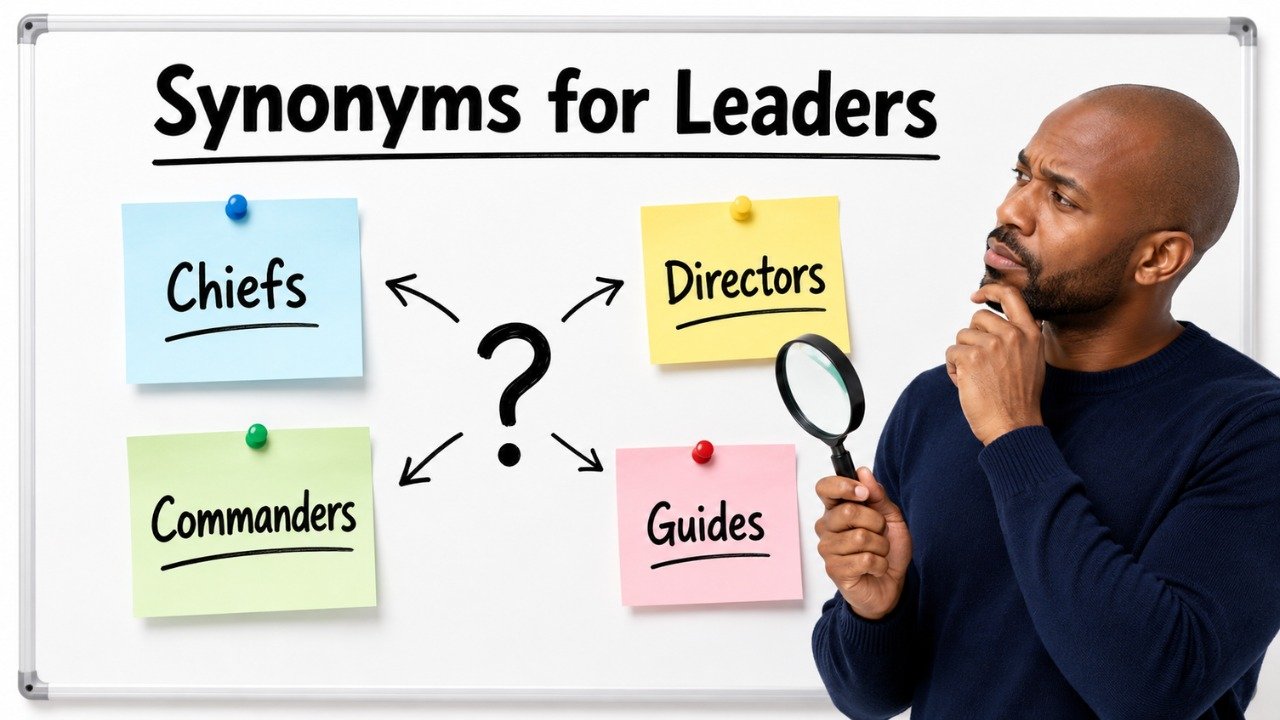
Quick Answer: The best synonyms for leaders include chiefs, heads, directors, managers, commanders, captains, guides, executives, mentors, and rulers. Use chiefs or heads for people in charge of organizations, directors and executives for business settings, commanders for military authority, captains for teams, guides for supportive leadership, mentors for personal development, and rulers for political control. The most suitable choice among synonyms for leaders depends on the level of authority, leadership style, setting, and responsibility involved.
Pronunciation and Word Details
Word: Leaders.
Pronunciation: /ˈliː.dərz/.
Part of Speech: Plural noun.
Meaning: People who guide, direct, influence, manage, or control other people or organizations.
US Pronunciation:
UK Pronunciation:
What Does “Leaders” Mean?
Leaders are people who guide, direct, manage, influence, or represent a group of people.
The word leaders is the plural form of leader. It is commonly used as a noun for people who hold authority, accept responsibility, make decisions, or inspire others toward a shared goal.
Leaders may have formal positions, such as directors, managers, presidents, or commanders. They may also lead informally through experience, knowledge, confidence, or personal influence.
In a workplace, leaders organize teams and make important decisions. In politics, leaders guide governments or movements. In education, community work, and personal development, leaders may support, advise, motivate, or mentor others.
Workplace Context: The leaders approved the new training program.
Political Context: National leaders met to discuss economic cooperation.
Community Context: Local leaders organized support for affected families.
Team Context: Strong leaders encourage every member to participate.
Informal Context: The most experienced students became leaders of the project groups.
Meaning, Tone, and Context of “Leaders”
Leaders is a neutral and widely used word. It can appear in formal, professional, academic, political, social, and conversational language.
Formal Tone: In reports, essays, and official communication, leaders often refers to people with recognized authority or responsibility.
Professional Tone: In business settings, leaders may include managers, directors, executives, supervisors, and department heads.
Political Tone: In political writing, leaders may refer to presidents, governors, rulers, party heads, or representatives.
Positive Tone: The word can describe people who inspire, support, guide, and motivate others.
Critical Tone: It can also refer to people who misuse authority or fail to fulfill their responsibilities.
Academic Tone: Researchers may discuss leadership styles, organizational leaders, community leaders, or influential figures.
Conversational Tone: In everyday speech, people use leaders for anyone who takes charge or guides a group.
The exact meaning depends on the context. A team leader may coordinate a small group, while a national leader may make decisions affecting an entire country.
When and How to Use “Leaders”
For Organizational Authority
Use leaders for people who make decisions and guide an organization.
Example: Company leaders introduced a new employee development plan.
For Team Direction
Use leaders for people who organize group tasks and help members achieve a shared objective.
Example: The team leaders divided the project into manageable stages.
For Political Authority
Use leaders for people who guide governments, political groups, or public movements.
Example: Political leaders discussed ways to improve public services.
For Community Guidance
Use leaders for respected people who represent or support a community.
Example: Community leaders arranged a meeting to discuss local safety.
For Inspiration
Use leaders for people who encourage others through their behavior, ideas, or achievements.
Example: Great leaders inspire people to believe in their abilities.
For Military Command
Use leaders for people who direct military groups or operations.
Example: Military leaders reviewed the safety plan before the exercise.
For Education
Use leaders for students, teachers, or administrators who guide educational activities.
Example: Student leaders welcomed the new learners and explained the campus rules.
For Innovation
Use leaders for people or organizations that introduce new ideas and influence progress.
Example: The researchers became leaders in environmental innovation.
For Social Change
Use leaders for people who organize movements and encourage reform.
Example: Movement leaders called for peaceful and constructive action.
For Informal Group Roles
Use leaders when someone naturally takes responsibility without holding an official title.
Example: During the emergency, several volunteers became natural leaders.
Best Synonyms for Leaders
Chiefs
Synonym: Chiefs are the highest ranking people in organizations, groups, or departments.
Example: The department chiefs met to review the annual budget.
Heads
Synonym: Heads are people responsible for organizations, departments, teams, or institutions.
Example: The department heads approved the revised schedule.
Directors
Synonym: Directors are senior people who manage organizations, departments, projects, or activities.
Example: The directors discussed the company’s long term strategy.
Managers
Synonym: Managers organize people, resources, schedules, and daily operations.
Example: The managers reviewed employee performance and training needs.
Commanders
Synonym: Commanders are people who direct military units, operations, or organized forces.
Example: The commanders prepared their teams for the training exercise.
Captains
Synonym: Captains lead sports teams, ships, aircraft crews, or organized groups.
Example: The captains encouraged their teams before the final match.
Guides
Synonym: Guides help people move in the right direction by offering advice, knowledge, or support.
Example: Experienced teachers acted as guides for the new staff members.
Executives
Synonym: Executives are senior professionals who make major organizational and business decisions.
Example: The executives approved the expansion proposal.
Mentors
Synonym: Mentors guide less experienced people through advice, encouragement, and practical support.
Example: The mentors helped young professionals build confidence.
Rulers
Synonym: Rulers are people who govern countries, territories, or populations.
Example: The rulers introduced new laws to improve trade.
50 Synonyms for Leaders with Short Meanings
- Chiefs: People holding the highest authority in a group or organization.
- Heads: People responsible for departments, teams, or institutions.
- Directors: Senior people who control organizations, projects, or departments.
- Managers: People who organize workers, resources, and daily operations.
- Commanders: People who direct military units or organized forces.
- Captains: People who lead teams, ships, aircraft crews, or groups.
- Guides: People who show others the correct direction or approach.
- Executives: Senior professionals who make important organizational decisions.
- Mentors: Experienced people who advise and support others.
- Rulers: People who govern countries, regions, or populations.
- Authorities: People with official power, recognized expertise, or influence.
- Chairpersons: People who lead meetings, boards, or committees.
- Presidents: Highest ranking officials in organizations, institutions, or countries.
- Governors: People who manage regions, institutions, or administrative bodies.
- Administrators: People responsible for organizing and managing systems or institutions.
- Coordinators: People who arrange activities and connect different participants.
- Organizers: People who plan events, groups, projects, or movements.
- Supervisors: People who oversee the work and performance of others.
- Pioneers: People who introduce new ideas, methods, or areas of development.
- Founders: People who establish organizations, movements, or institutions.
- Visionaries: People who imagine and promote important future possibilities.
- Strategists: People who create plans for achieving major goals.
- Decision Makers: People responsible for choosing actions or policies.
- Representatives: People chosen to speak or act for others.
- Spokespersons: People who communicate the views of a group or organization.
- Team Leads: People responsible for guiding and coordinating teams.
- Department Heads: People who manage specific organizational departments.
- Group Heads: People who direct particular groups or units.
- Officers: People holding positions of authority in organizations or services.
- Officials: People with recognized positions and formal responsibilities.
- Principals: People who head schools, organizations, or professional firms.
- Figureheads: People who symbolically represent groups or institutions.
- Standard Bearers: People who publicly represent important values or causes.
- Frontrunners: People who are ahead of others in progress, influence, or competition.
- Trailblazers: People who create new paths and inspire others to follow.
- Influencers: People whose ideas or actions strongly affect others.
- Advocates: People who publicly support a cause, policy, or group.
- Champions: People who actively defend, promote, or support an idea.
- Delegates: People authorized to represent a group at meetings or events.
- Ambassadors: People who officially or informally represent an organization or community.
- Facilitators: People who help groups communicate, cooperate, and make progress.
- Coaches: People who train, motivate, and develop individuals or teams.
- Instructors: People who direct learning and teach practical skills.
- Advisers: People who provide informed guidance before decisions are made.
- Counselors: People who offer professional or personal advice and support.
- Stewards: People trusted to manage, protect, or care for resources.
- Trustees: People legally or formally responsible for managing property or organizations.
- Overseers: People who watch, manage, and inspect the work of others.
- Bosses: Informal term for people who control employees or workplaces.
- Leading Figures: Important and influential people within a field or group.
Read Also:
Synonyms for Persistence

Synonyms for Leaders by Context
When Leaders Means People in Charge
Chiefs, heads, directors, managers, executives, supervisors, and administrators are suitable when leaders refers to people with official responsibility.
Example: The organization’s leaders approved the policy.
Alternative: The organization’s directors approved the policy.
Use chiefs when emphasizing rank, heads when identifying responsibility, and directors when referring to senior organizational control.
When Leaders Means People Who Guide Others
Guides, mentors, coaches, advisers, counselors, and instructors work well when leadership involves support, learning, or personal development.
Example: Good leaders help new employees develop confidence.
Alternative: Good mentors help new employees develop confidence.
Mentors provide long term personal guidance, while coaches usually focus on performance and specific skills.
When Leaders Means Military Authorities
Commanders, officers, captains, chiefs, and strategists are appropriate in military or security contexts.
Example: Military leaders examined the operation plan.
Alternative: Military commanders examined the operation plan.
Commanders emphasize direct authority, while strategists emphasize planning and long term objectives.
When Leaders Means Political Authorities
Presidents, governors, rulers, officials, representatives, and heads are suitable for governments and political organizations.
Example: The country’s leaders announced new economic reforms.
Alternative: The country’s officials announced new economic reforms.
Use rulers for people with broad governing power and representatives for people selected to speak for citizens or groups.
When Leaders Means Innovators
Pioneers, trailblazers, visionaries, founders, frontrunners, and leading figures describe people who introduce ideas or influence progress.
Example: These scientists are leaders in renewable energy research.
Alternative: These scientists are pioneers in renewable energy research.
Pioneers introduce new approaches, while visionaries imagine future possibilities.
When Leaders Means Public Representatives
Spokespersons, ambassadors, delegates, advocates, champions, and representatives are useful when people speak or act for others.
Example: Community leaders presented the residents’ concerns.
Alternative: Community representatives presented the residents’ concerns.
Representatives formally act for a group, while advocates actively defend its interests.
When Leaders Means Team Coordinators
Team leads, captains, coordinators, facilitators, organizers, and supervisors are useful for group activities.
Example: Project leaders assigned responsibilities to each member.
Alternative: Project coordinators assigned responsibilities to each member.
Coordinators focus on organization, while captains often motivate and represent a team.
When Leaders Means People With Influence
Authorities, influencers, standard bearers, champions, figureheads, and leading figures describe people whose opinions or actions affect others.
Example: Cultural leaders encouraged greater cooperation.
Alternative: Cultural figures encouraged greater cooperation.
Authorities influence through expertise, while standard bearers represent values, traditions, or causes.
Another Word for Leaders
Another word for leaders is heads. Heads is a useful general replacement when referring to people responsible for organizations, departments, institutions, or groups.
However, the best alternative depends on context. Managers is better for daily workplace operations, directors for senior business authority, commanders for military control, mentors for supportive guidance, and rulers for political power.
Original: The leaders of each department attended the meeting.
Better Option: The heads of each department attended the meeting.
Original: The leaders approved the new business strategy.
Better Option: The executives approved the new business strategy.
Original: The leaders prepared the soldiers for the operation.
Better Option: The commanders prepared the soldiers for the operation.
Original: The experienced leaders supported the new employees.
Better Option: The experienced mentors supported the new employees.
When Not to Use “Leaders”
Avoid leaders when a more precise word would clearly explain the person’s role, authority, or responsibility.
When the Role Is Specific
Leaders may sound too general when the person has a clear professional title.
Weak: The school leaders met with parents.
Better: The school administrators met with parents.
When Describing Daily Management
Use managers or supervisors when discussing schedules, performance, and workplace operations.
Weak: The leaders checked the employees’ weekly reports.
Better: The supervisors checked the employees’ weekly reports.
When Discussing Military Authority
Use commanders, officers, or captains when military rank or command is important.
Weak: The army leaders reviewed the mission.
Better: The army commanders reviewed the mission.
When Referring to Personal Guidance
Use mentors, coaches, guides, or advisers when the person supports individual growth.
Weak: The program connected students with professional leaders.
Better: The program connected students with professional mentors.
When Describing Political Control
Use presidents, governors, rulers, or officials when the political position matters.
Weak: The leaders signed the national agreement.
Better: The government officials signed the national agreement.
When Repetition Makes Writing Dull
Avoid repeating leaders several times in the same paragraph.
Weak: The leaders met other leaders and asked the local leaders for support.
Better: The directors met community representatives and asked local officials for support.
When Leadership Is Only Symbolic
Use figureheads when someone represents a group but has little practical authority.
Weak: He remained the organization’s leader but made no important decisions.
Better: He remained the organization’s figurehead but made no important decisions.
Words Commonly Confused With Leaders
Leaders vs Managers: Leaders influence direction, motivate people, and shape goals. Managers focus more on planning, organization, resources, and daily operations. One person may perform both roles.
Leaders vs Bosses: Leaders may inspire and support people, while bosses mainly have authority over employees. Bosses is more informal and can sound critical.
Leaders vs Directors: Leaders is a broad term. Directors usually hold formal senior positions and make organizational decisions.
Leaders vs Supervisors: Leaders may guide through authority or influence. Supervisors directly monitor tasks, performance, and workplace behavior.
Leaders vs Mentors: Leaders guide groups toward shared goals. Mentors usually support the development of particular individuals.
Leaders vs Rulers: Leaders can guide any group or organization. Rulers govern countries, territories, or populations.
Leaders vs Commanders: Leaders is general, while commanders specifically direct military forces or structured operations.
Leaders vs Guides: Leaders may possess authority and decision making power. Guides mainly provide direction, knowledge, or advice.
Leaders vs Representatives: Leaders direct or influence groups. Representatives speak or act on behalf of groups.
Leaders vs Pioneers: Leaders guide people, while pioneers introduce new ideas, methods, or fields. A pioneer may become a leader through innovation.
Which Synonym Should You Choose?
Choose chiefs when referring to people with the highest authority in an organization, department, or group.
Choose heads when identifying the people responsible for departments, institutions, or teams.
Choose directors when writing about senior officials who control organizations, programs, or projects.
Choose managers when discussing workplace operations, employee performance, schedules, or resources.
Choose executives when referring to senior business professionals who make major decisions.
Choose commanders when describing military authority, operations, or organized forces.
Choose captains when writing about sports teams, ships, aircraft crews, or organized groups.
Choose mentors when describing experienced people who guide personal or professional development.
Choose guides when emphasizing direction, support, knowledge, or assistance.
Choose rulers when discussing people who govern countries, regions, or populations.
Choose supervisors when writing about people who monitor workers, tasks, and performance.
Choose administrators when referring to people who manage institutions, systems, or official processes.
Choose pioneers when discussing people who introduce new ideas or methods.
Choose visionaries when emphasizing imagination, future planning, and ambitious ideas.
Choose representatives when people speak or act for a community, organization, or group.
Choose organizers when discussing people who arrange events, movements, campaigns, or activities.
Choose coaches when leadership involves training, motivation, and performance improvement.
Choose officials for formal reports about people holding recognized public or organizational positions.
Choose bosses in informal conversation about workplace authority.
Choose leading figures in essays or reports about important and influential people in a field.
Real Life Examples of “Leaders” in Sentences
Original: The business leaders discussed the company’s future direction.
Better Option: The business executives discussed the company’s future direction.
Original: The team leaders encouraged everyone to share ideas.
Better Option: The team captains encouraged everyone to share ideas.
Original: The military leaders approved the safety plan.
Better Option: The military commanders approved the safety plan.
Original: Community leaders organized a neighborhood meeting.
Better Option: Community representatives organized a neighborhood meeting.
Original: The school leaders introduced a new learning program.
Better Option: The school administrators introduced a new learning program.
Original: Experienced leaders helped the new employees understand their roles.
Better Option: Experienced mentors helped the new employees understand their roles.
Original: Political leaders met to discuss regional cooperation.
Better Option: Political officials met to discuss regional cooperation.
Original: The project leaders assigned tasks to each team member.
Better Option: The project coordinators assigned tasks to each team member.
Original: Scientific leaders developed a new research method.
Better Option: Scientific pioneers developed a new research method.
Original: The organization’s leaders approved the annual budget.
Better Option: The organization’s directors approved the annual budget.
Synonym Groups and Usage Differences
Authority Group
Chiefs, heads, directors, rulers, executives, and officials belong to the authority group.
These words describe people who hold recognized power or responsibility. Chiefs and heads are broad terms, while executives and directors are common in professional organizations.
Example: The department heads approved the final proposal.
Management Group
Managers, administrators, supervisors, coordinators, and overseers belong to the management group.
These words focus on organizing work, monitoring progress, managing resources, and ensuring that responsibilities are completed.
Example: The supervisors reviewed the team’s weekly performance.
Guidance Group
Guides, mentors, coaches, advisers, counselors, and instructors belong to the guidance group.
These words describe people who support learning, development, confidence, and better decision making.
Example: The mentors helped the students prepare for professional interviews.
Command Group
Commanders, captains, officers, chiefs, and strategists belong to the command group.
These words are suitable for military units, sports teams, ships, security groups, or structured operations.
Example: The commander explained the operation to the officers.
Innovation Group
Pioneers, trailblazers, visionaries, founders, and frontrunners belong to the innovation group.
These words describe people who introduce ideas, establish new organizations, or create new directions.
Example: The researchers became pioneers in sustainable farming.
Representation Group
Representatives, delegates, ambassadors, spokespersons, and figureheads belong to the representation group.
These words describe people who speak, act, or appear on behalf of a larger group.
Example: The delegates presented their community’s concerns.
Advocacy Group
Advocates, champions, standard bearers, and influencers belong to the advocacy group.
These words describe people who promote ideas, defend causes, or shape public attitudes.
Example: The advocates encouraged stronger protection for local wildlife.
Organization Group
Organizers, facilitators, coordinators, team leads, and group heads belong to the organization group.
These words focus on arranging activities, connecting people, and maintaining progress.
Example: The facilitators helped the participants reach a shared decision.
Antonyms of Leaders
The opposite of leaders depends on whether the word refers to authority, influence, guidance, or position.
Followers: People who accept the direction of others.
Subordinates: People working under someone with greater authority.
Supporters: People who assist a leader, movement, or organization.
Assistants: People who help someone complete responsibilities.
Trainees: People learning skills under guidance.
Beginners: People with little experience in a field or activity.
Participants: People who take part without necessarily directing others.
Members: People belonging to a group without holding leadership roles.
Workers: People who perform assigned tasks under management.
Employees: People who work for an organization or employer.
Juniors: People with less experience, authority, or professional rank.
Dependents: People who rely on others for direction or support.
Outsiders: People who do not belong to the controlling group.
Opponents: People who resist or challenge particular leaders.
Dissenters: People who disagree with those in authority.
Comparison: Leaders vs Related Words
Leaders vs Managers
Leaders influence direction, create purpose, and motivate people. Managers focus on planning, organizing, and controlling daily work.
Example With Leaders: Strong leaders help employees understand the organization’s purpose.
Example With Managers: Efficient managers ensure that employees complete tasks on schedule.
Leaders vs Chiefs
Leaders is a broad word for anyone who guides or influences others. Chiefs usually hold the highest position in a group, department, or organization.
Example With Leaders: The community leaders discussed local development.
Example With Chiefs: The department chiefs approved the spending plan.
Leaders vs Directors
Leaders may guide formally or informally. Directors normally have official responsibility for organizational decisions and policies.
Example With Leaders: The project leaders motivated the volunteers.
Example With Directors: The directors approved the project budget.
Leaders vs Executives
Leaders can exist in any group or setting. Executives are senior professionals who make important business or organizational decisions.
Example With Leaders: The leaders encouraged open communication.
Example With Executives: The executives approved the company’s expansion.
Leaders vs Commanders
Leaders is a general term. Commanders specifically control military groups, security forces, or structured operations.
Example With Leaders: The leaders reviewed the emergency plan.
Example With Commanders: The commanders reviewed the military operation.
Leaders vs Captains
Leaders may direct many types of groups. Captains commonly lead sports teams, ships, aircraft crews, or smaller organized units.
Example With Leaders: The group leaders explained the rules.
Example With Captains: The team captains encouraged the players.
Leaders vs Mentors
Leaders guide groups toward goals. Mentors help individuals grow through advice, experience, and encouragement.
Example With Leaders: The leaders introduced a new team objective.
Example With Mentors: The mentors helped the graduates plan their careers.
Leaders vs Rulers
Leaders can guide businesses, communities, teams, or countries. Rulers specifically govern territories or populations.
Example With Leaders: National leaders discussed economic development.
Example With Rulers: Ancient rulers controlled large territories.
Leaders vs Pioneers
Leaders direct or influence people. Pioneers introduce new ideas, methods, or areas of work.
Example With Leaders: The leaders guided the research team.
Example With Pioneers: The pioneers developed a new scientific method.
Leaders vs Representatives
Leaders guide or control groups. Representatives speak and act for groups, although they may not direct them.
Example With Leaders: The union leaders organized the meeting.
Example With Representatives: The union representatives presented the workers’ concerns.
Common Phrases and Expressions With “Leaders”
Strong Leaders: People who guide confidently, responsibly, and effectively.
Natural Leaders: People who guide others without needing a formal position.
Team Leaders: People responsible for directing and coordinating teams.
Community Leaders: Respected people who represent or guide local communities.
Political Leaders: People who guide governments, parties, or political movements.
Business Leaders: Influential people who direct companies or industries.
World Leaders: People who govern or represent major countries.
Industry Leaders: People or organizations that hold strong influence within a particular field.
Future Leaders: People expected to hold important positions later.
Emerging Leaders: People beginning to gain authority, recognition, or influence.
Senior Leaders: People holding high ranking positions in organizations.
Effective Leaders: People who successfully guide others toward goals.
Visionary Leaders: People who inspire progress through ambitious ideas.
Respected Leaders: People trusted and admired for their judgment or behavior.
Local Leaders: People who guide communities, districts, or smaller organizations.
Common Mistakes to Avoid
Repeating Leaders Too Often
Using leaders repeatedly in one paragraph can make writing sound dull.
Incorrect: The leaders met other leaders to discuss how leaders should manage the project.
Improved: The directors met team heads to discuss how managers should organize the project.
Choosing a Synonym With the Wrong Level of Authority
Not every leader is a chief, ruler, or executive.
Incorrect: The student ruler collected the group assignments.
Improved: The student leader collected the group assignments.
Using Managers and Leaders as Exact Matches
Managers and leaders often overlap, but they do not always mean the same thing. Managers focus on operations, while leaders may focus on influence, purpose, and direction.
Incorrect: Every inspirational leader is responsible for employee schedules.
Improved: Every workplace manager is responsible for employee schedules.
Using Rulers Outside Political Contexts
Rulers normally govern countries, regions, or populations.
Incorrect: The project rulers assigned the tasks.
Improved: The project leaders assigned the tasks.
Using Bosses in Formal Writing
Bosses is natural in casual speech but may sound too informal in reports or professional documents.
Informal: The bosses approved our leave requests.
Formal: The managers approved our leave requests.
Confusing Mentors With Supervisors
Mentors advise and support development. Supervisors monitor work and performance.
Incorrect: My supervisor gives me personal career advice every month.
Clearer: My mentor gives me personal career advice every month.
Using Figureheads for Active Decision Makers
A figurehead usually represents a group but may have limited practical authority.
Incorrect: The figurehead personally managed every department.
Improved: The executive personally managed every department.
Selecting a Word Based Only on Similarity
Choose synonyms according to meaning, setting, responsibility, and tone rather than replacing leaders automatically.
Weak: The classroom commanders collected the worksheets.
Better: The classroom group leaders collected the worksheets.
Ignoring Singular and Plural Forms
Leader is singular, while leaders is plural.
Incorrect: The leaders is responsible for the final decision.
Correct: The leaders are responsible for the final decision.
Using a Singular Verb With Leaders
Because leaders is plural, it usually requires a plural verb.
Incorrect: The leaders supports the new policy.
Correct: The leaders support the new policy.
Conclusion
Synonyms for leaders include chiefs, heads, directors, managers, commanders, captains, guides, mentors, executives, and rulers. The right word depends on the person’s role and the setting. Use managers for workplace operations, executives for senior business authority, commanders for military control, mentors for personal guidance, and pioneers for innovation. Heads and chiefs work well for people in charge, while representatives suit people who speak for groups. Choosing a precise alternative makes writing clearer, more natural, and more informative.
FAQs About Synonyms for Leaders
What Is the Best Synonym for Leaders?
Heads is one of the best general synonyms for leaders. Directors, managers, chiefs, and guides may be more accurate in specific contexts.
What Is a Formal Word for Leaders?
Executives, directors, authorities, officials, and administrators are formal alternatives. The best choice depends on the organization and level of responsibility.
What Is Another Word for Business Leaders?
Executives, directors, managers, entrepreneurs, chiefs, and leading figures are suitable alternatives for business leaders.
What Is Another Word for Team Leaders?
Team leads, captains, coordinators, supervisors, facilitators, and group heads can replace team leaders.
What Is a Synonym for Strong Leaders?
Influential figures, effective chiefs, respected heads, powerful authorities, and capable directors can describe strong leaders.
What Is the Difference Between Leaders and Managers?
Leaders guide, influence, and inspire people toward a goal. Managers organize tasks, resources, schedules, and daily operations.
Can Mentors Be Called Leaders?
Yes. Mentors can be leaders when they guide, support, and influence others, although their authority is usually based on experience rather than an official position.
