
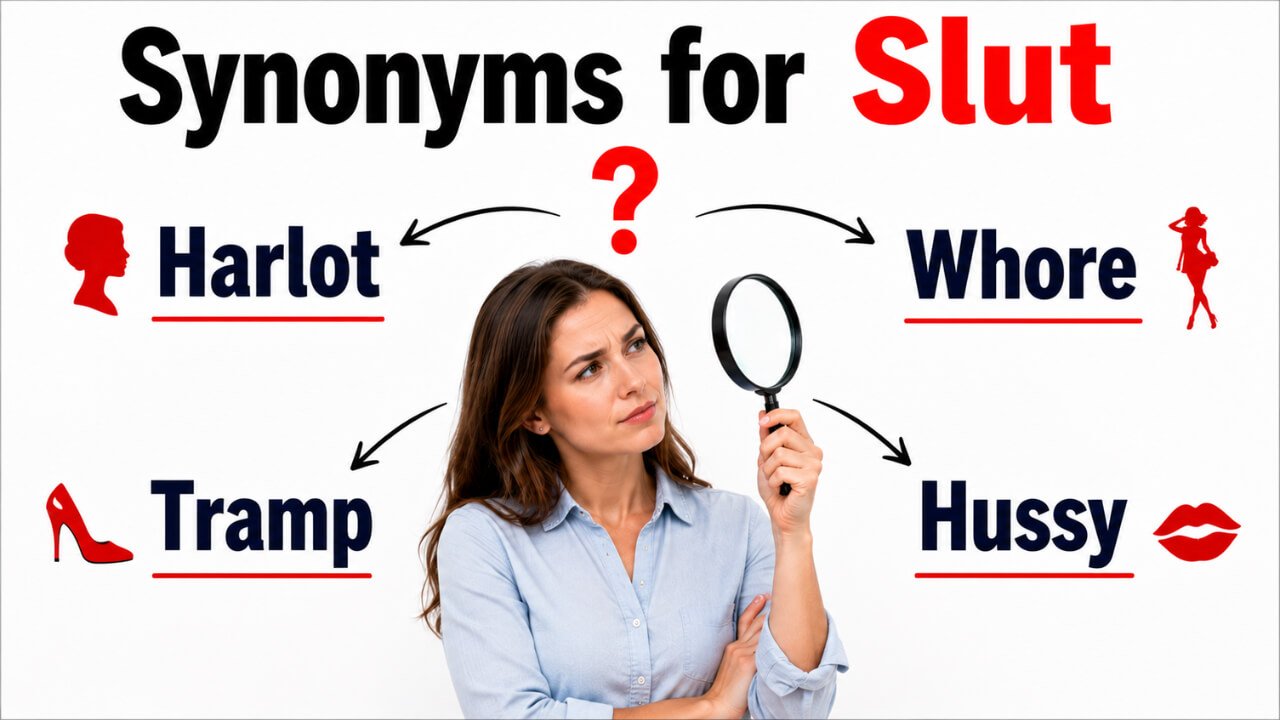
Quick Answer: Synonyms for slut include promiscuous person, libertine, flirt, seductress, temptress, wanton, philanderer, adulterer, unfaithful partner, and sexually adventurous person. However, slut is a highly offensive and gendered insult, so it is usually better to choose a neutral and precise alternative. Use promiscuous person when sexual behavior is genuinely relevant, flirt for playful romantic behavior, unfaithful partner for cheating, and sexually adventurous person for a respectful description of consensual choices.
Pronunciation and Word Details
Word: Slut
Pronunciation: /slʌt/
Part of Speech: Noun
Meaning: Slut is an offensive insult used mainly against a woman who is unfairly judged for her real or assumed sexual behavior.
US Pronunciation:
UK Pronunciation:
What Does “Slut” Mean?
Slut is a strongly offensive noun used to shame or insult someone, usually a woman, because of real, imagined, or exaggerated sexual behavior. It commonly suggests that the person has multiple sexual partners, dresses in a way others consider revealing, or behaves outside traditional expectations.
The word is rarely a neutral description. It usually communicates anger, contempt, jealousy, ridicule, or moral judgment. Because it is frequently directed at women, it can also reflect a gender based double standard.
In modern sentences, slut often appears when reporting an insult rather than describing someone directly.
Example: He apologized for calling her a slut during the argument.
Historically, the word could also describe an untidy or careless woman. That older meaning is now uncommon, although it survives in related words such as slattern.
In some limited settings, people may use or reclaim the word about themselves. That personal use does not make it acceptable to apply the label to another person without permission.
Meaning, Tone, and Context of “Slut”
Slut has an insulting, vulgar, emotional, and highly judgmental tone. It is not normally suitable for polite conversation, academic writing, professional communication, medical discussions, reports, or factual descriptions.
The word is conversational rather than formal, but even in casual speech it can cause serious offense. It may be used during arguments, in fictional dialogue, in discussions of gender stereotypes, or when explaining harmful language.
In educational writing, the word should generally appear only when its meaning, history, social effect, or use as an insult is being discussed. Quotation marks or explanatory wording can make it clear that the writer is examining the label rather than approving it.
Slut is not a technical term for sexual behavior. It does not tell readers how many partners a person has had, whether someone is faithful, or whether any behavior occurred at all. The insult is often based on rumors, appearance, clothing, or personal prejudice.
When accurate wording matters, replace it with a description of the actual behavior. Unfaithful partner describes cheating. Flirt describes playful romantic attention. Sexually active person describes behavior without moral judgment. Sexually adventurous person emphasizes consensual openness.
When and How to Use “Slut”
When Discussing Offensive Language: Use the word when explaining how sexual insults affect individuals or reinforce unfair judgments.
Example: The counselor explained why calling someone a slut can be emotionally damaging.
When Reporting an Insult: The word may be necessary when accurately describing what someone said.
Example: The witness stated that the speaker repeatedly used the word slut as an insult.
When Analyzing Fictional Dialogue: Writers may discuss the term when examining conflict, prejudice, jealousy, or character behavior in a story.
Example: The character uses slut to shame another woman and control her choices.
When Discussing Gender Standards: The term may appear in conversations about the unequal judgment of men and women.
Example: The discussion examined why the label slut is applied more frequently to women.
When Explaining Historical Usage: The word can be used when describing its older connection with untidiness or careless housekeeping.
Example: In older usage, slut could refer to an untidy woman rather than sexual behavior.
For Respectful Description: Do not use the insult when a neutral phrase can communicate the intended meaning.
Example: She described herself as sexually adventurous and comfortable making her own choices.
For Infidelity: Use unfaithful partner, adulterer, or cheater when the real issue is a violation of relationship commitments.
Example: He ended the relationship after discovering that his partner had been unfaithful.
For Flirtatious Behavior: Use flirt, coquette, or playful when someone enjoys romantic attention without implying sexual activity.
Example: She is an enthusiastic flirt, but she is clear about her boundaries.
Best Synonyms for Slut
No alternative matches every use of slut because the word functions mainly as an insult. The following choices are useful only in specific contexts.
Promiscuous Person: A person who has or is believed to have several casual sexual partners. This description can still sound judgmental and should be used carefully.
Example: The writer described the character as promiscuous rather than using a gendered insult.
Sexually Adventurous Person: Someone who is open to varied consensual sexual experiences.
Example: She considers herself a sexually adventurous person who communicates her boundaries clearly.
Sexually Liberated Person: Someone who rejects shame and makes independent choices about consensual sexuality.
Example: The character is portrayed as sexually liberated rather than immoral.
Libertine: A person who rejects conventional moral restrictions, especially concerning pleasure or sexuality.
Example: The novel presents him as a wealthy libertine who avoids commitment.
Flirt: Someone who playfully shows romantic or sexual interest.
Example: He is a natural flirt who enjoys lighthearted conversation.
Seductress: A woman portrayed as deliberately attracting someone sexually. This word is literary and can sound judgmental.
Example: The story casts her as a mysterious seductress.
Temptress: A woman believed to tempt another person into desire or improper behavior. It is dated and often shifts responsibility unfairly.
Example: The legend portrays the woman as a dangerous temptress.
Unfaithful Partner: A person who breaks an agreed relationship commitment.
Example: The conflict began when she discovered that he was an unfaithful partner.
Philanderer: A person, usually a man, who repeatedly has casual relationships or is unfaithful.
Example: The character is a known philanderer who refuses to remain loyal.
Adulterer: A married person who has a sexual relationship outside the marriage.
Example: The report described him accurately as an adulterer rather than using a vague insult.
50 Synonyms for Slut with Short Meanings
- Promiscuous Person: Someone who has several casual sexual partners.
- Promiscuous Woman: A judgmental description of a woman believed to have multiple partners.
- Promiscuous Partner: A partner who engages in multiple casual sexual relationships.
- Sexually Adventurous Person: Someone open to varied consensual sexual experiences.
- Sexually Liberated Person: Someone who makes independent sexual choices without accepting social shame.
- Sexually Active Person: Someone who currently engages in sexual activity.
- Person With Multiple Partners: A factual phrase for someone who has more than one sexual partner.
- Casual Dater: Someone who dates without seeking a committed relationship.
- Flirt: A person who playfully expresses romantic or sexual interest.
- Coquette: A woman who deliberately attracts romantic attention, often in a playful manner.
- Seductress: A woman portrayed as deliberately attracting someone sexually.
- Temptress: A dated label for a woman believed to inspire sexual temptation.
- Vamp: A dated term for a woman who uses charm to attract or influence others.
- Siren: A figurative term for an alluring and potentially dangerous woman.
- Femme Fatale: A mysterious and attractive woman portrayed as dangerous to others.
- Libertine: A person who rejects conventional restrictions concerning pleasure or sexuality.
- Wanton: An archaic and insulting term for someone considered sexually uncontrolled.
- Rake: A dated term for a man known for immoral or promiscuous behavior.
- Womanizer: A man who repeatedly pursues casual relationships with women.
- Philanderer: A person, usually a man, who repeatedly has affairs or casual relationships.
- Seducer: Someone who deliberately persuades another person into sexual or romantic involvement.
- Adulterer: A married person who has a sexual relationship outside the marriage.
- Unfaithful Partner: Someone who violates an agreed commitment in a relationship.
- Cheater: A person who is dishonest or unfaithful in a relationship.
- Player: An informal term for someone who pursues several romantic partners without serious commitment.
- Heartbreaker: Someone who repeatedly causes emotional pain in romantic relationships.
- Mistress: A woman in a continuing relationship with a married person.
- Other Woman: A woman involved with someone who already has a committed partner.
- Loose Woman: An offensive and dated phrase for a woman judged as sexually promiscuous.
- Easy Woman: An insulting phrase suggesting that a woman is easily persuaded into sexual activity.
- Fast Woman: A dated description of a woman considered sexually bold or socially improper.
- Fallen Woman: An archaic moral label for a woman believed to have lost social respectability.
- Woman of Easy Virtue: An old euphemism for a woman judged as sexually promiscuous.
- Scarlet Woman: A literary or religious expression for a woman condemned for sexual behavior.
- Harlot: An archaic and insulting word for a sexually immoral woman.
- Strumpet: An old and offensive term for a woman judged as sexually promiscuous.
- Trollop: A dated insult for a woman considered sexually immoral or untidy.
- Tart: An insulting term for a woman judged by her clothing or sexual behavior.
- Tramp: A harsh insult for someone, usually a woman, considered sexually promiscuous.
- Floozy: A dated and mocking word for a woman considered sexually available.
- Hussy: An old insult for a woman believed to behave boldly or improperly.
- Wench: A dated word for a young woman that can become insulting in sexual contexts.
- Jade: An archaic insult for a supposedly disreputable woman.
- Minx: A sometimes playful but dated word for a bold, flirtatious, or troublesome woman.
- Bad Girl: An informal label for a woman who rejects expected behavior.
- Wild Woman: A broad description of a woman viewed as uncontrolled or unconventional.
- Debauchee: A person devoted to excessive pleasure, especially sexual pleasure.
- Shameless Woman: A condemning phrase for a woman believed to ignore social expectations.
- Slattern: An archaic word for an untidy or careless woman.
- Untidy Woman: A neutral phrase related to the older historical meaning of slut.
Read Also:
Synonyms for High

Synonyms for Slut by Context
When Slut Refers to Promiscuous Behavior
Promiscuous person, promiscuous partner, person with multiple partners, libertine, and debauchee describe sexual behavior more directly than the insult. However, promiscuous can still carry criticism, so it should be used only when the information is relevant and supported.
Example: The biography describes him as a libertine who avoided committed relationships.
Example: The discussion used promiscuous person instead of applying a gendered slur.
When a Respectful Description Is Needed
Sexually active person, sexually adventurous person, sexually liberated person, and person with multiple partners are more respectful choices. They describe behavior or identity without automatically suggesting that the person lacks dignity or moral worth.
Example: She described herself as sexually liberated and confident in her personal choices.
Example: The health questionnaire asks whether someone is sexually active without making moral judgments.
When the Meaning Is Flirtatious
Flirt, coquette, minx, vamp, seductress, and temptress focus on attraction, charm, or romantic behavior. These words do not necessarily imply that sexual activity has occurred.
Example: Her friends describe her as a confident flirt who enjoys playful conversation.
Example: The fictional character appears as a mysterious seductress.
When the Meaning Involves Infidelity
Unfaithful partner, cheater, adulterer, philanderer, womanizer, mistress, and other woman relate to broken relationship commitments. They should be used only when cheating or involvement with an attached person is actually part of the situation.
Example: The article referred to him as an unfaithful partner because he broke a clear relationship agreement.
Example: An adulterer is specifically a married person who has a sexual relationship outside the marriage.
When the Word Is Used as a Dated Insult
Harlot, strumpet, trollop, tart, tramp, floozy, hussy, jade, loose woman, and fallen woman are dated or offensive labels. They may be useful in historical analysis, literary discussion, or fictional dialogue, but they are not respectful descriptions of real people.
Example: The historical drama uses the word harlot to reveal the community’s harsh moral attitudes.
Example: Calling someone a floozy reflects judgment rather than objective information.
When the Older Meaning Is Untidiness
Slattern and untidy woman relate to the older meaning of slut as a careless or messy woman. This sense is uncommon today and may confuse modern readers.
Example: The older text uses slattern to describe a careless housekeeper.
Example: In current writing, untidy person is clearer and less insulting.
Another Word for Slut
Promiscuous person is the closest general replacement when the sentence genuinely concerns multiple casual sexual partners. However, it may still sound judgmental. The best alternative depends on whether the intended meaning is sexual activity, flirtation, infidelity, personal freedom, or an insult.
Original: The character is described as a slut because she dates several people.
Better Option: The character is described as a promiscuous person because she has several casual partners.
Original: Her classmates called her a slut because she enjoyed flirting.
Better Option: Her classmates judged her unfairly because she was openly flirtatious.
Original: He said his former partner was a slut after learning about the affair.
Better Option: He said his former partner had been unfaithful after learning about the affair.
Original: The story presents her as a slut who ignores traditional expectations.
Better Option: The story presents her as a sexually liberated person who rejects traditional expectations.
When Not to Use “Slut”
Do not use slut as a factual description of someone’s character, clothing, relationships, or sexual history. The word is usually intended to humiliate rather than communicate accurate information.
Avoid the term in academic essays, professional emails, medical forms, workplace communication, reports, educational materials, and polite conversation unless the subject is the word itself.
Do not use slut as a synonym for sex worker. A sex worker performs a form of paid labor, while slut is a moral insult. The two expressions describe completely different ideas.
Do not assume that someone is sexually active because of clothing, confidence, friendships, dating habits, or public behavior. None of these details proves anything about private sexual choices.
Weak: The report described her as a slut.
Better: The report described the specific behavior without using a degrading label.
Weak: She dresses like a slut.
Better: She wears clothing that expresses her personal style.
Weak: He called her a slut because she spoke to several men.
Better: He judged her unfairly because she spoke confidently with several people.
Weak: The character is a slut because she cheated.
Better: The character is an unfaithful partner because she broke a relationship commitment.
Weak: She is a slut because she has dated several people.
Better: She has had several relationships and prefers casual dating.
Weak: The medical note identified the patient as a slut.
Better: The medical note recorded relevant sexual health information using neutral language.
Words Commonly Confused With Slut
Slut vs Promiscuous Person: Slut is an offensive moral insult. Promiscuous person describes someone believed to have several casual sexual partners, although the phrase can still sound judgmental.
Slut vs Flirt: Slut suggests sexual behavior and shame. Flirt describes someone who playfully expresses romantic interest and does not prove sexual activity.
Slut vs Sex Worker: Slut is an insult based on sexual judgment. Sex worker describes a person who provides adult services for payment. The terms are not synonyms.
Slut vs Adulterer: Slut is vague and insulting. Adulterer has a specific meaning and refers to a married person who has a sexual relationship outside the marriage.
Slut vs Unfaithful Partner: Slut attacks a person’s supposed morality. Unfaithful partner identifies a particular relationship violation.
Slut vs Mistress: Slut can be directed at almost any woman regardless of facts. Mistress refers specifically to a woman in a continuing relationship with a married person.
Slut vs Seductress: Slut condemns someone’s assumed sexual behavior. Seductress describes a woman portrayed as deliberately attracting or persuading someone sexually.
Slut vs Sexually Liberated Person: Slut expresses shame and disapproval. Sexually liberated person describes someone who makes independent consensual choices without accepting traditional sexual restrictions.
Slut vs Slattern: Slut usually has a sexual meaning today. Slattern is an archaic term for an untidy or careless woman.
Which Synonym Should You Choose?
Choose promiscuous person when multiple casual sexual relationships are directly relevant and the wording can be supported by facts.
Choose sexually active person in medical, educational, or health related writing when the only relevant information is whether sexual activity occurs.
Choose sexually adventurous person when describing someone who openly explores varied consensual experiences.
Choose sexually liberated person when emphasizing independence from social shame or restrictive expectations.
Choose flirt in casual conversation when someone enjoys playful romantic attention without any claim about sexual activity.
Choose seductress or temptress in literary writing when a character is deliberately portrayed as alluring or dangerous. Remember that both words may carry gendered judgment.
Choose libertine in formal, literary, or historical writing for a person who rejects conventional moral restrictions.
Choose player for informal discussion of someone who pursues several romantic partners without seeking commitment.
Choose philanderer or womanizer when describing a man who repeatedly pursues women or engages in affairs.
Choose unfaithful partner or cheater when someone has broken an agreed relationship commitment.
Choose adulterer when a married person has a sexual relationship outside the marriage.
Choose degrading sexual insult when reporting harmful language without repeating the exact slur unnecessarily.
Choose slattern or untidy woman only when discussing the rare historical meaning related to messiness.
Avoid replacing slut with another gendered insult merely to create vocabulary variety. Precision and respect are more important than finding a direct slur.
Real Life Examples of “Slut” in Sentences
Original: He called her a slut after she rejected him.
Better Option: He used a degrading sexual insult after she rejected him.
Original: People unfairly described her as a slut because she dated frequently.
Better Option: People unfairly judged her because she preferred casual dating.
Original: The character believes every confident woman is a slut.
Better Option: The character unfairly views every confident woman as sexually immoral.
Original: Her former partner spread rumors that she was a slut.
Better Option: Her former partner spread degrading rumors about her sexual behavior.
Original: The group called her a slut because of her clothing.
Better Option: The group judged her unfairly because of her clothing.
Original: The writer labels the unfaithful character a slut.
Better Option: The writer describes the character as an unfaithful partner.
Original: The villagers treat the independent woman as a slut.
Better Option: The villagers condemn the independent woman as a libertine.
Original: She reclaimed the word slut when discussing sexual shame.
Better Option: She reclaimed a sexual insult as part of her discussion of personal freedom.
Original: He assumed that being a flirt made her a slut.
Better Option: He wrongly assumed that flirtatious behavior revealed her private sexual choices.
Original: The historical text uses slut to mean an untidy woman.
Better Option: The historical text uses slattern to describe an untidy woman.
Synonym Groups and Usage Differences
Neutral Description Group
Sexually active person, sexually adventurous person, sexually liberated person, person with multiple partners, and casual dater are descriptive alternatives. They focus on behavior or personal choice without automatically attacking someone’s worth.
Example: The character is sexually adventurous but remains honest about her expectations.
Promiscuity Group
Promiscuous person, promiscuous partner, libertine, wanton, and debauchee suggest multiple partners or rejection of conventional sexual limits. Promiscuous is the most current option, while wanton and debauchee sound literary or dated.
Example: The novel portrays him as a libertine who avoids emotional commitment.
Flirtation and Seduction Group
Flirt, coquette, minx, seductress, temptress, vamp, siren, and femme fatale describe charm, attraction, or seductive behavior. They do not necessarily mean that someone has multiple sexual partners.
Example: The fictional spy is presented as a confident femme fatale.
Infidelity Group
Unfaithful partner, cheater, adulterer, philanderer, womanizer, mistress, and other woman relate to betrayal or involvement outside a committed relationship. These words are more precise than slut when infidelity is the actual issue.
Example: He was described as a philanderer because of his repeated affairs.
Offensive Insult Group
Harlot, strumpet, trollop, tart, tramp, floozy, hussy, loose woman, easy woman, and scarlet woman are insulting or archaic labels. They are mainly useful when analyzing harmful language, historical attitudes, or fictional dialogue.
Example: The speaker uses the word harlot to humiliate a woman who challenges him.
Historical Untidiness Group
Slattern and untidy woman relate to the older nonsexual meaning of slut. Slattern is archaic, while untidy woman or untidy person is clearer in modern English.
Example: The old passage describes the careless servant as a slattern.
Antonyms of Slut
Slut has no exact antonym because it is an insult rather than an objective personality type. Possible opposites depend on the intended meaning.
Chaste Person: Someone who chooses to avoid sexual activity.
Celibate Person: Someone who abstains from sexual relationships.
Abstinent Person: Someone who deliberately refrains from sexual activity.
Faithful Partner: Someone who honors the agreed commitments of a relationship.
Loyal Partner: Someone who remains dependable and committed.
Monogamous Person: Someone who has one romantic or sexual partner at a time.
Reserved Person: Someone who is private and restrained in behavior.
Modest Person: Someone whose behavior or appearance follows conventional standards of restraint.
Virtuous Person: Someone regarded as having strong moral qualities.
Respectable Person: Someone viewed as socially responsible and honorable.
Tidy Woman: A woman who keeps herself or her surroundings orderly, relating only to the older meaning.
Orderly Person: Someone who is neat, careful, and organized.
Comparison: Slut vs Related Words
Slut vs Promiscuous Person
Slut is primarily an abusive label. Promiscuous person is more descriptive, but it may still express judgment and should be used only when sexual behavior is relevant.
Example With Slut: The angry character called her a slut without knowing anything about her private life.
Example With Promiscuous Person: The fictional character is portrayed as a promiscuous person who avoids exclusive relationships.
Slut vs Flirt
Slut implies sexual behavior and moral condemnation. Flirt describes playful romantic attention and may be positive, negative, or neutral depending on context.
Example With Slut: He unfairly assumed that her confidence made her a slut.
Example With Flirt: She is a cheerful flirt who enjoys harmless romantic conversation.
Slut vs Sexually Liberated Person
Slut is intended to shame. Sexually liberated person emphasizes personal freedom, consent, and independence from restrictive expectations.
Example With Slut: Critics used slut to condemn the character’s independence.
Example With Sexually Liberated Person: The character is a sexually liberated person who makes her own choices.
Slut vs Unfaithful Partner
Slut is vague and attacks the whole person. Unfaithful partner identifies the specific act of breaking a relationship agreement.
Example With Slut: He called his former partner a slut after discovering the betrayal.
Example With Unfaithful Partner: He ended the relationship because his partner had been unfaithful.
Slut vs Adulterer
Slut can be directed at someone regardless of relationship status or actual behavior. Adulterer specifically means a married person who has a sexual relationship outside the marriage.
Example With Slut: The rumor unfairly labeled the unmarried woman a slut.
Example With Adulterer: The married character becomes an adulterer after beginning a secret affair.
Slut vs Seductress
Slut suggests broad sexual immorality. Seductress describes a woman portrayed as intentionally attracting or persuading another person into sexual involvement.
Example With Slut: The villagers condemn her as a slut without evidence.
Example With Seductress: The story presents her as a seductress who manipulates powerful men.
Slut vs Sex Worker
Slut is an offensive judgment about supposed sexual behavior. Sex worker is an occupational description. Using the insult as a substitute creates stigma and communicates inaccurate information.
Example With Slut: The speaker used slut as a degrading insult.
Example With Sex Worker: The article discusses the safety and legal concerns affecting a sex worker.
Slut vs Slattern
Slut usually carries a sexual meaning in current English. Slattern is an old term for an untidy or careless woman.
Example With Slut: The insult attacked her supposed sexual behavior.
Example With Slattern: The historical passage called the careless housekeeper a slattern.
Common Phrases and Expressions With Slut
Call Someone a Slut: To direct a degrading sexual insult at another person.
Use Slut as an Insult: To employ the word for humiliation, ridicule, or moral condemnation.
Slut Shaming: Criticizing or humiliating someone for real or assumed sexual behavior, clothing, or appearance.
Slut Label: A harmful identity imposed on someone through sexual judgment.
Slut Stereotype: The belief that clothing, confidence, or dating behavior reveals someone’s sexual history.
Slut Accusation: A claim that someone is sexually immoral, often without evidence.
Slut Related Insult: Any degrading expression used to shame someone for supposed sexuality.
Reclaim the Word Slut: To use the insult about oneself in an attempt to remove its power or reject sexual shame.
Be Called a Slut: To be targeted with the insult by another person.
Treat Someone Like a Slut: To judge or disrespect someone based on assumptions about sexuality.
Common Mistakes to Avoid
Treating the Word as Neutral: Slut is not a neutral synonym for sexually active woman. It communicates contempt and moral judgment.
Equating Clothing With Sexual Behavior: Clothing does not reveal a person’s sexual history, consent, relationships, or private choices.
Confusing Flirting With Promiscuity: Someone can enjoy flirtation without having multiple sexual partners or wanting sexual involvement.
Using Slut for an Unfaithful Person: If cheating is the actual issue, unfaithful partner, adulterer, or cheater is more accurate.
Confusing the Term With Sex Worker: Sex worker is an occupational description. Slut is an insult, and the two terms must not be treated as synonyms.
Applying a Gender Double Standard: Avoid judging similar behavior differently according to whether the person is a man or woman.
Replacing It With Another Slur: Harlot, tramp, tart, and similar words remain offensive. A different insult does not create respectful writing.
Using the Word in Formal Writing: Reports, essays, medical documents, and workplace communication should use factual descriptions unless the term itself is being analyzed.
Ignoring Consent and Personal Choice: Consensual behavior between adults should not automatically be described through shame or moral condemnation.
Assuming Rumors Are Facts: Do not describe someone’s private behavior based on gossip, appearance, jealousy, or speculation.
Forgetting the Historical Meaning: In old texts, slut may refer to untidiness. Check the context before assuming that the word has a sexual meaning.
Repeating the Keyword Unnaturally: In vocabulary content, explain the word clearly without placing it in every sentence. Use pronouns and accurate alternatives to maintain natural readability.
Conclusion
Understanding synonyms for slut requires attention to tone, accuracy, and respect. Promiscuous person is the closest descriptive alternative, while sexually active person and sexually adventurous person are more neutral. Flirt refers to playful attraction, and unfaithful partner or adulterer should be used when cheating is the real issue. Older terms such as harlot, strumpet, and trollop are also offensive. In most modern writing, describing the actual behavior is clearer and more responsible than replacing one harmful label with another.
FAQs About Synonyms for Slut
What Is the Closest Synonym for Slut?
Promiscuous person is the closest general alternative, but it can still sound judgmental. Use it only when the person’s sexual behavior is genuinely relevant.
Is Slut an Offensive Word?
Yes. It is a highly offensive and gendered insult commonly used to shame women for real or assumed sexual behavior.
What Is a Respectful Alternative to Slut?
Sexually active person, sexually adventurous person, or sexually liberated person may be respectful choices, depending on the intended meaning.
Is Flirt a Synonym for Slut?
Not exactly. A flirt enjoys playful romantic attention, but the word does not prove or imply multiple sexual partners.
Is Sex Worker a Synonym for Slut?
No. Sex worker is an occupational description, while slut is a degrading moral insult. The terms should never be treated as interchangeable.
What Word Should Describe Someone Who Cheats?
Use unfaithful partner, cheater, adulterer, or philanderer, depending on the person’s relationship status and behavior.
Did Slut Originally Mean an Untidy Woman?
The word historically had a meaning connected with an untidy or careless woman. That sense is now rare, and slattern is a clearer historical alternative.
