
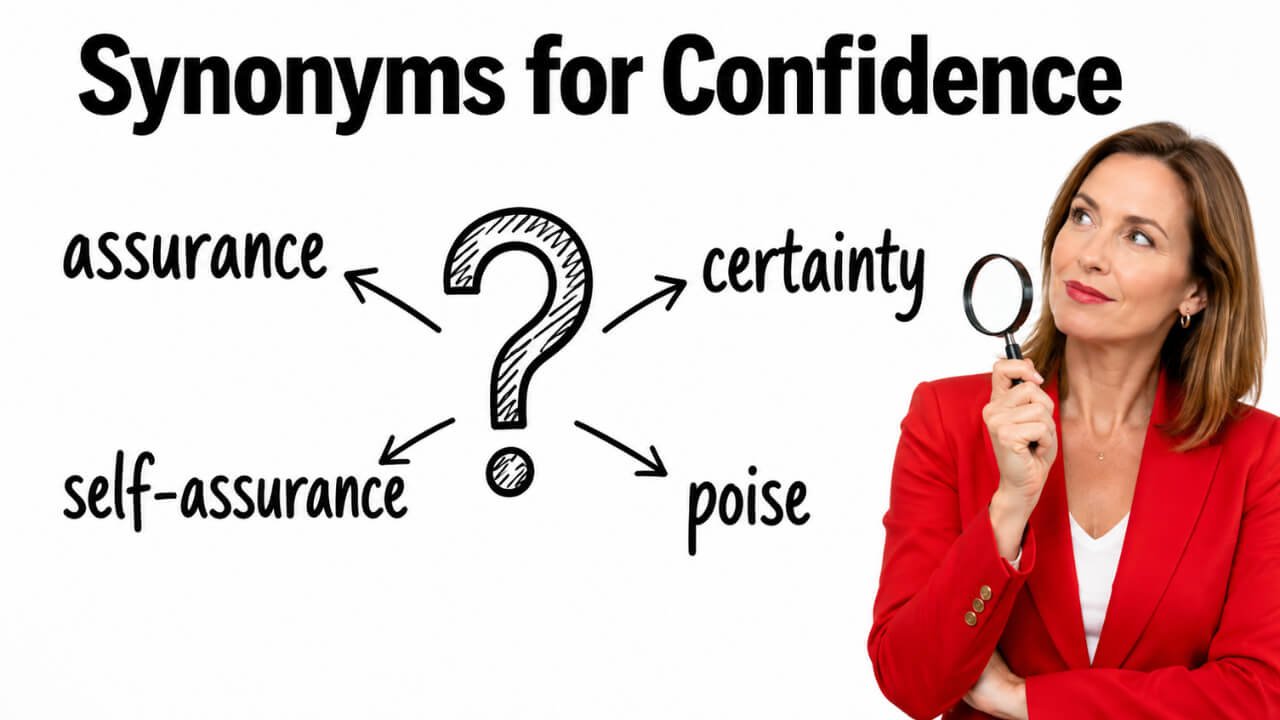
Quick Answer: Synonyms for confidence include trust, belief, faith, assurance, certainty, conviction, poise, composure, courage, and self belief. Use trust when speaking about reliance on someone, belief when showing acceptance of an idea, assurance for calm certainty, certainty for no doubt, conviction for strong opinion, poise for calm behavior, composure for emotional control, courage for brave action, and self belief when describing personal confidence.
Pronunciation and Word Details
Word: Confidence
Pronunciation: /ˈkɑːn.fə.dəns/
Part of Speech: Noun
Meaning: Confidence means a feeling of trust, certainty, belief, or calm ability in yourself, another person, or a situation.
US Pronunciation:
UK Pronunciation:
What Does “Confidence” Mean?
Confidence means trust, belief, or certainty in someone, something, or yourself. It is a noun used to describe a strong feeling that something is true, reliable, possible, or within your ability.
The word confidence can describe personal belief, such as confidence before a speech. It can also describe trust in another person, such as confidence in a leader. In writing, confidence can work in personal, formal, academic, business, emotional, and everyday contexts. It often shows calm strength, positive belief, and freedom from serious doubt.
Meaning, Tone, and Context of “Confidence”
Confidence has a positive, strong, and neutral tone. It can sound formal in professional writing, natural in everyday speech, and powerful in motivational or personal development contexts.
The word is common in business, education, relationships, leadership, sports, public speaking, decision making, and emotional growth. In formal writing, confidence often means trust or certainty. In personal writing, it often means self belief. In behavior, confidence can mean calm presence, poise, or composure. The tone depends on context. Confidence can be healthy and respectful, but too much confidence may sound like arrogance.
When and How to Use “Confidence”
For Self Belief: Use confidence when someone believes in their own ability.
Example: She gained confidence after practicing her presentation.
For Trust: Use confidence when showing trust in a person, plan, system, or result.
Example: The team has confidence in the new strategy.
For Certainty: Use confidence when something feels likely, true, or reliable.
Example: He spoke with confidence about the final decision.
For Calm Behavior: Use confidence when someone appears steady, relaxed, and controlled.
Example: Her confidence made the interview feel natural.
For Professional Judgment: Use confidence when discussing careful belief in data, reports, results, or expert decisions.
Example: The manager expressed confidence in the project timeline.
Best Synonyms for Confidence
Trust: Belief that someone or something is reliable.
Example: The employees had trust in their manager’s decision.
Belief: Acceptance that something is true, possible, or worth supporting.
Example: His belief in his skills helped him continue.
Faith: Strong trust, often emotional or personal.
Example: She had faith in the process even when progress was slow.
Assurance: Calm certainty or confident promise.
Example: He answered with assurance during the meeting.
Certainty: Complete confidence with little or no doubt.
Example: She spoke with certainty about the facts.
Conviction: Strong belief based on values, judgment, or evidence.
Example: He defended his idea with conviction.
Poise: Calm and graceful confidence in behavior.
Example: She handled the difficult question with poise.
Composure: Calm control, especially under pressure.
Example: He kept his composure during the debate.
Courage: Confidence to face fear, risk, or difficulty.
Example: It took courage to admit the mistake.
Self Belief: Confidence in your own ability, worth, or judgment.
Example: Her self belief grew with every small success.
50 Synonyms for Confidence with Short Meanings
- Trust: Belief in reliability or honesty.
- Belief: Acceptance that something is true or possible.
- Faith: Strong trust or loyal belief.
- Assurance: Calm certainty or confident promise.
- Certainty: Strong belief without doubt.
- Conviction: Firm belief or strong opinion.
- Poise: Calm and graceful self control.
- Composure: Calm control under pressure.
- Courage: Strength to act despite fear.
- Self Belief: Trust in your own ability.
- Self Trust: Faith in your own judgment.
- Self Reliance: Ability to depend on yourself.
- Boldness: Willingness to act with courage.
- Bravery: Strength to face danger or difficulty.
- Nerve: Courage in a difficult situation.
- Spirit: Inner strength and energy.
- Determination: Firm decision to continue.
- Resolve: Strong purpose and mental firmness.
- Optimism: Hopeful belief in good results.
- Positivity: Hopeful and confident attitude.
- Authority: Confident control or expert command.
- Command: Strong control and confident presence.
- Presence: Strong and confident personal effect.
- Certitude: Complete certainty.
- Reliance: Dependence based on trust.
- Dependence: Trust placed in someone or something.
- Credence: Belief that something is true.
- Expectation: Belief that something will happen.
- Hope: Positive belief about the future.
- Encouragement: Support that builds confidence.
- Morale: Group confidence and positive spirit.
- Security: Feeling of safety and confidence.
- Calmness: Peaceful confidence without panic.
- Steadiness: Firm and reliable confidence.
- Firmness: Strength and certainty in attitude.
- Assertiveness: Confident expression of needs or views.
- Fearlessness: Lack of fear in action.
- Daring: Brave and confident willingness to try.
- Audacity: Very bold confidence.
- Backbone: Strength of character and courage.
- Strength: Inner power and confidence.
- Self Respect: Positive regard for your own worth.
- Dignity: Calm self respect and worth.
- Surety: Confidence or certainty.
- Sureness: Feeling of being certain.
- Confidence Level: Degree of certainty.
- Credibility: Quality that creates trust.
- Reliability: Quality of being trusted.
- Stability: Steady and secure condition.
- Empowerment: Strength and confidence to act.
Read Also:
Synonyms for Profound
Synonyms for Confidence by Context
When Confidence Means Trust
Use these synonyms when confidence means relying on a person, system, promise, decision, or plan.
Trust: The team showed trust in the leader’s judgment.
Faith: She had faith in her friend’s honesty.
Reliance: The company placed reliance on accurate data.
Credibility: His clear explanation gave the report credibility.
When Confidence Means Self Belief
Use these words when confidence describes belief in personal ability, value, or judgment.
Self Belief: His self belief helped him perform well.
Self Trust: She developed self trust through experience.
Self Reliance: The training improved his self reliance.
Self Respect: Confidence grows stronger when self respect is healthy.
When Confidence Means Certainty
Use these synonyms when confidence means being sure about facts, results, decisions, or opinions.
Certainty: She answered with certainty.
Assurance: He gave the instructions with assurance.
Conviction: The speaker defended her view with conviction.
Surety: The witness spoke with surety about what happened.
When Confidence Means Calm Control
Use these words when confidence appears in behavior, body language, speech, or pressure.
Poise: She walked into the room with poise.
Composure: He kept his composure during the challenge.
Calmness: Her calmness helped the group stay focused.
Steadiness: His steadiness made others feel safe.
When Confidence Means Courage
Use these synonyms when confidence is connected to action, bravery, risk, or challenge.
Courage: It took courage to speak honestly.
Boldness: Her boldness helped her ask for the opportunity.
Bravery: His bravery inspired the whole team.
Daring: The decision required daring and confidence.
Another Word for Confidence
A strong single replacement for confidence is trust, but the best alternative depends on context. Use self belief when talking about personal ability, assurance when showing calm certainty, poise when describing behavior, and conviction when describing strong belief.
Original: She had confidence in her public speaking skills.
Better Option: She had self belief in her public speaking skills.
Original: The client showed confidence in the company.
Better Option: The client showed trust in the company.
Original: He answered every question with confidence.
Better Option: He answered every question with assurance.
Original: Her confidence remained strong under pressure.
Better Option: Her composure remained strong under pressure.
When Not to Use “Confidence”
Do not use confidence when a more specific word would be clearer. Confidence can sound vague if you mean trust, courage, certainty, poise, or belief. It can also sound too positive when the situation is actually about arrogance or overconfidence.
Weak: His confidence in the data was based on exact numbers.
Better: His certainty about the data was based on exact numbers.
Weak: She showed confidence by staying calm during the crisis.
Better: She showed composure by staying calm during the crisis.
Weak: The child had confidence in his mother’s promise.
Better: The child had trust in his mother’s promise.
Weak: He had too much confidence and ignored advice.
Better: He was overconfident and ignored advice.
Use confidence when you mean healthy belief, trust, or certainty. Choose a sharper synonym when the sentence needs more exact meaning.
Words Commonly Confused With Confidence
Confidence vs Trust: Confidence can mean belief in ability, truth, or success. Trust focuses more on reliability, honesty, and dependence.
Confidence vs Arrogance: Confidence is healthy belief without disrespect. Arrogance is excessive pride that often ignores others.
Confidence vs Certainty: Confidence can allow some doubt. Certainty suggests a stronger level of sureness.
Confidence vs Courage: Confidence is belief in ability or success. Courage is action despite fear.
Confidence vs Poise: Confidence is an inner feeling of belief. Poise is the calm and graceful way that confidence appears.
Confidence vs Conviction: Confidence can be general trust or self belief. Conviction is a strong belief or firm opinion.
Which Synonym Should You Choose?
Choose trust when writing about reliance on a person, promise, system, or decision.
Choose belief when writing about acceptance of an idea, ability, value, or possibility.
Choose faith when the confidence is emotional, personal, loyal, or hopeful.
Choose assurance when someone speaks or acts with calm certainty.
Choose certainty when there is little or no doubt about facts, results, or decisions.
Choose conviction when writing about strong opinions, values, principles, or firm beliefs.
Choose poise when describing graceful confidence in behavior.
Choose composure when someone stays calm under stress.
Choose courage when confidence leads to brave action.
Choose self belief when describing personal confidence in skills, worth, or judgment.
Real Life Examples of “Confidence” in Sentences
Original: She spoke with confidence during the interview.
Better Option: She spoke with assurance during the interview.
Original: The students gained confidence after the practice test.
Better Option: The students gained self belief after the practice test.
Original: The board expressed confidence in the new plan.
Better Option: The board expressed trust in the new plan.
Original: He had confidence that the answer was correct.
Better Option: He had certainty that the answer was correct.
Original: Her confidence helped her face the challenge.
Better Option: Her courage helped her face the challenge.
Original: The athlete showed confidence before the final match.
Better Option: The athlete showed composure before the final match.
Original: His confidence in the idea never faded.
Better Option: His conviction in the idea never faded.
Original: The teacher gave him confidence to try again.
Better Option: The teacher gave him encouragement to try again.
Original: They moved forward with confidence.
Better Option: They moved forward with optimism.
Original: She carried herself with confidence.
Better Option: She carried herself with poise.
Synonym Groups and Usage Differences
Trust Group
Words like trust, faith, reliance, credibility, and reliability focus on believing that someone or something is dependable. Use this group for relationships, leadership, systems, reports, and promises.
Example: The workers had trust in the safety plan.
Self Belief Group
Words like self belief, self trust, self reliance, self respect, and empowerment focus on personal confidence. Use this group for growth, motivation, skills, identity, and personal development.
Example: Her self belief improved after each successful task.
Certainty Group
Words like certainty, assurance, conviction, surety, and sureness focus on being sure. Use this group for facts, decisions, opinions, evidence, and statements.
Example: He spoke with certainty because he had checked the details.
Calm Behavior Group
Words like poise, composure, calmness, steadiness, and dignity focus on visible confidence. Use them when describing behavior, speech, leadership, or pressure.
Example: Her composure made the difficult meeting easier.
Courage Group
Words like courage, boldness, bravery, nerve, and daring focus on confident action. Use them when someone faces risk, fear, rejection, or difficulty.
Example: It took boldness to ask for a second chance.
Antonyms of Confidence
Doubt: Lack of certainty or belief.
Uncertainty: Not being sure about something.
Insecurity: Lack of confidence in yourself or your position.
Fear: Feeling of worry, danger, or nervousness.
Hesitation: Delay caused by doubt or uncertainty.
Distrust: Lack of trust in someone or something.
Suspicion: Doubt about honesty or truth.
Timidity: Lack of courage or boldness.
Nervousness: Anxious or uneasy feeling.
Self Doubt: Lack of belief in your own ability.
Anxiety: Strong worry or unease.
Weakness: Lack of strength, firmness, or certainty.
Comparison: Confidence vs Related Words
Confidence vs Trust
Confidence can describe belief in ability, success, facts, or people. Trust focuses more on reliability and honesty.
Example With Confidence: She had confidence in her ability to lead.
Example With Trust: She had trust in her team’s honesty.
Confidence vs Certainty
Confidence means a strong feeling that something is true or possible. Certainty is stronger and suggests little or no doubt.
Example With Confidence: I have confidence that the plan will work.
Example With Certainty: I know with certainty that the report is accurate.
Confidence vs Courage
Confidence is belief in ability or success. Courage is the strength to act even when fear exists.
Example With Confidence: He had confidence before the speech.
Example With Courage: He showed courage by speaking despite his fear.
Confidence vs Poise
Confidence is the inner belief. Poise is the calm and graceful way a person behaves.
Example With Confidence: Her confidence grew after months of practice.
Example With Poise: She answered the difficult question with poise.
Confidence vs Arrogance
Confidence is healthy and respectful belief in yourself. Arrogance is excessive pride that can make someone dismiss others.
Example With Confidence: He accepted feedback with confidence.
Example With Arrogance: He rejected every suggestion with arrogance.
Common Phrases and Expressions With Confidence
With Confidence: In a sure and calm way.
Full Confidence: Complete trust or belief.
Confidence Level: The degree of certainty in something.
Self Confidence: Belief in your own ability or worth.
Build Confidence: Develop stronger belief or trust.
Gain Confidence: Become more sure or self assured.
Lose Confidence: Stop trusting or believing in something.
Confidence Boost: Something that increases confidence.
Vote of Confidence: A clear show of support or trust.
Confidence in Yourself: Belief in your own skills, choices, or value.
Common Mistakes to Avoid
A common mistake is using confidence when the sentence needs a more exact word. If you mean trust in a person, use trust. If you mean no doubt, use certainty. If you mean calm behavior, use poise or composure. If you mean brave action, use courage.
Another mistake is confusing confidence with arrogance. Confidence is respectful and balanced, while arrogance sounds excessive. Avoid repeating confidence too many times in one paragraph. Mix in natural synonyms such as assurance, self belief, trust, conviction, and composure to make writing clearer and more engaging.
Conclusion
Synonyms for confidence help you express trust, self belief, certainty, courage, and calm control with better accuracy. Use trust for reliability, assurance for calm certainty, conviction for strong belief, poise for graceful behavior, composure for pressure, and self belief for personal growth. Confidence is useful in formal and casual writing, but the best synonym depends on what you want to describe. Clear word choice makes your sentence stronger, more natural, and more precise.
FAQs About Synonyms for Confidence
What are the best synonyms for confidence?
The best synonyms for confidence are trust, belief, faith, assurance, certainty, conviction, poise, composure, courage, and self belief.
What is another word for confidence in yourself?
Another word for confidence in yourself is self belief. You can also use self trust, self reliance, self respect, or assurance.
What is a formal synonym for confidence?
Formal synonyms for confidence include assurance, certainty, conviction, trust, reliance, credibility, and certitude.
What is the difference between confidence and trust?
Confidence can mean belief in ability, success, or truth. Trust means belief that someone or something is reliable, honest, or dependable.
Is confidence the same as arrogance?
No. Confidence is healthy belief in yourself or something else. Arrogance is excessive pride that often ignores other people’s views.
What is the opposite of confidence?
Opposites of confidence include doubt, uncertainty, insecurity, fear, hesitation, distrust, nervousness, and self doubt.
Can confidence mean certainty?
Yes, confidence can mean a strong level of certainty. However, certainty is stronger and suggests little or no doubt.
