
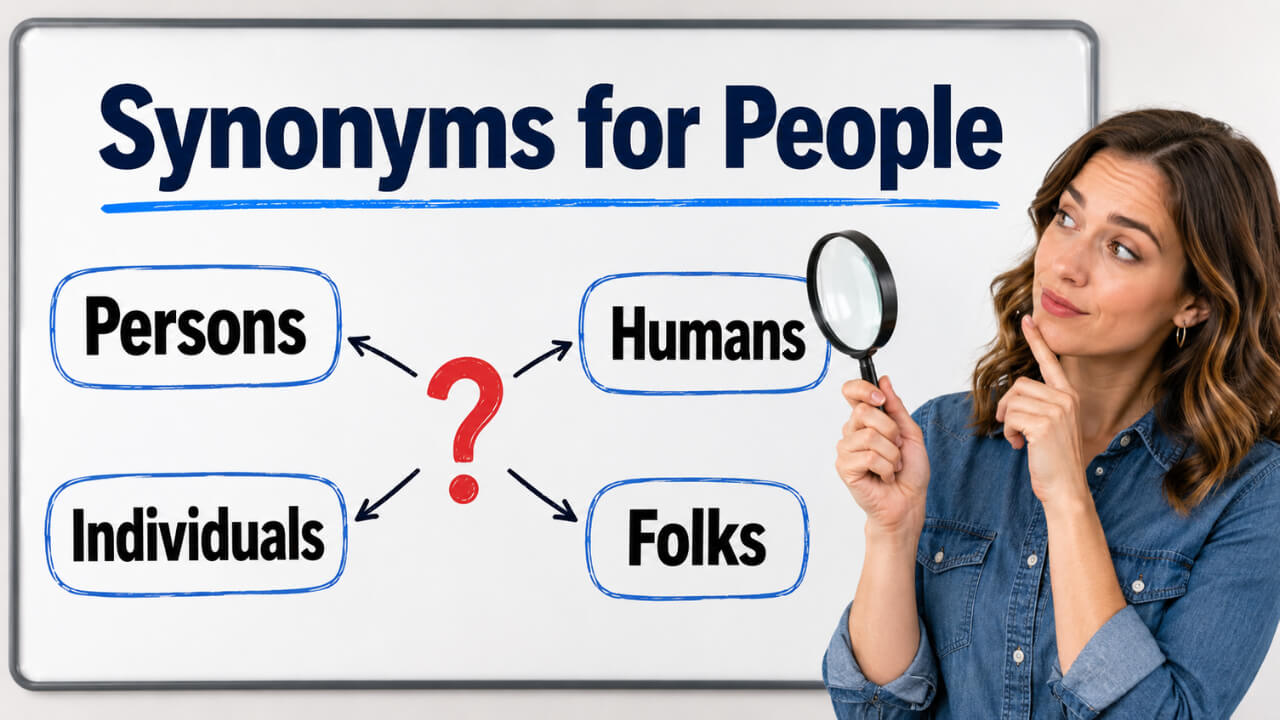
Quick Answer: The best synonyms for people include persons, individuals, humans, human beings, citizens, residents, community, public, population, and society. Use individuals for formal writing, persons for legal or official contexts, humans for general human identity, citizens for national or civic meaning, residents for people living in a place, and community when referring to people connected by place, interest, or shared life.
Pronunciation and Word Details
Word: People.
Pronunciation: /ˈpiːpəl/.
Part of Speech: Plural noun, collective noun, and verb.
Meaning: People means human beings in general or a group of humans connected by place, identity, activity, or situation.
US Pronunciation:
UK Pronunciation:
What Does “People” Mean?
People means human beings in general or a group of human beings considered together.
The word people is usually used as a plural noun. It can refer to humans as a whole, a group in a place, members of a community, citizens of a country, or persons involved in an action. It can also work as a collective noun when speaking about a nation, ethnic group, or shared identity.
In sentences, people can be general, specific, formal, casual, social, political, or cultural. For example, people need clean water refers to humans generally, while the people of the city refers to a specific population.
Meaning, Tone, and Context of “People”
People is a neutral, common, and flexible word. It works in everyday conversation, education, news style writing, public communication, essays, reports, grammar lessons, and social topics.
The tone of people is usually simple and conversational. It is not too formal or too casual. However, in academic or official writing, words like individuals, persons, citizens, residents, participants, or population may sound more precise.
People is commonly used in contexts involving human beings, society, community, citizenship, population, groups, culture, behavior, rights, work, public life, and relationships.
When and How to Use “People”
For human beings in general: Use people when you mean humans as a broad group.
Example: People need respect, safety, and opportunity.
For a group in a place: Use people when talking about humans living, working, or gathering somewhere.
Example: The people in the village welcomed the visitors warmly.
For public meaning: Use people when referring to ordinary members of society.
Example: The decision affected many people across the country.
For social groups: Use people when talking about communities, cultures, or shared identity.
Example: The people of that region have many rich traditions.
For everyday conversation: Use people when a simple and natural word is better than a formal one.
Example: Many people enjoy learning new words.
For general behavior: Use people when discussing how humans think, act, feel, or respond.
Example: People often remember kind words for a long time.
Best Synonyms for People
Individuals: Separate human beings considered one by one.
Example: The study focused on individuals from different age groups.
Persons: Human beings, often used in legal, formal, or official writing.
Example: Only authorized persons may enter this area.
Humans: Human beings as a species or general group.
Example: Humans need connection and communication.
Human beings: A clear and complete phrase for people as living humans.
Example: All human beings deserve dignity.
Citizens: People who legally belong to a country, city, or state.
Example: Citizens voted on the new proposal.
Residents: People who live in a particular place.
Example: Residents complained about the noise.
Community: People connected by location, identity, interest, or shared experience.
Example: The community worked together after the storm.
Public: Ordinary people as a whole, especially in relation to services or decisions.
Example: The public responded strongly to the announcement.
Population: All the people living in a country, city, region, or area.
Example: The population of the town has grown quickly.
Society: People living together in an organized community.
Example: Education plays an important role in society.
50 Synonyms for People with Short Meanings
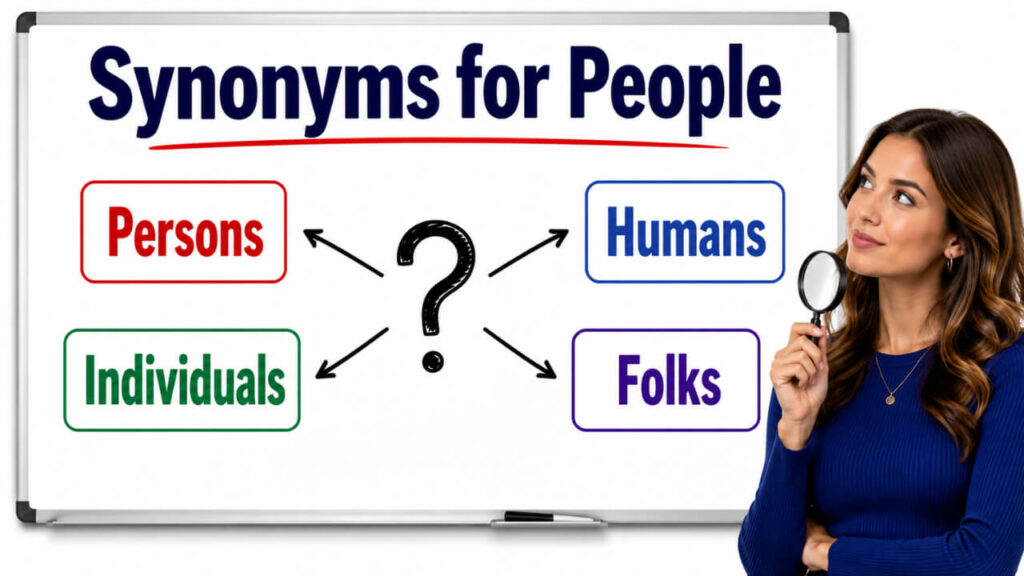
- Individuals: Separate persons considered one by one.
- Persons: Human beings in formal or official language.
- Humans: Members of the human species.
- Human beings: Living human persons.
- Citizens: Legal members of a country, city, or state.
- Residents: People who live in a specific place.
- Community: People connected by place, identity, or shared interest.
- Public: Ordinary people as a whole.
- Population: All people living in an area.
- Society: People living together in an organized system.
- Members: People who belong to a group.
- Locals: People from a particular area.
- Inhabitants: People who live in a place.
- Natives: People originally from a place.
- Citizensry: Citizens considered as a whole.
- Populace: The people of a country or area.
- Folk: People in a casual or traditional sense.
- Crowd: A large group of people together.
- Audience: People watching, listening, or reading.
- Group: Several people considered together.
- Gathering: People assembled in one place.
- Assembly: People gathered for a purpose.
- Participants: People taking part in an activity.
- Attendees: People present at an event.
- Guests: People invited or welcomed somewhere.
- Visitors: People who come to a place temporarily.
- Customers: People who buy goods or services.
- Clients: People receiving professional service or help.
- Consumers: People who use or buy products and services.
- Users: People who use a product, service, or system.
- Workers: People who perform labor or tasks.
- Employees: People who work for an employer.
- Staff: People working for an organization.
- Personnel: People employed in a workplace or service.
- Colleagues: People who work together.
- Voters: People who vote in an election.
- Taxpayers: People who pay taxes.
- Civilians: People who are not part of armed forces.
- Adults: Grown people.
- Children: Young people.
- Youths: Young people, often teenagers or young adults.
- Elders: Older people with age or experience.
- Families: Related people living or connected together.
- Households: People living together in one home.
- Humanity: All human beings collectively.
- Humankind: The human race as a whole.
- Mankind: Human beings collectively, often in traditional usage.
- Nation: People of a country considered collectively.
- Tribe: People linked by ancestry, culture, or group identity.
- Generation: People born and living around the same time.
Read Also:
Synonyms for Best

Synonyms for People by Context
When People Means Human Beings
Use these words when people refers to humans in general.
Humans: Humans communicate through language, emotion, and behavior.
Human beings: Human beings need care, safety, and belonging.
Humanity: Humanity has always searched for meaning.
Humankind: Humankind depends on cooperation and knowledge.
When People Means Individuals
Use these synonyms when you want to speak about separate persons rather than a broad group.
Individuals: The program supports individuals with different learning needs.
Persons: The notice applies to all persons entering the building.
Members: Members must follow the safety rules.
Participants: Participants answered the questions carefully.
When People Means Citizens or Residents
Use these words when people refers to those who live in or belong to a place.
Citizens: Citizens have rights and responsibilities.
Residents: Residents asked for better public services.
Locals: Locals know the area better than most visitors.
Inhabitants: The island’s inhabitants rely on fishing.
When People Means a Community
Use these synonyms when people refers to a connected group.
Community: The community supported the family.
Society: Society benefits from education.
Nation: The nation came together during the crisis.
Tribe: The tribe preserved its traditions.
When People Means an Audience or Group
Use these alternatives when people are gathered for a shared purpose.
Audience: The audience listened closely to the speaker.
Crowd: A crowd gathered near the entrance.
Gathering: The gathering included teachers, parents, and students.
Assembly: The assembly discussed the new plan.
When People Means Workers or Staff
Use these words when people refers to those involved in jobs, teams, or workplaces.
Workers: Workers completed the task on time.
Employees: Employees received updated instructions.
Staff: The staff handled the situation professionally.
Personnel: Trained personnel managed the equipment.
Another Word for People
Another word for people is individuals, especially when you want a clear, formal, and respectful replacement. The best alternative depends on context. Use persons for legal or official writing, citizens for civic meaning, residents for people living in a place, and community for a connected group.
Original: Many people joined the training session.
Better Option: Many individuals joined the training session.
Original: People living near the river were warned.
Better Option: Residents living near the river were warned.
Original: People must show identification before entry.
Better Option: Persons must show identification before entry.
Original: People worked together to clean the park.
Better Option: The community worked together to clean the park.
When Not to Use “People”
Do not use people when a more precise word would improve clarity. People is useful, but it can sound broad, repetitive, or vague in formal writing.
Weak: The people in the report answered the questions.
Better: The participants in the report answered the questions.
Weak: The people in the city need better roads.
Better: The residents of the city need better roads.
Weak: The rules apply to people entering the room.
Better: The rules apply to persons entering the room.
Weak: People at the company received training.
Better: Employees at the company received training.
People can also sound too general in essays, reports, notices, and academic writing. If you mean voters, customers, students, workers, citizens, or patients, choose the exact word.
Words Commonly Confused With People
People vs Persons: People is more common and natural in everyday English. Persons is more formal and often appears in legal, official, or public notices.
People vs Humans: People often refers to groups in social life. Humans refers to the species or human beings in a biological, general, or philosophical sense.
People vs Public: People means human beings generally. Public means ordinary people as a group, especially in relation to services, decisions, or shared concerns.
People vs Population: People can refer to any group. Population means all the people living in a specific area or belonging to a measured group.
People vs Community: People is broad. Community means people connected by place, identity, interest, or shared experience.
People vs Citizens: People can include anyone. Citizens specifically means legal members of a country, state, or city.
People vs Residents: People is general. Residents means people who live in a particular place.
Which Synonym Should You Choose?
Choose individuals when writing formal sentences about separate human beings.
Choose persons when writing legal, official, safety, or notice based text.
Choose humans when writing about the human species, nature, behavior, or shared human qualities.
Choose human beings when you want a clear and respectful phrase for all people.
Choose citizens when writing about rights, duties, voting, public policy, or national belonging.
Choose residents when writing about people who live in a city, town, building, or area.
Choose community when writing about people connected by place, identity, culture, or shared purpose.
Choose public when referring to ordinary people in relation to decisions, services, opinions, or announcements.
Choose population when writing about numbers, data, cities, countries, regions, or demographics.
Choose audience when referring to people who are watching, listening, reading, or attending.
Choose staff, employees, or workers when writing about people in a workplace.
Choose participants when writing about people taking part in an event, study, survey, class, or activity.
Real Life Examples of “People” in Sentences
Original: Many people attended the workshop.
Better Option: Many participants attended the workshop.
Original: People in the building must follow the rules.
Better Option: Persons in the building must follow the rules.
Original: The storm affected people across the town.
Better Option: The storm affected residents across the town.
Original: People responded well to the speech.
Better Option: The audience responded well to the speech.
Original: People need honest information.
Better Option: The public needs honest information.
Original: People in the office received new guidelines.
Better Option: Employees in the office received new guidelines.
Original: People from nearby areas came to help.
Better Option: Locals from nearby areas came to help.
Original: The project helps people find jobs.
Better Option: The project helps individuals find jobs.
Original: People of the country supported the change.
Better Option: Citizens of the country supported the change.
Original: People have always created language to share ideas.
Better Option: Humans have always created language to share ideas.
Synonym Groups and Usage Differences
General Human Group
This group includes humans, human beings, humanity, humankind, and mankind. These words are best when discussing people as a species or as all human life.
Example: Humanity depends on communication to share knowledge.
Formal Individual Group
This group includes individuals, persons, participants, and members. These words work well in formal, academic, legal, or organized contexts.
Example: Each individual received a separate form.
Place Based Group
This group includes residents, locals, inhabitants, natives, and population. These words are useful when people are connected to a place.
Example: Residents raised concerns about traffic.
Civic Group
This group includes citizens, voters, taxpayers, public, and citizensry. These words fit political, legal, civic, and public service contexts.
Example: Voters will decide the issue next month.
Social Group
This group includes community, society, nation, tribe, and families. These words describe people connected through shared life, identity, culture, or structure.
Example: The community protected its local traditions.
Event Group
This group includes audience, crowd, attendees, guests, visitors, and gathering. These words are useful for events, meetings, ceremonies, and public places.
Example: The audience enjoyed the final performance.
Workplace Group
This group includes workers, employees, staff, personnel, and colleagues. These words are best when people are connected by employment or professional roles.
Example: Staff completed the training before opening hours.
Antonyms of People
The opposite of people depends on the context. If people means human beings, antonyms may refer to animals, objects, machines, or nonhuman things. If people means a group, the opposite may be an individual or isolation.
Individual: One person instead of a group.
Object: A thing rather than a human being.
Animal: A living creature that is not human.
Machine: A mechanical device instead of a person.
Robot: An artificial machine that performs tasks.
Nonhuman: Not belonging to human beings.
Creature: A living being that may not be human.
Thing: A general object, idea, or item.
Solitary person: One person alone rather than people together.
Isolation: Separation from people or society.
Comparison: People vs Related Words
People vs Persons
People is the common everyday word for human beings. Persons is more formal and often appears in official rules, notices, and legal language.
Example With People: Many people waited outside the hall.
Example With Persons: Unauthorized persons may not enter the hall.
People vs Humans
People is often social and conversational. Humans is broader and can sound biological, scientific, or philosophical.
Example With People: People in the room were quiet.
Example With Humans: Humans need water to survive.
People vs Public
People means human beings generally. Public means ordinary people as a group, especially when discussing shared information, opinion, safety, or services.
Example With People: People asked many questions.
Example With Public: The public asked for clear answers.
People vs Population
People can describe any group of humans. Population is better when discussing numbers, data, demographics, or all residents of an area.
Example With People: People moved into the new town.
Example With Population: The population of the town increased.
People vs Community
People is general. Community suggests connection, belonging, shared identity, or shared place.
Example With People: People helped after the flood.
Example With Community: The community helped after the flood.
People vs Citizens
People can include anyone. Citizens are legal members of a country, state, city, or civic body.
Example With People: People discussed the new law.
Example With Citizens: Citizens discussed the new law.
People vs Residents
People is broad. Residents specifically means people who live in a particular place.
Example With People: People complained about the noise.
Example With Residents: Residents complained about the noise.
Common Phrases and Expressions With People
Many People: A large number of human beings.
Some People: An unspecified group of human beings.
Most People: The majority of human beings in a group.
Young People: Children, teenagers, or younger adults.
Older People: People who are advanced in age.
Local People: People from a specific area.
Working People: People who have jobs or perform labor.
Ordinary People: Regular members of society.
People in Need: People who require help or support.
People of All Ages: Humans from every age group.
Common Mistakes to Avoid
One common mistake is using people too often in the same paragraph. Repetition makes writing sound plain and less precise.
Weak: People in the area said people needed more help from people in charge.
Better: Residents in the area said the community needed more help from local leaders.
Another mistake is using people when a specific group name is clearer. If you mean students, workers, customers, citizens, residents, or participants, use that exact word.
Avoid using persons in casual writing when people sounds more natural. Persons can sound stiff unless the context is legal, official, or rule based.
Do not confuse people with population. Population is best for numbers and demographics, while people is better for general human meaning.
Also avoid using public when you simply mean people. Public usually means ordinary people as a shared group in relation to decisions, information, or services.
Conclusion
Learning synonyms for people helps you write with more accuracy, variety, and natural tone. Use individuals for formal writing, persons for official notices, humans for general human meaning, citizens for civic topics, residents for location based writing, and community for connected groups. The best synonym depends on whether you mean human beings, a public group, a workplace team, event attendees, or a population. Strong word choice makes your writing clearer and more useful.
FAQs About Synonyms for People
What are the best synonyms for people?
The best synonyms for people are individuals, persons, humans, human beings, citizens, residents, community, public, population, and society.
What is another word for people in formal writing?
Another word for people in formal writing is individuals. You can also use persons, participants, members, or citizens, depending on the context.
Is persons the same as people?
Persons and people both refer to human beings, but persons is more formal and official. People is more common in everyday English.
What is another word for people living in a place?
Another word for people living in a place is residents. You can also use inhabitants, locals, natives, or population.
What is another word for people in a country?
Another word for people in a country is citizens when referring to legal members. You can also use population, nation, or public.
What is another word for people at an event?
Another word for people at an event is attendees. You can also use guests, audience, participants, or crowd.
What is the opposite of people?
The opposite of people depends on meaning. It can be individual, object, animal, machine, robot, nonhuman, or thing, depending on the sentence.
